Hamann Manus · Volume 7
The Type and Its Relatives
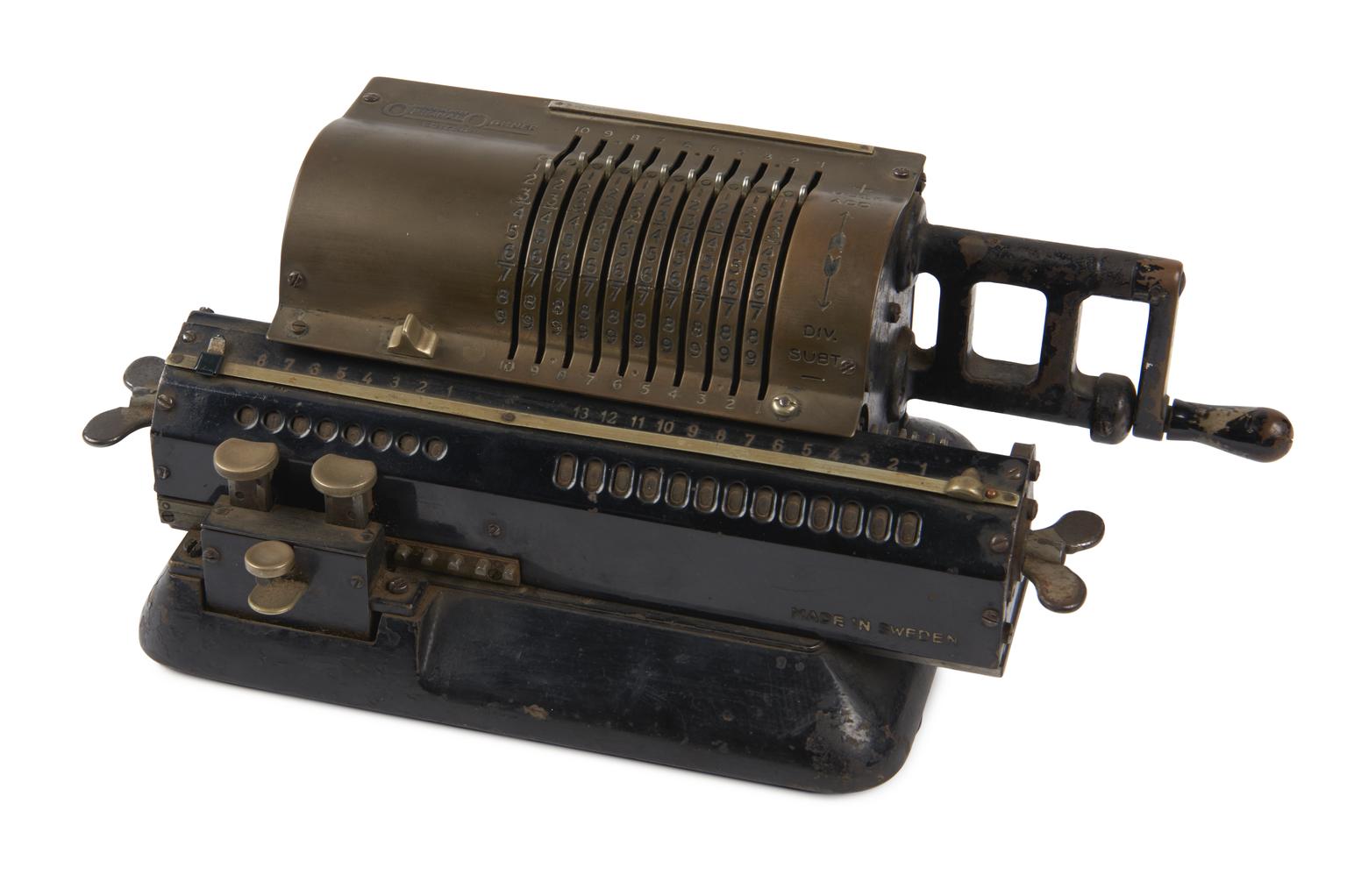
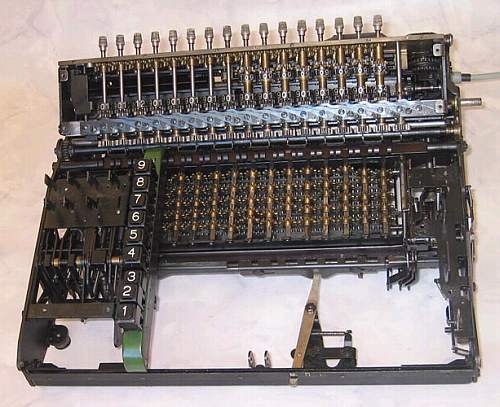
Collectors class a calculating machine first by what it can do and how it is driven, and then by its Schaltwerk, its actuating mechanism, meaning the part that turns a digit on the setting levers into that many steps of a result wheel. By the first measure the Manus is an ordinary machine of its day: a hand-cranked, lever-set, four-function calculator, the kind that sat on thousands of office desks between the wars. By the second it is almost unique. It belongs to a class of one maker, the switching-latch machine (Schaltklinkenmaschine), and no one but Hamann’s company and its successors built four-function calculators that way.
7.1 The four classic mechanisms
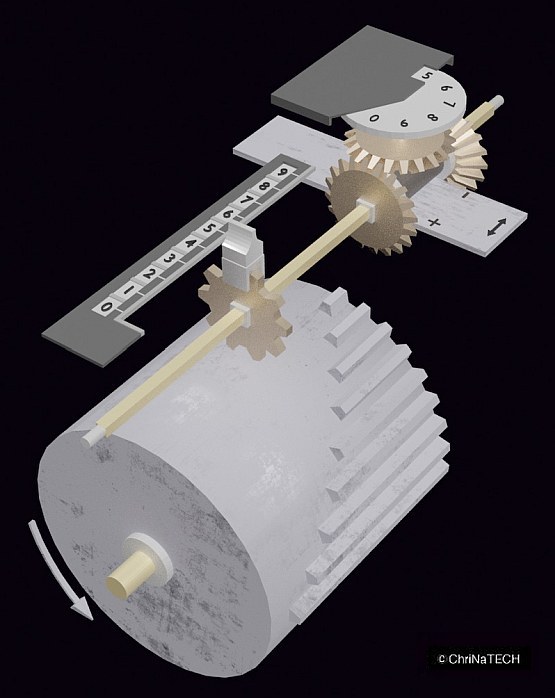
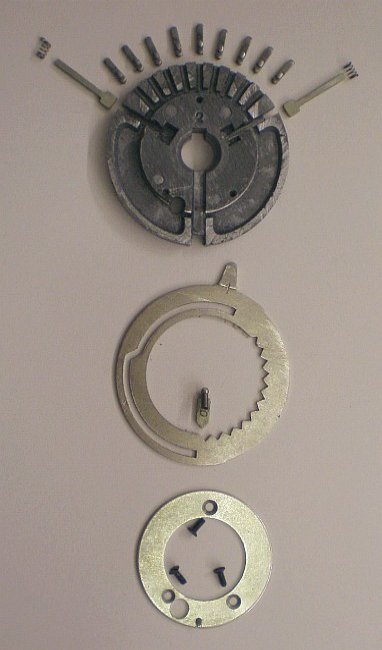
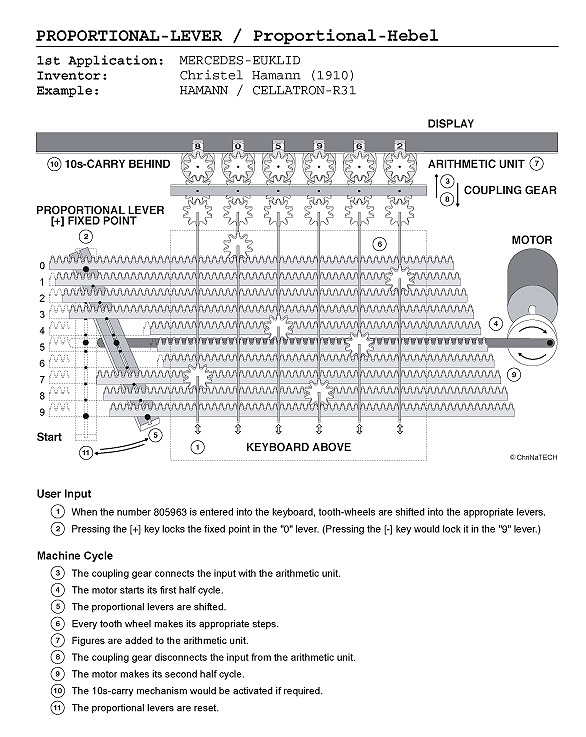
Table 1 — The four classic mechanisms
| Mechanism | How a digit becomes teeth | Classic machines |
|---|---|---|
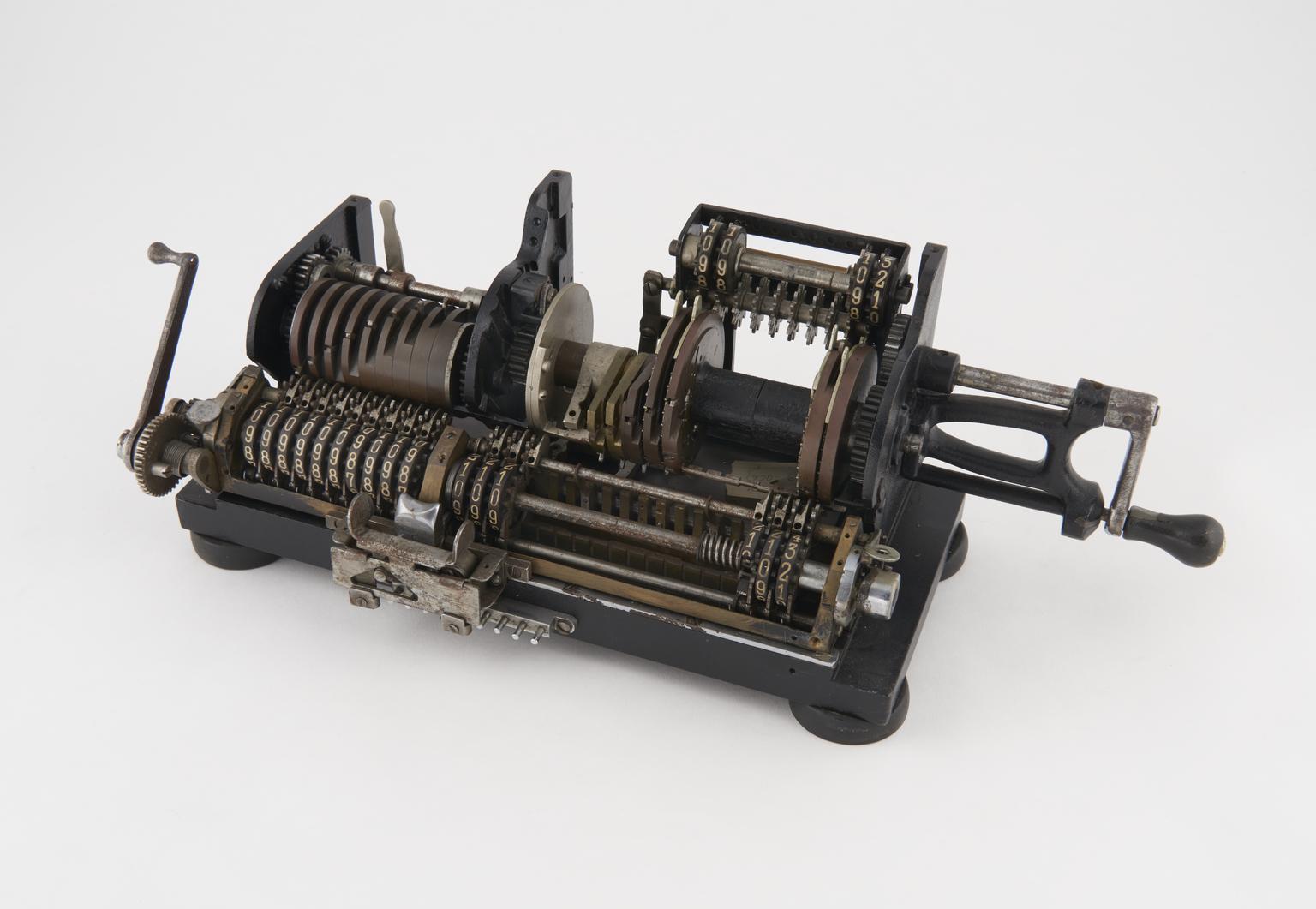
| Stepped drum (Staffelwalze) | a drum with nine teeth of graded length; a pinion slides along it to the digit and is turned by that many teeth | Thomas arithmometer, Burkhardt, Saxonia and Archimedes of Glashütte, the Curta |
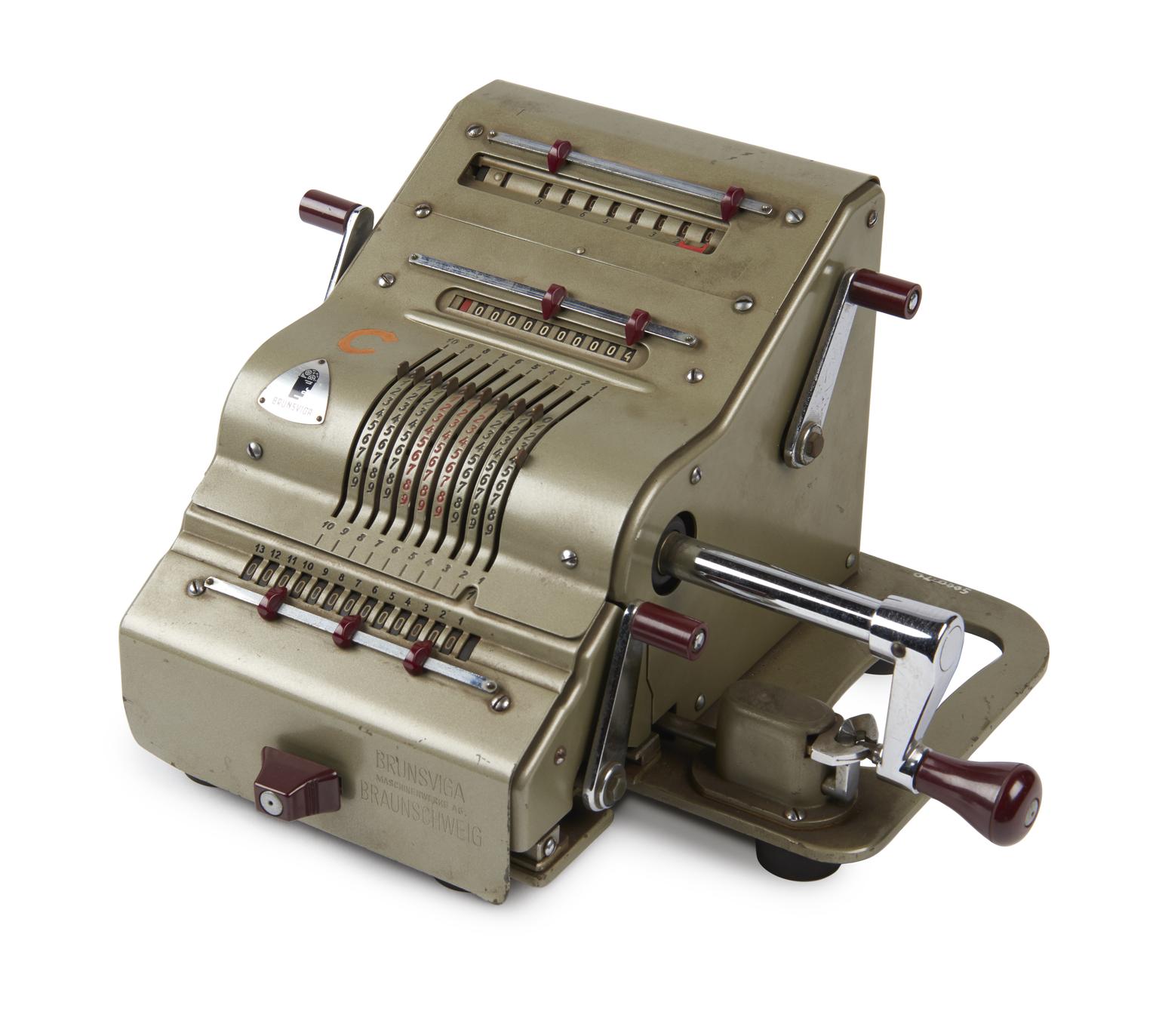
| Pinwheel (Sprossenrad) | a wheel whose teeth slide out: setting the lever pushes out that many teeth, which mesh once per turn | Odhner, Brunsviga, Thales, Walther, Triumphator, Facit |
| Proportional lever (Proportionalhebel) | a lever or rack moved a distance proportional to the digit | Mercedes-Euklid (Hamann’s earlier invention) |
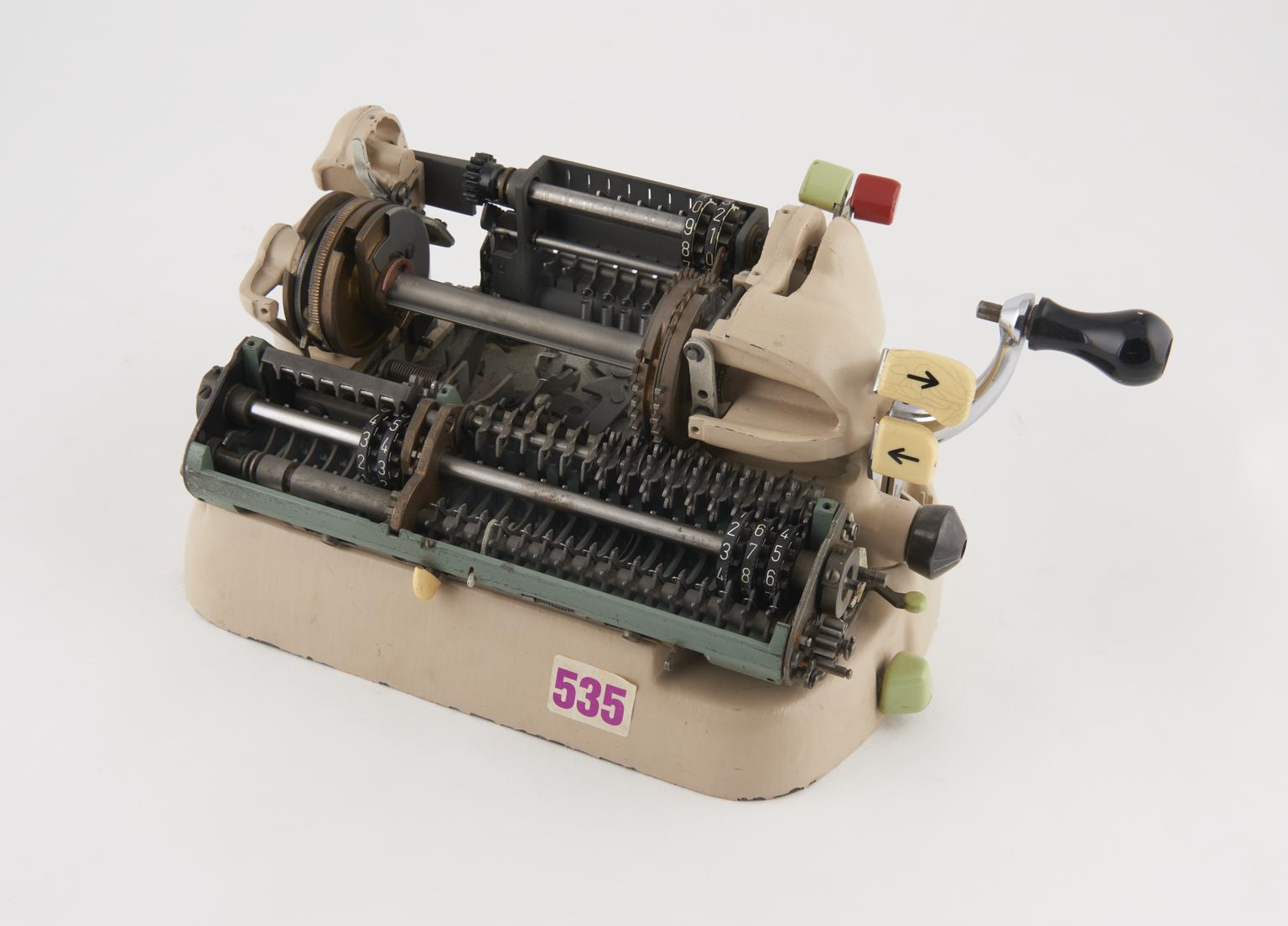
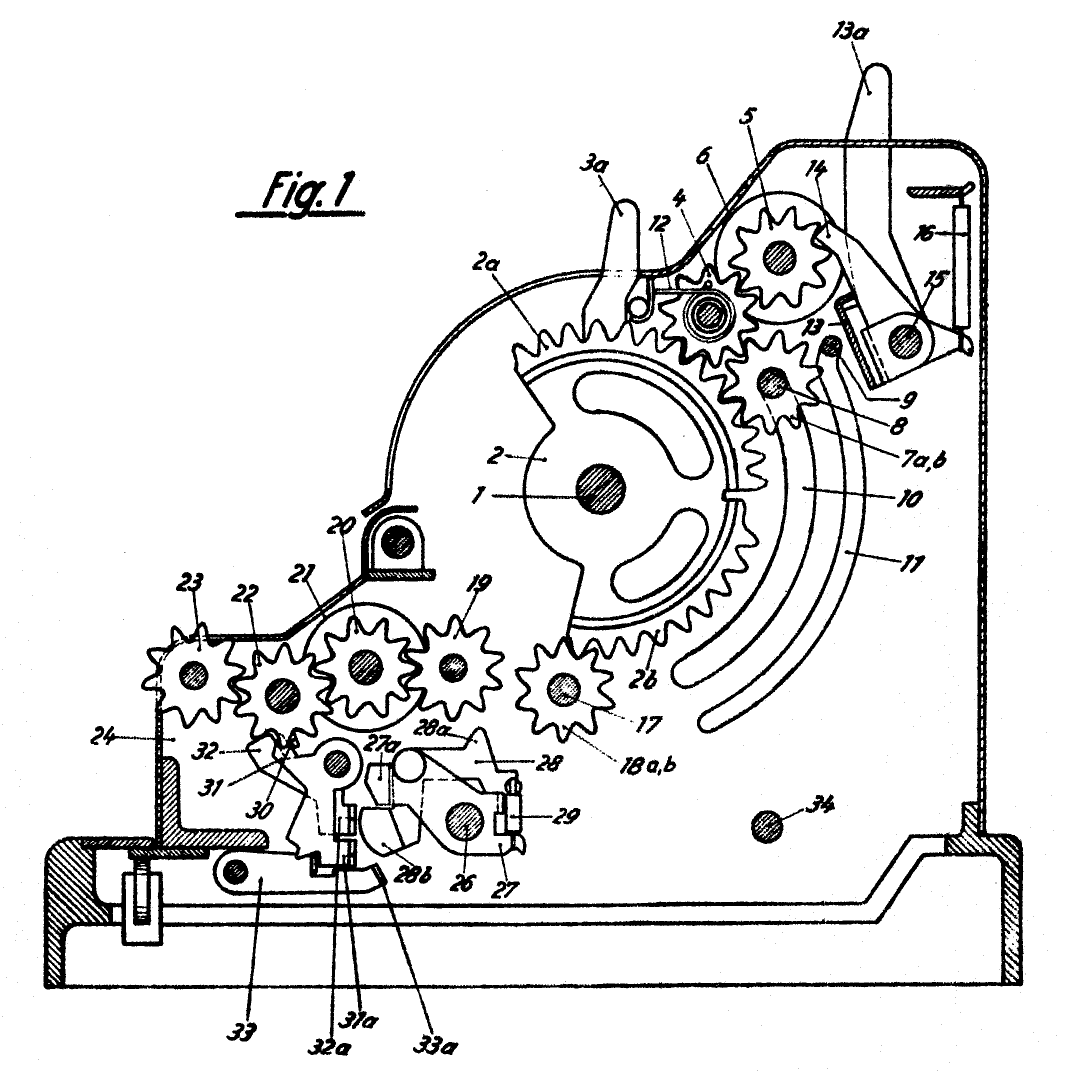
| Switching latch (Schaltklinke) | a full gear wheel, loose on the shaft, coupled to it by a latch for as many teeth as the digit | Hamann Manus and all later Hamann machines |
Peter Haertel’s classification of mechanical calculator mechanisms states it outright: “The inventor of the switching-latch principle is Dr. h.c. Christel Hamann (1870–1948).” His classification credits Hamann with the proportional lever as well, which makes Hamann one of very few designers credited with inventing two of the classic mechanisms.
7.2 What the switching latch gave Hamann
The 1920 patent lists the advantages Hamann wanted, and the Manus delivered them:
- Ordinary gear teeth throughout, in place of pinwheel teeth sliding in slots, for “the quietest possible running” and long wear.
- Setting parts that stand still while the machine runs, so the number set can be read in windows. On a pinwheel machine the setting turns with the drum.
- One crank direction for everything, with subtraction done by a reversing gear. A pinwheel machine subtracts by turning backwards.
- Places driven one after another, which keeps the crank light and makes the drum’s own tens carry possible.
- Automatic division, because the machine can detect its own overdraft and move its own carriage.
The cost was complexity. A pinwheel drum can be lifted out, cleaned and dropped back in an afternoon. A switching-latch drum, as the repair volume explains, cannot.
The Arithmeum in Bonn notes that Hamann was not the first to try latches: “Hamann was the first to successfully use this mechanism in calculating machines manufactured in series production. The switching latches that Dietzschold and Weiss had developed before … never got beyond the stage of a prototype.” The ratchet principle also appears in simple adding devices, which Rechnerlexikon files under the same heading, but those are adders, not four-function calculators.
7.3 The competitors
The Manus was built to look like the pinwheel machines it competed with. These were its rivals on the office desk.
Table 2 — The competitors
| Make | Where and when | Mechanism | Difference from the Manus |
|---|---|---|---|
| Odhner / Original-Odhner | St Petersburg from 1890; Göteborg from 1917 | pinwheel | crank turned backwards to subtract; division by hand. The Manus copied its outward form and dimensions |
| Brunsviga | Grimme, Natalis & Co., Braunschweig, from 1892 (Odhner licence); Brunsviga Maschinenwerke 1927; to Olympia 1959 | pinwheel | the market leader in Germany; reverse crank; no automatic division on hand models |
| Thales | Thaleswerk, Rastatt; model A from 1911 into the 1950s | pinwheel | as the Brunsviga |
| Triumphator | Leipzig, 1904–1965; about 380,000 made | pinwheel | large production; nationalised after 1948 |
| Walther | Zella-Mehlis, later Niederstotzingen | pinwheel | built pinwheel machines for Mercedes in the 1920s–30s; post-war WSR “Schnellrechner” with back-transfer |
| Facit | Stockholm 1918, Åtvidaberg from 1922 | pinwheel | ten-key setting from 1932 |
| Archimedes | Reinhold Pöthig, Glashütte | stepped drum | slide setting, stepped drums |
| Mercedes-Euklid | Mercedes Büromaschinen, Zella-Mehlis | proportional lever | Hamann’s earlier design; heavier office machine, automatic division from 1915 |
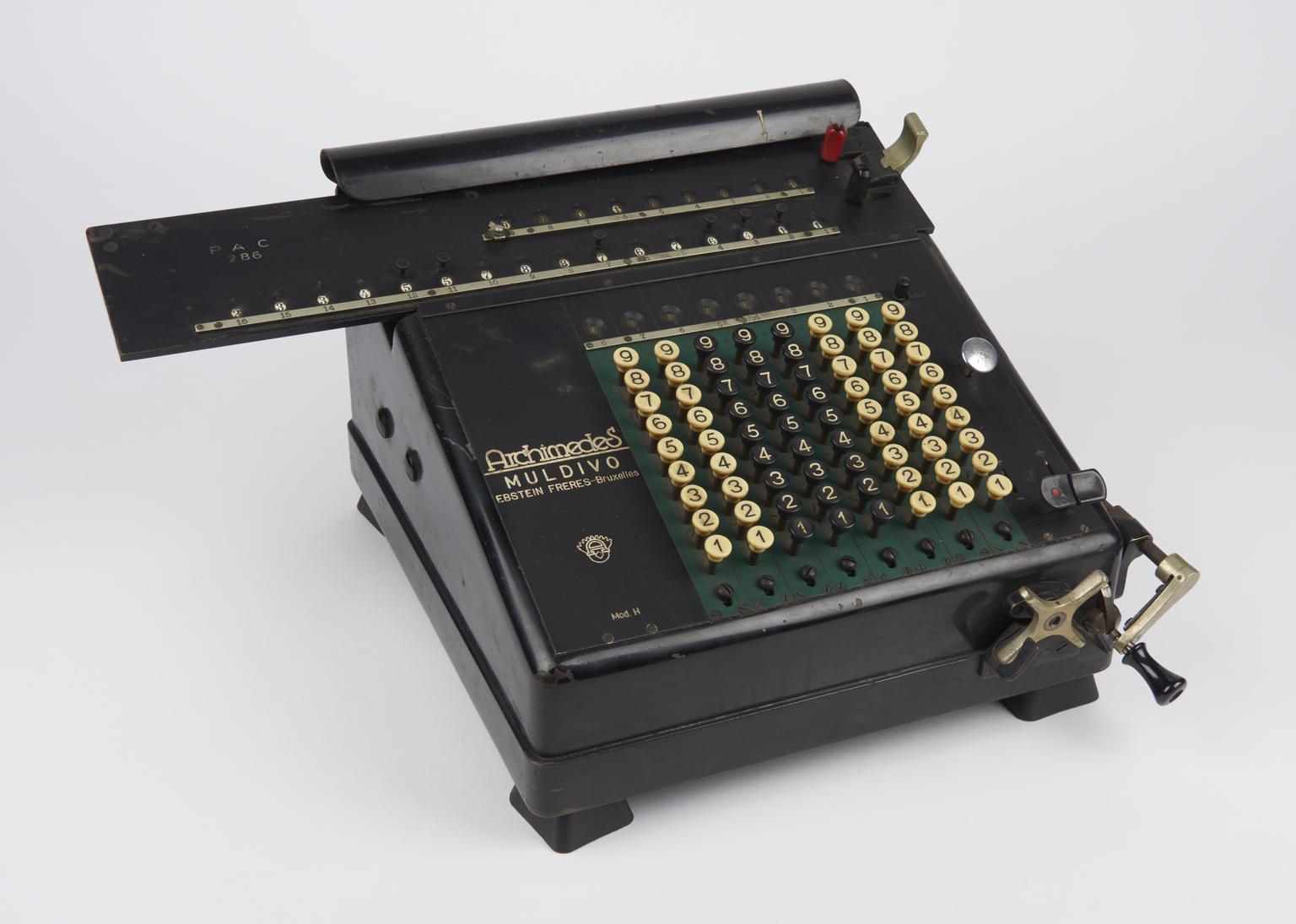
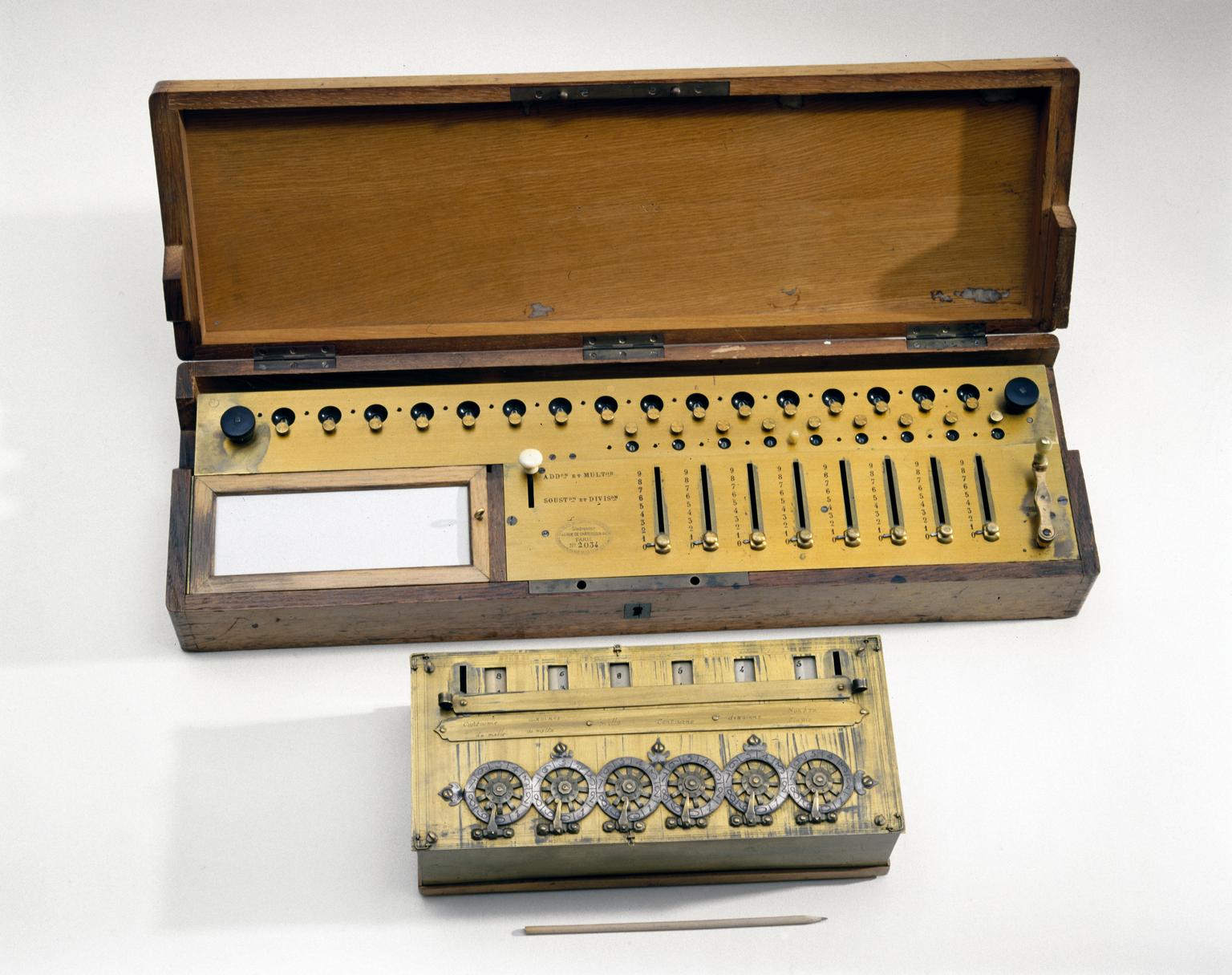
The German calculator industry was concentrated in a few towns: Glashütte in Saxony (Burkhardt, Saxonia, Archimedes), Braunschweig (Brunsviga), Leipzig (Triumphator), Zella-Mehlis (Mercedes, Walther), Rastatt (Thales) and Berlin, where DeTeWe built the Hamanns in its telephone works.
7.4 Hamann’s other machines
Every Hamann machine after 1925 used the switching latch. The line, as far as it can be reconstructed:
Table 3 — Every Hamann machine after 1925 used the switching latch. The line, as far as it can be reconstructed
| Machine | Years | Capacity | Notes |
|---|---|---|---|
| Manus A–F, R | 1925–1959 | 9 × 8 × 13 | the hand-cranked lever-set machine; R with back-transfer |
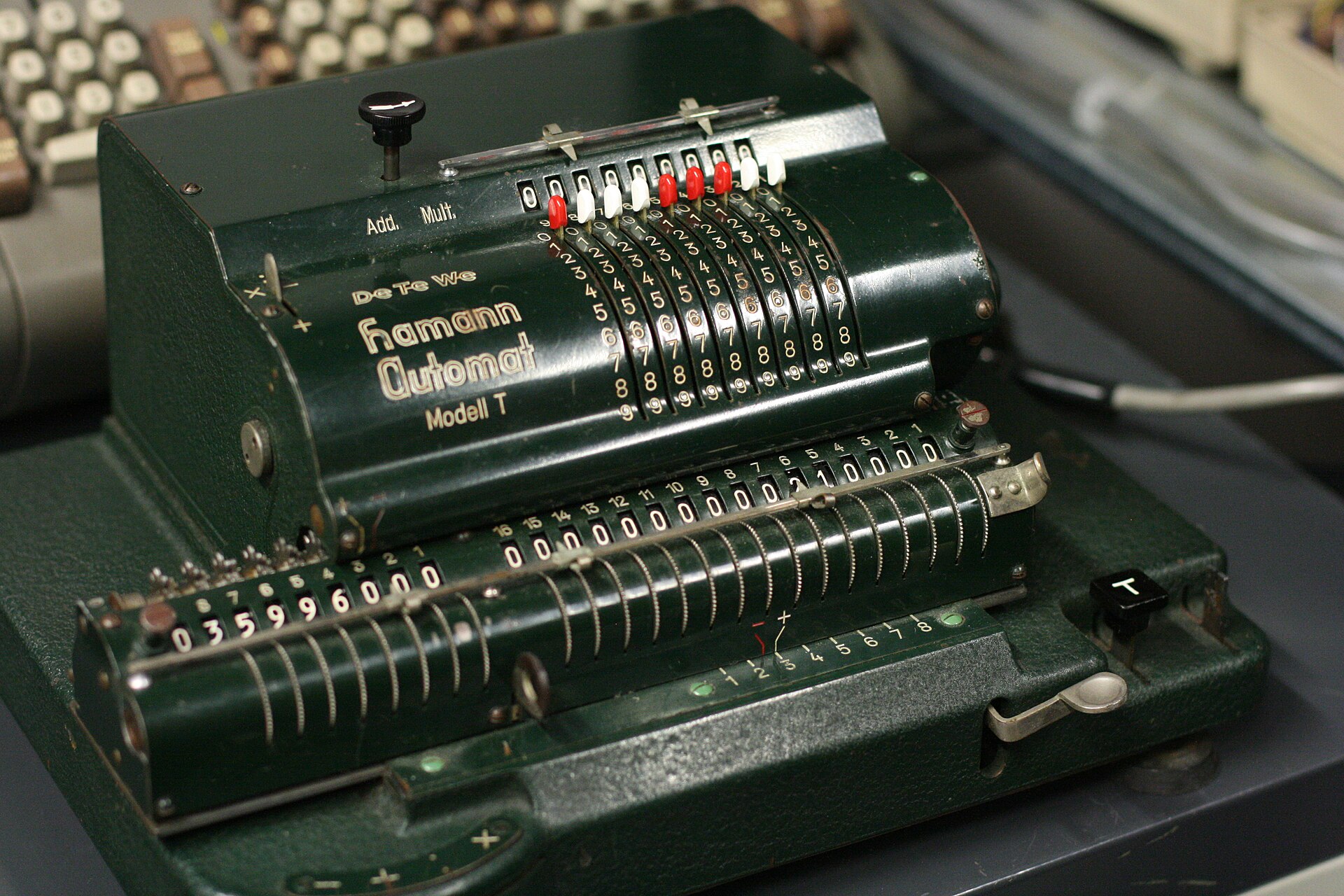
| Automat (Z, Y, X, V) | from c. 1930 | — | electric, automatic multiplication (US 1,968,201); the V with short-cut multiplication |
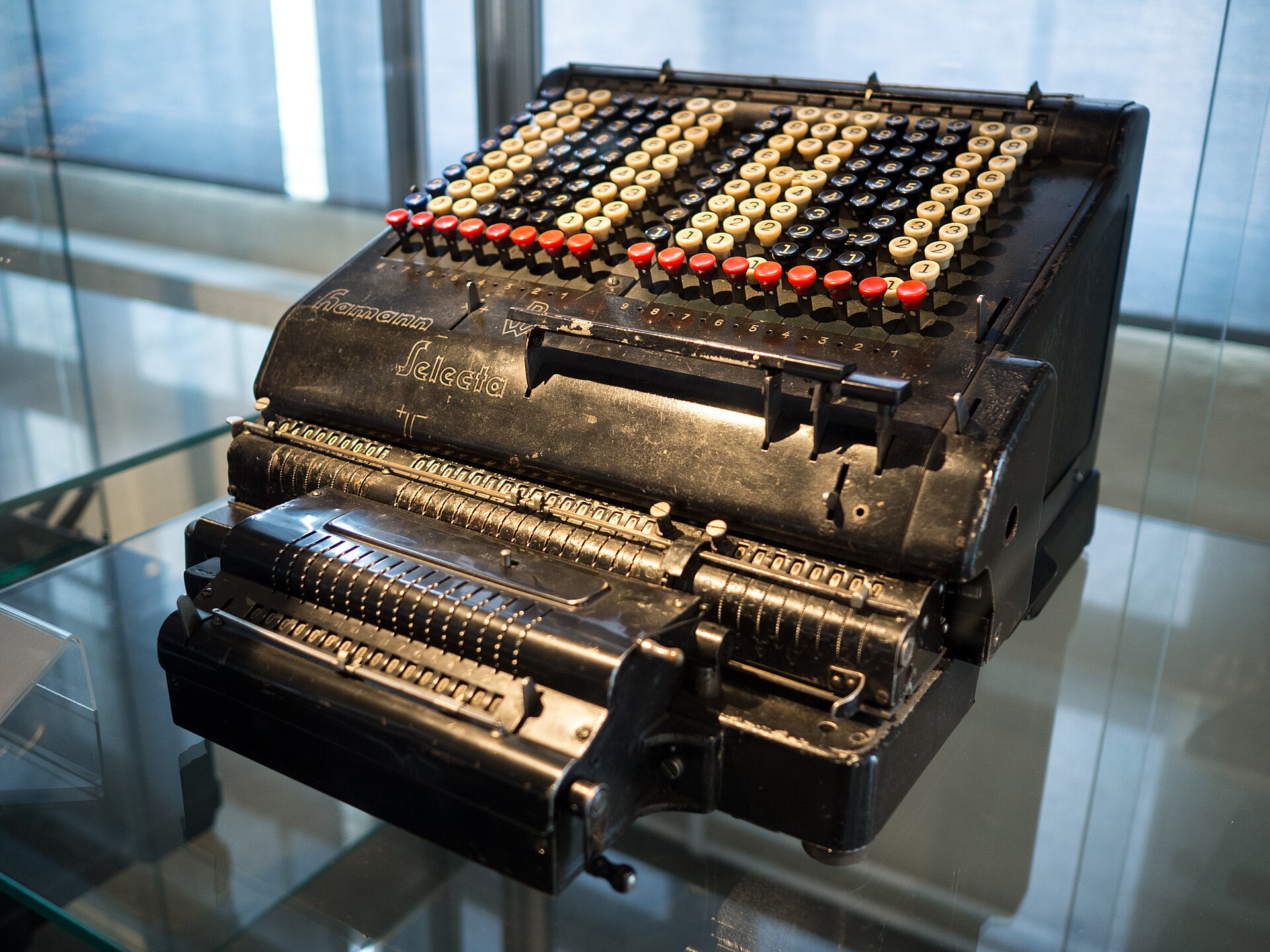
| Selecta | 1931–46 | 9 + 8 × 9 × 16 | electric, two full keyboards (multiplicand and multiplier); about 5,000 made |
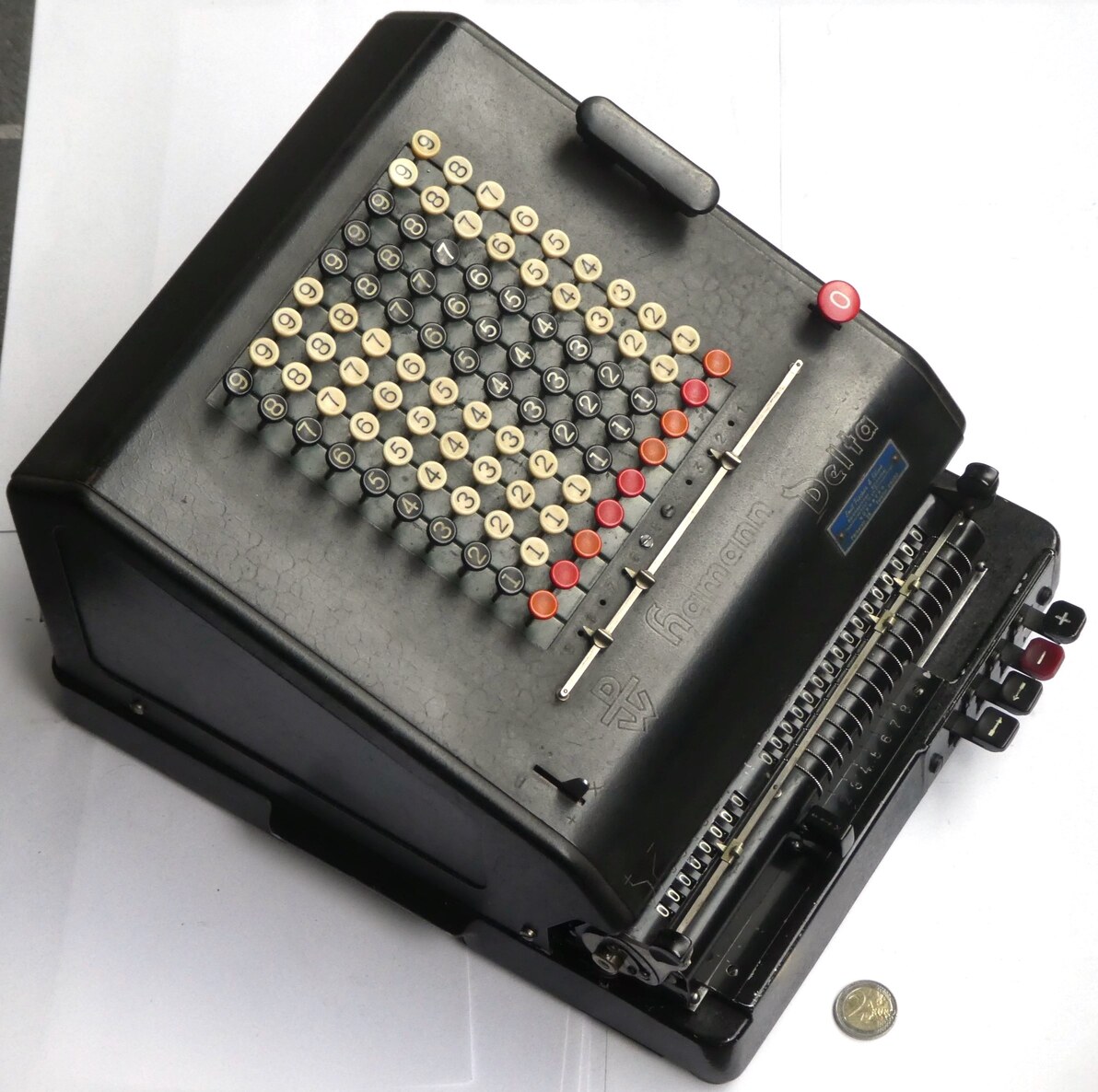
| Delta | from 1934 | 9 × 8 × 16 / 13 × 8 × 16 | full keyboard, motor, automatic division; about 1,200–1,500 made |
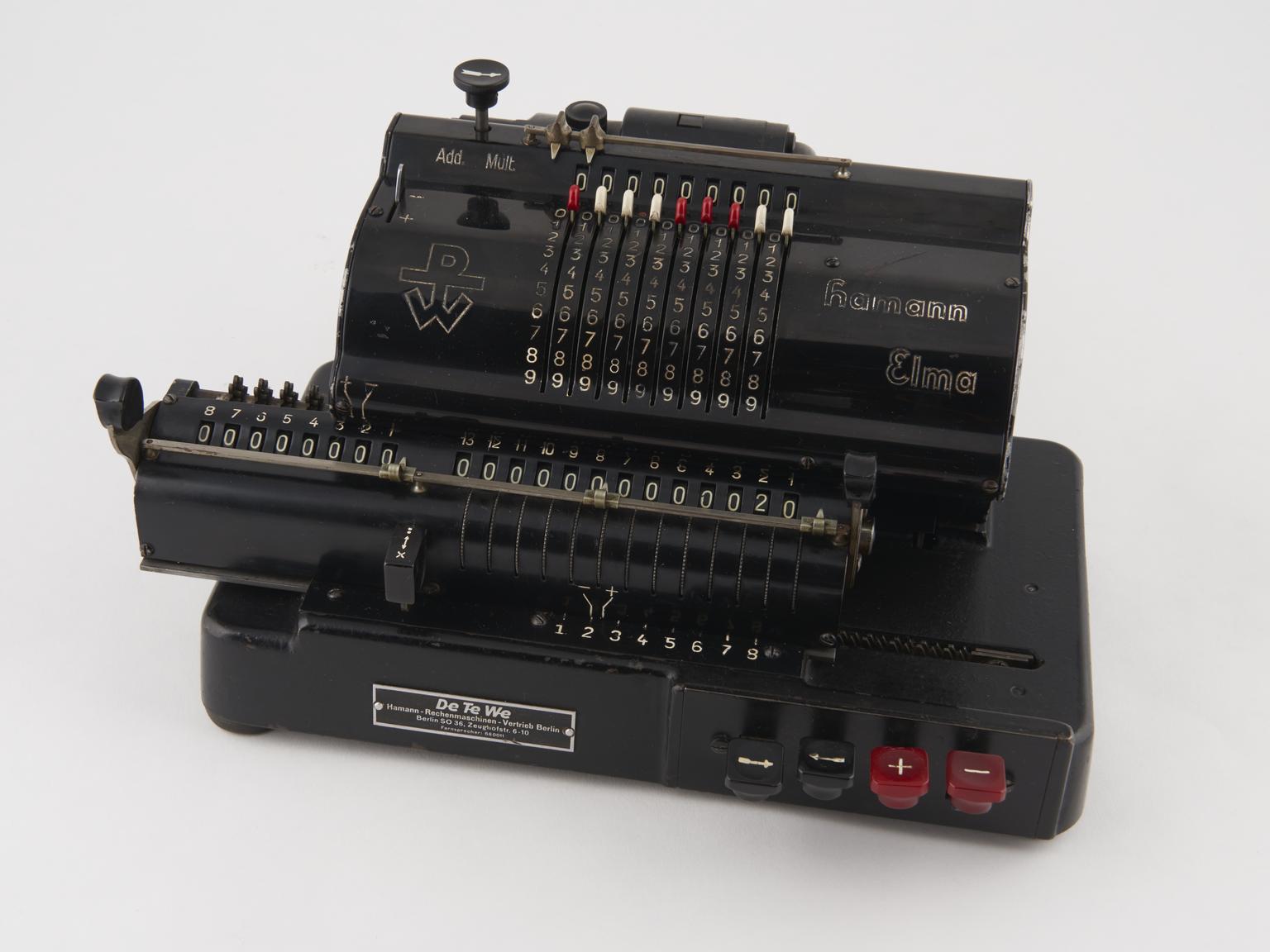
| Elma | 1930s–40s | 9 × 8 × 13 | essentially a Manus with an electric motor as well as a crank; about 7,000 made |
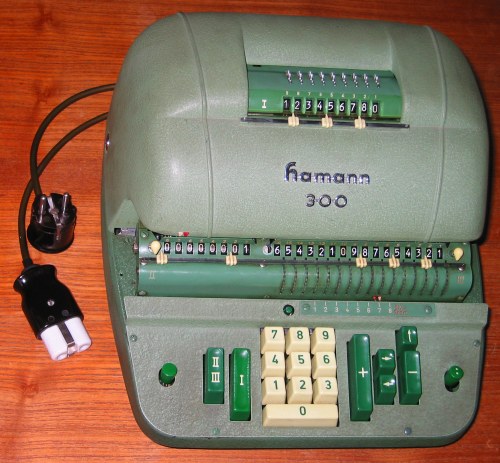
| Hamann 300 | 1953–59 | 9 × 8 × 16 | ten-key keyboard, double back-transfer; DM 1,980 in 1958 |
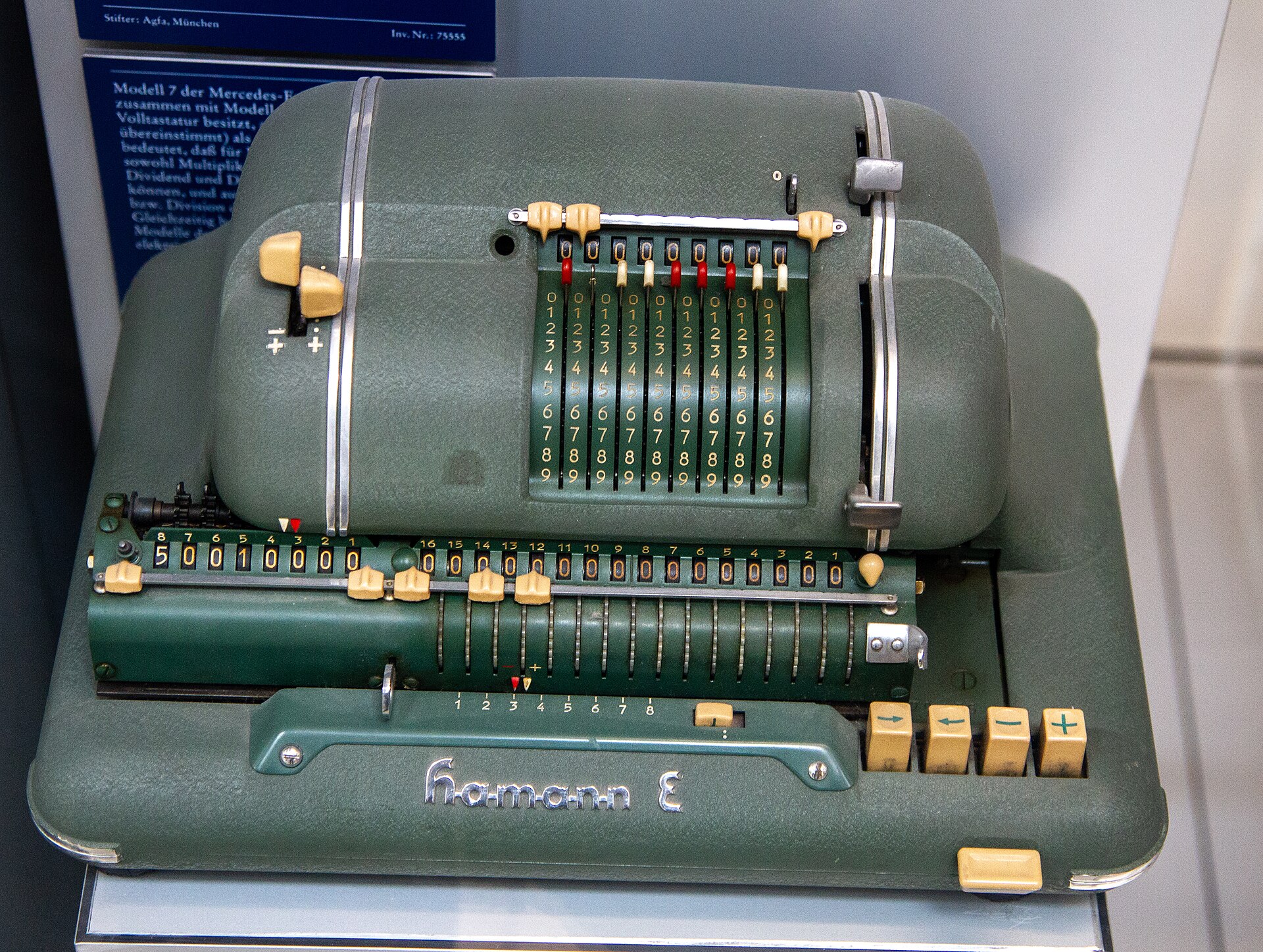
| Hamann E | 1953–59 | 9 × 8 × 16 | electric keyboard machine (not the Manus E); about 5,100 made |
| Automat S | 1954–58 | 9 × 8 × 16 | electric, automatic carriage; DM 1,750 in 1958 |
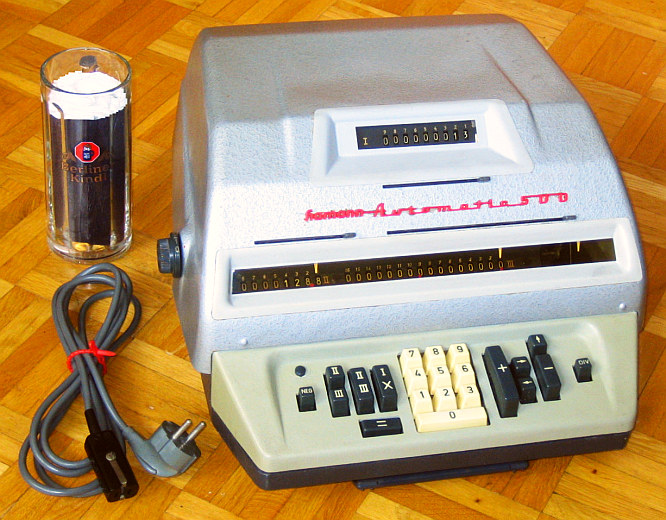
| Automatic 500 | 1959–62 | 9 × 8 × 16 | sold in America as the Marchant Tenkeymatic |
| 505 | 1962–68 | — | the last non-printing Hamann |
7.5 How it ended
The Manus R was the cheap end of DeTeWe’s range by the 1950s: DM 598 in 1958, against DM 1,000–2,000 for the electric keyboard machines. In 1958 DeTeWe sold the calculating-machine works to the American firm Marchant, and the business continued as Hamann Rechenmaschinen GmbH, later SCM Deutschland. One account says Siemens bought DeTeWe in 1959 and then sought a buyer for Hamann; the German sources do not confirm that. The Manus R ended in 1959, the same year the Automatic 500 appeared. Electronics finished the rest: the last Hamann, the 505, was made until 1968.
The switching latch went with it. Unlike the pinwheel and the stepped drum, which every maker used, it had only ever belonged to one designer.
Comments (0)