Pocket Computers · Volume 3
The Pocket Computers, 1980–2015
For about five years after the PC-1211, every maker of calculators and several makers of computers tried a pocket computer. Sharp made the most and made them longest; Casio made the cheapest; Hewlett-Packard and Texas Instruments made the most ambitious. Radio Shack, which made none of its own, sold eight of them under the TRS-80 and Tandy names. By the late 1980s the Western market had faded, but in Japan the pocket computer became a school tool and stayed in production until 2015.
3.1 Radio Shack’s eight
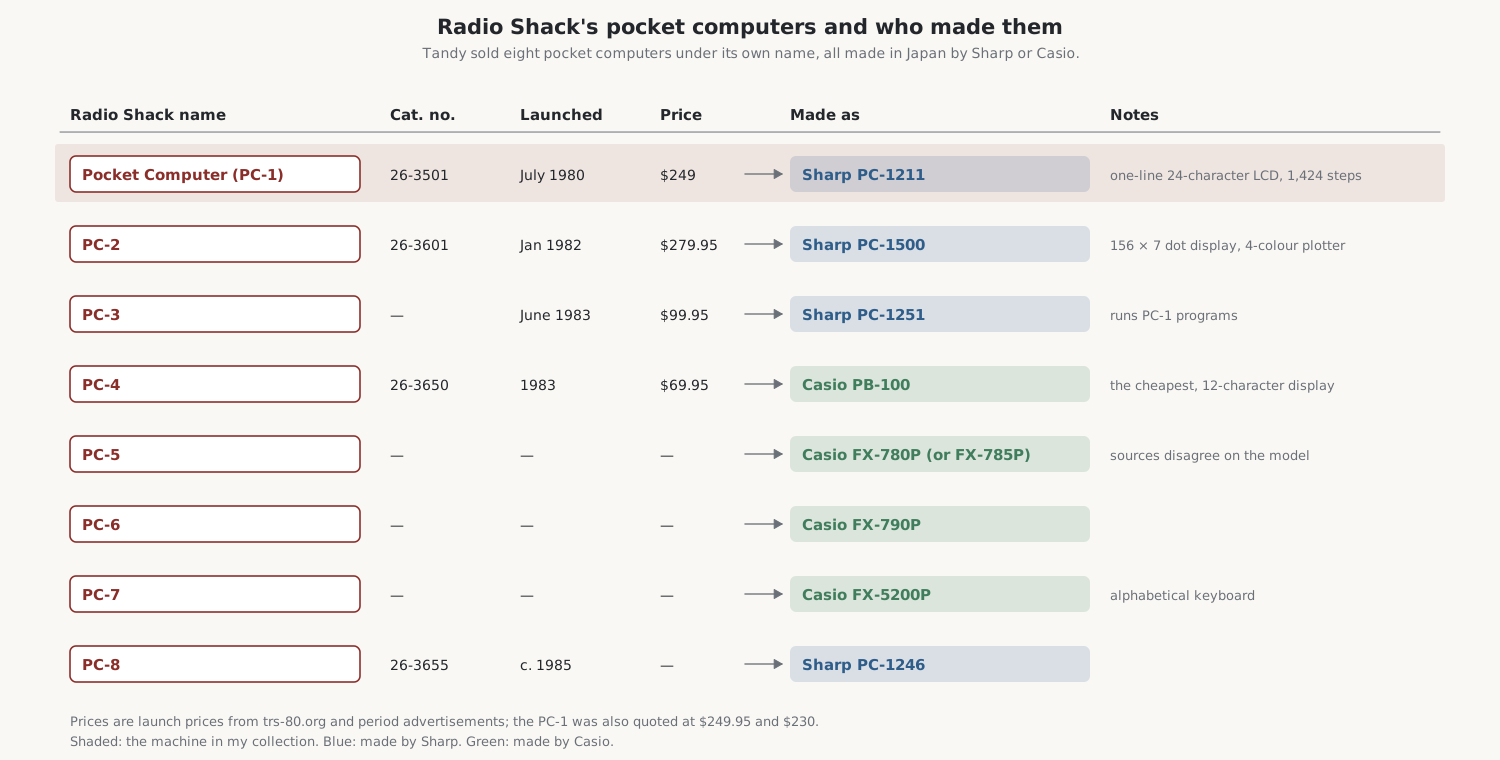
Radio Shack named its first machine simply the Pocket Computer and numbered the rest:
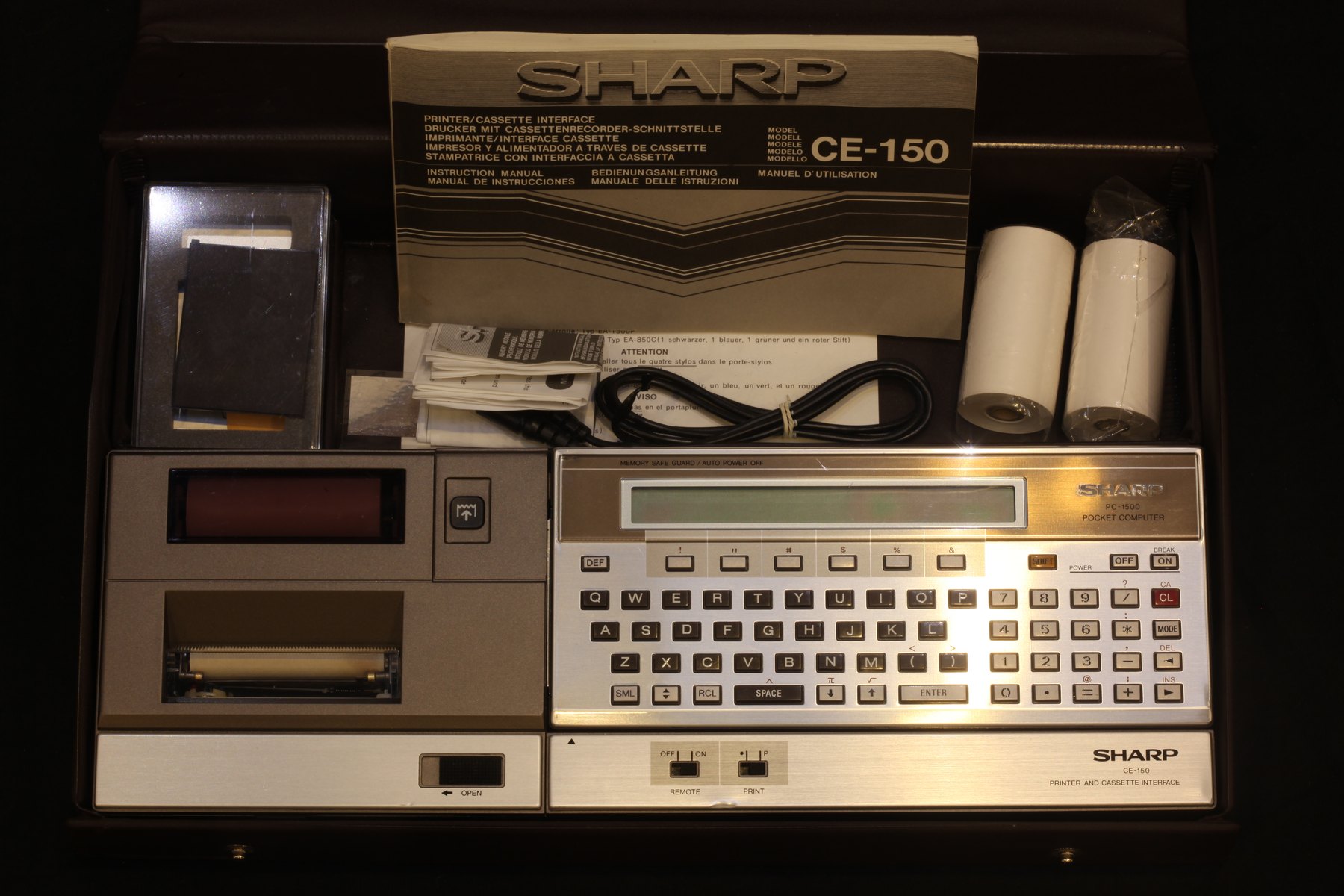
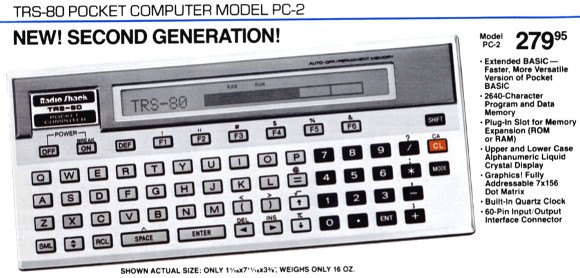
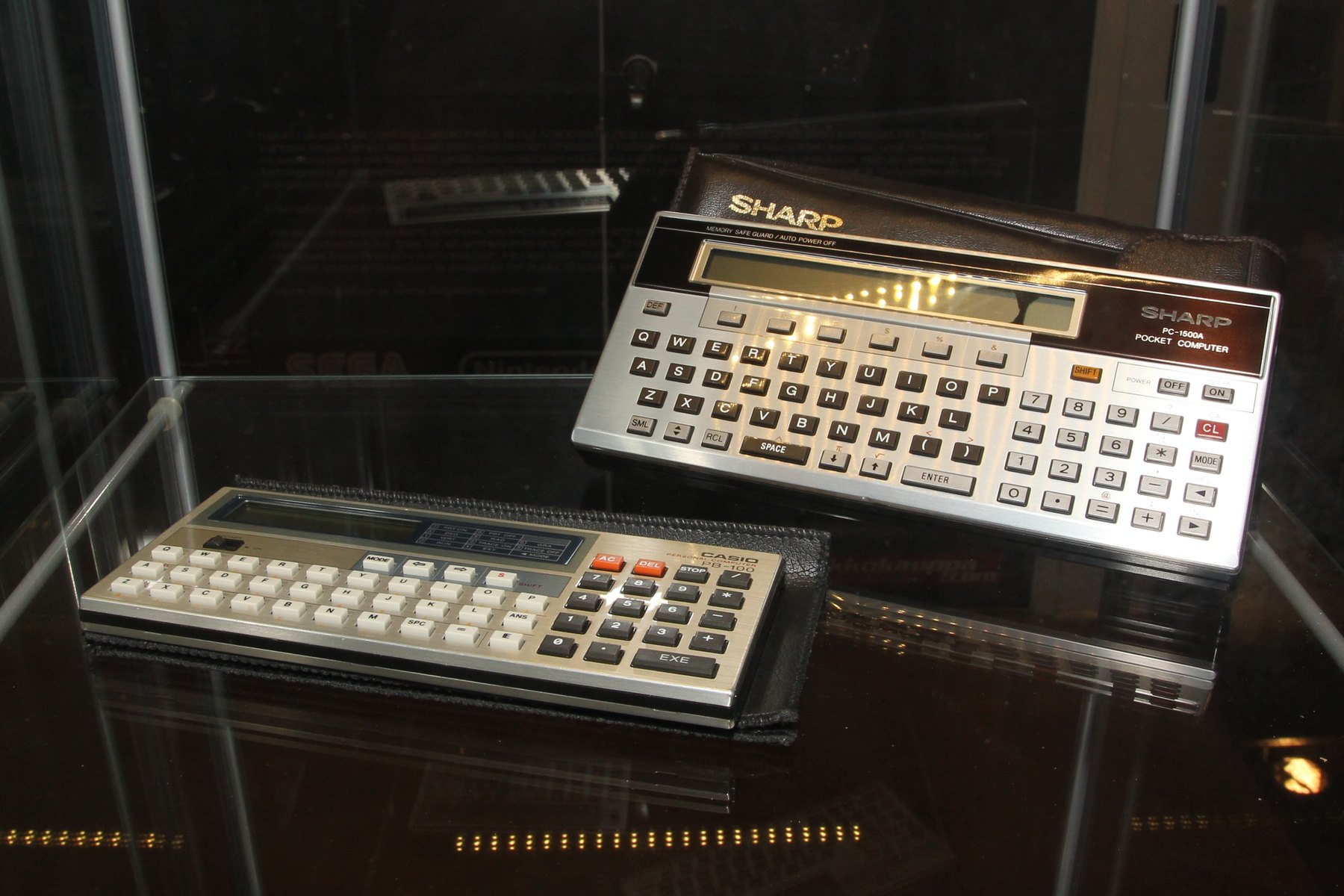
- PC-2 (26-3601, January 1982, $279.95): the Sharp PC-1500, with a 16 KB ROM holding “Extended Pocket BASIC”, 2,640 bytes for the user, plug-in 4 KB and 8 KB modules, a printer, plotter and dual-cassette interface (26-3605, $239.95) and an RS-232C interface. It was the only Tandy pocket computer with PEEK, POKE and CALL, so its owners could reach machine code.
- PC-3 (June 1983, $99.95): the Sharp PC-1251, which ran programs written for the PC-1.
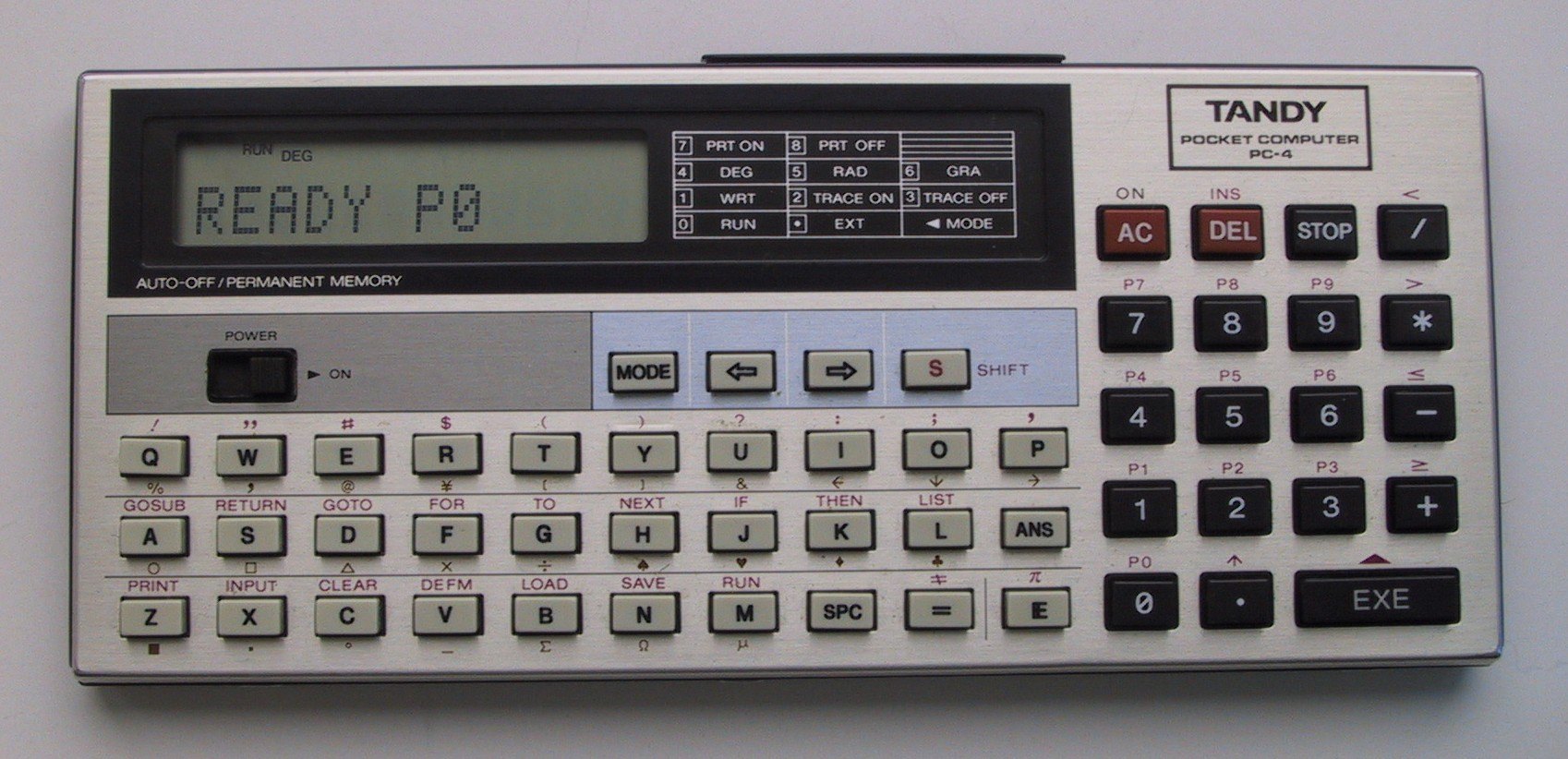
- PC-4 (26-3650, 1983, $69.95): the Casio PB-100, the cheapest.
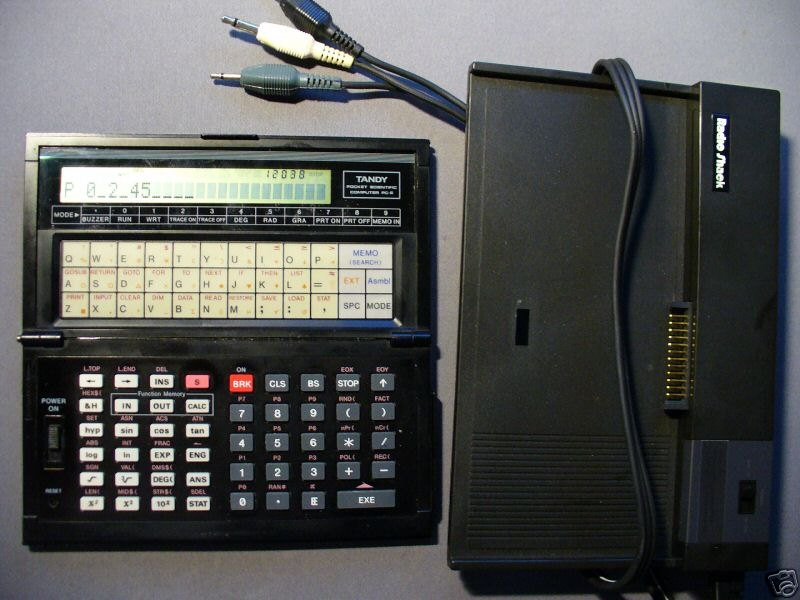
- PC-5, PC-6 and PC-7: Casio’s FX-780P (or FX-785P; the sources differ), FX-790P and FX-5200P.
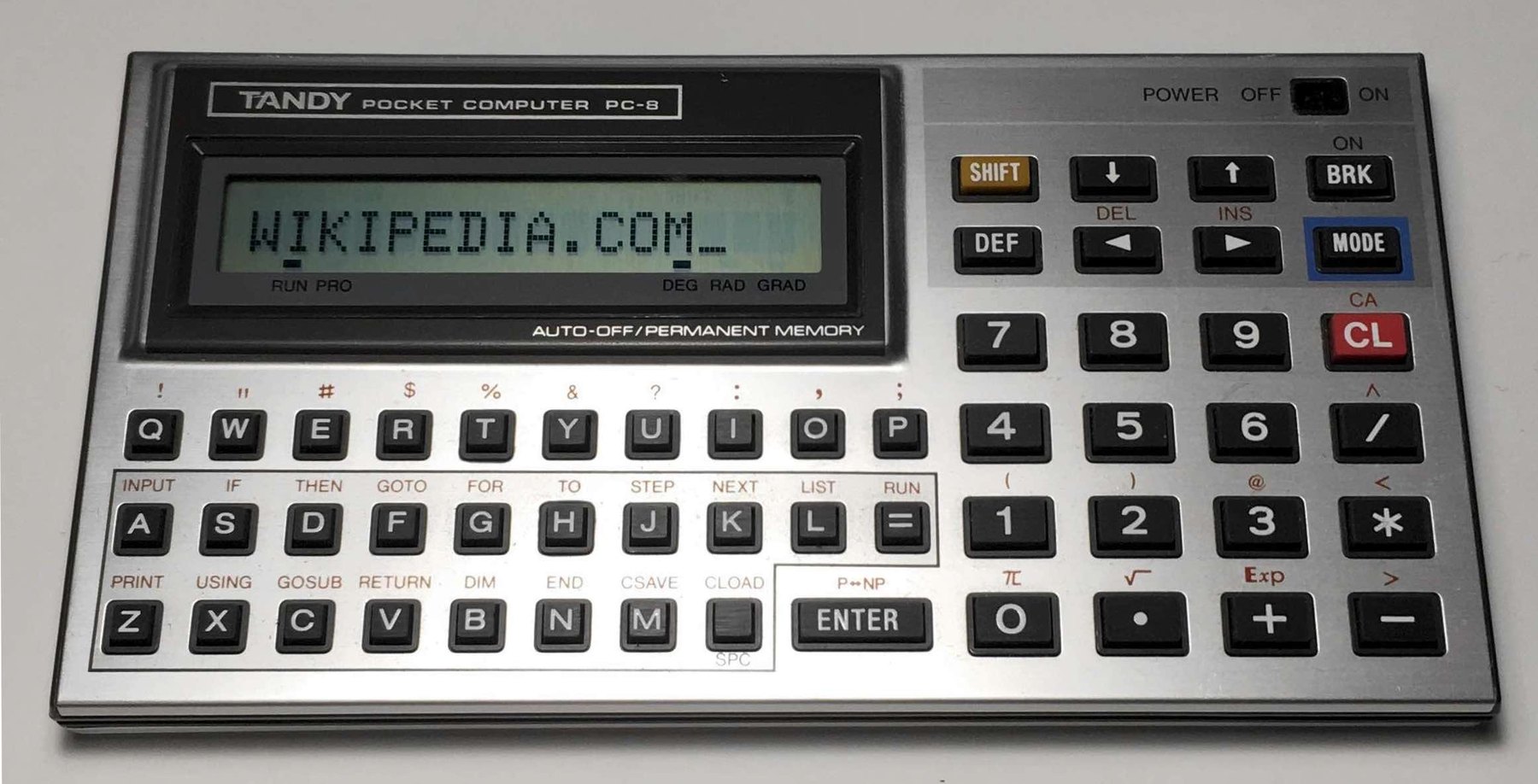
- PC-8 (26-3655, about 1985): the Sharp PC-1246.
3.2 Sharp
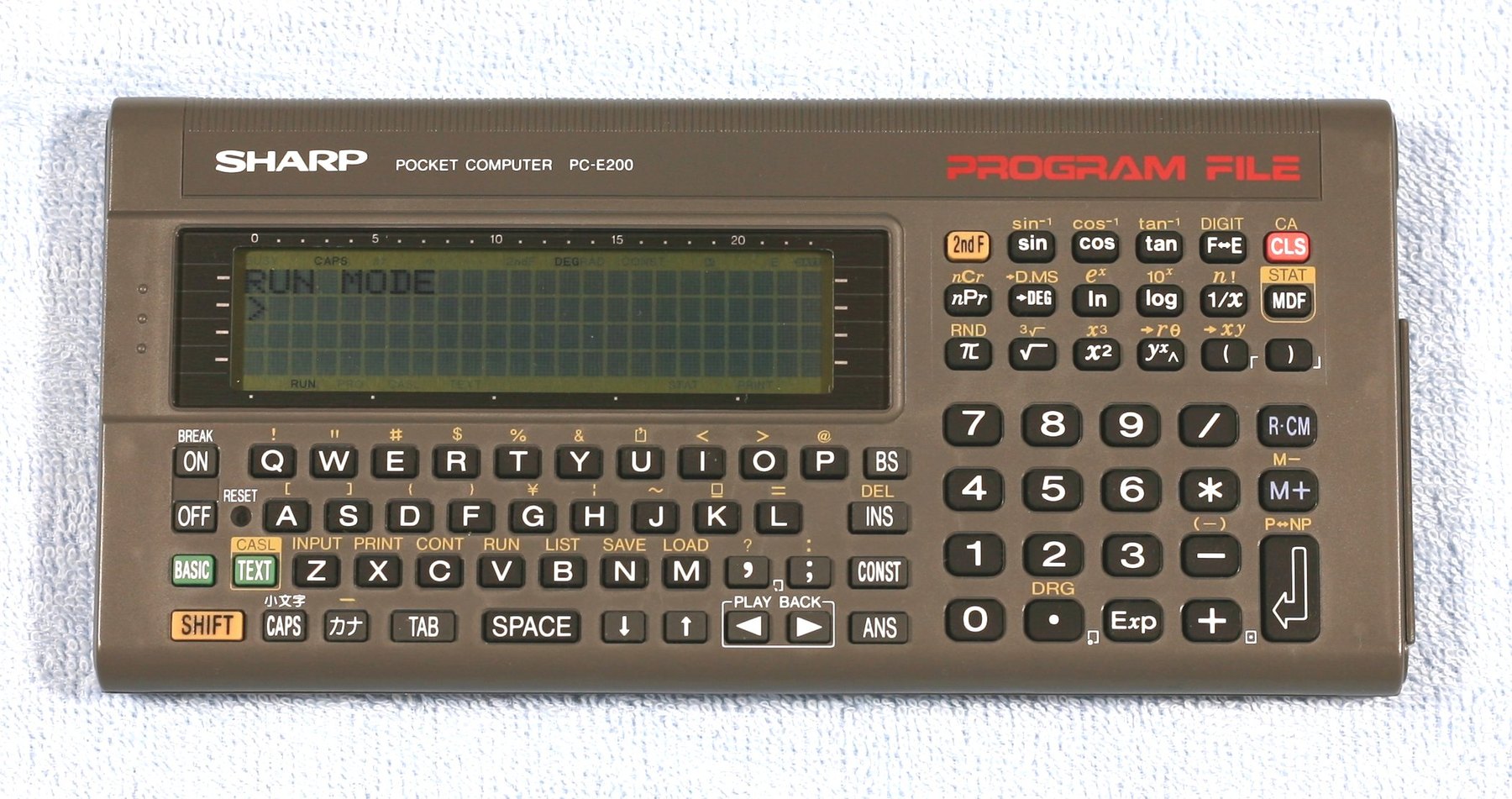
Sharp made more pocket computers than anyone else, in two lines from two groups: the small machines from its calculator group at Nara, and the PC-1500 and PC-1600 from its computer group in Osaka. Dates and prices below are from Bill Symmes’s list at sharppocketcomputers.com and Roland Saam’s history, which do not always agree.
Table 1 — Sharp
| Model | Year | Notes |
|---|---|---|
| PC-1210, PC-1211, PC-1212 | 1980 | the first; 400 and 1,424 steps; the PC-1211 became Radio Shack’s PC-1 |
| PC-1500 | 1981 or January 1982 | LH5801 8-bit CMOS processor at 1.3 MHz, 156 × 7 dot display, CE-150 four-colour plotter; the PC-2 |
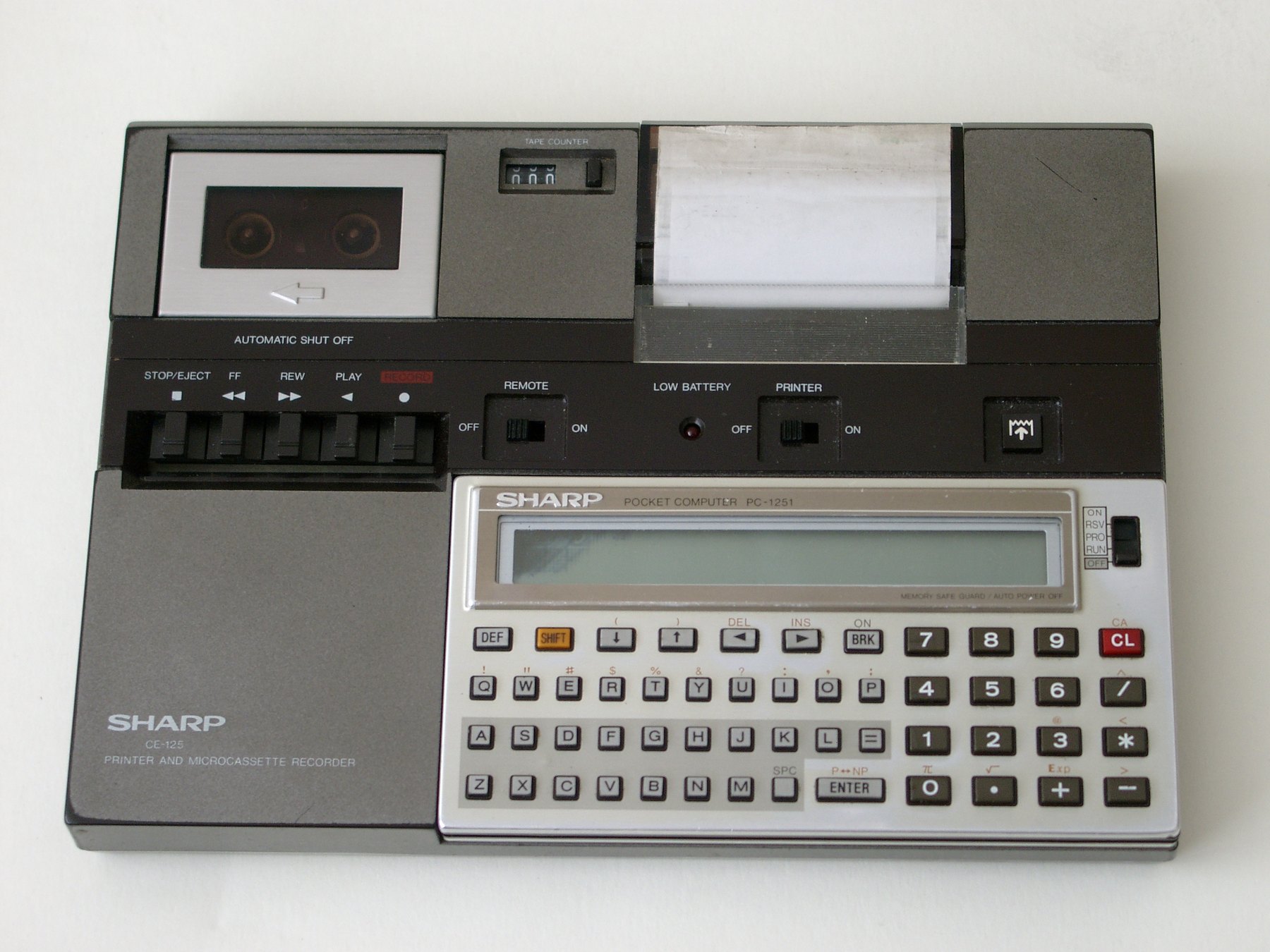
| PC-1245, PC-1250, PC-1251 | 1982–83 | SC61860 8-bit processor, about $75–145; the PC-1251 became the PC-3 |
| PC-1401, PC-1402 | 1982–83 | a scientific calculator and a BASIC computer in one case |
| PC-1260, PC-1261 | 1984 | two-line display |
| PC-1350 | 1984–85 | four-line display |
| PC-1450 | 1985 | $134.95 |
| PC-1270 | 1986 | a run-only machine for dealers’ software, made unchanged until 1999 |
| PC-1600 | 1986 | a Z80-compatible processor plus a second processor to run PC-1500 programs; four-line display; about $450–489 |
| PC-1403 | 1986–87 | successor to the PC-1401, $99.95 |
| PC-1475 | 1987 | 20-digit precision and matrix functions |
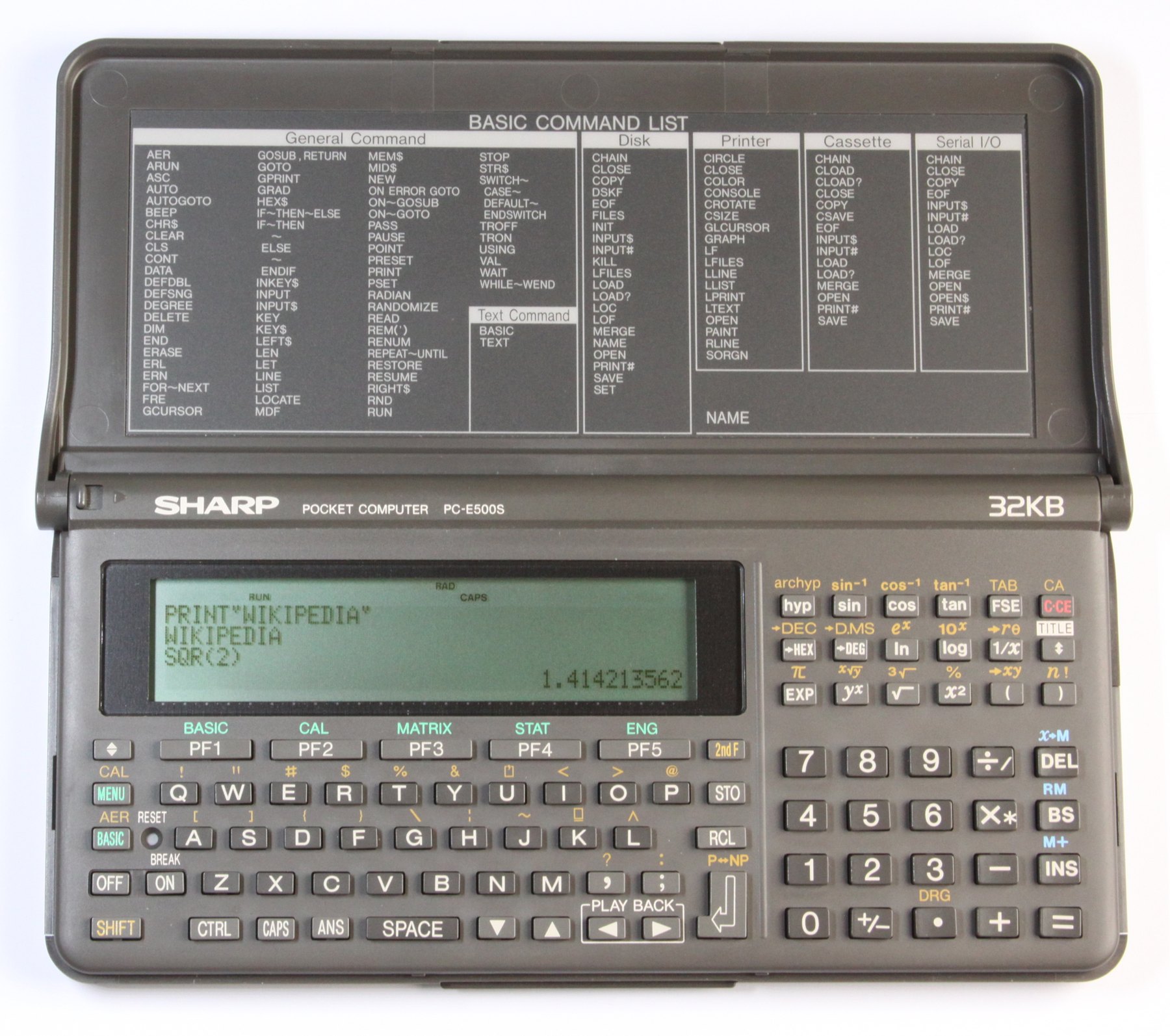
| PC-E500 | 1989 | the PC-E500S followed in 1993 |
| PC-1360 | 1991 | $249 |
| PC-U6000 | 1993 | 4 × 40 display, 256 KB ROM, $650 |
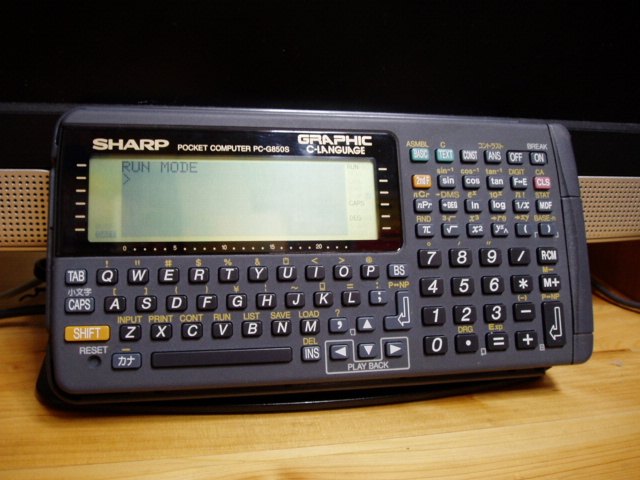
| PC-G850 | 2001 | 24 × 6 dot-matrix display, Z80-compatible; BASIC and a simple C compiler |
| PC-G850VS | 2009 | the last; sold as a pocket computer “for technical education in schools” |
3.3 Casio
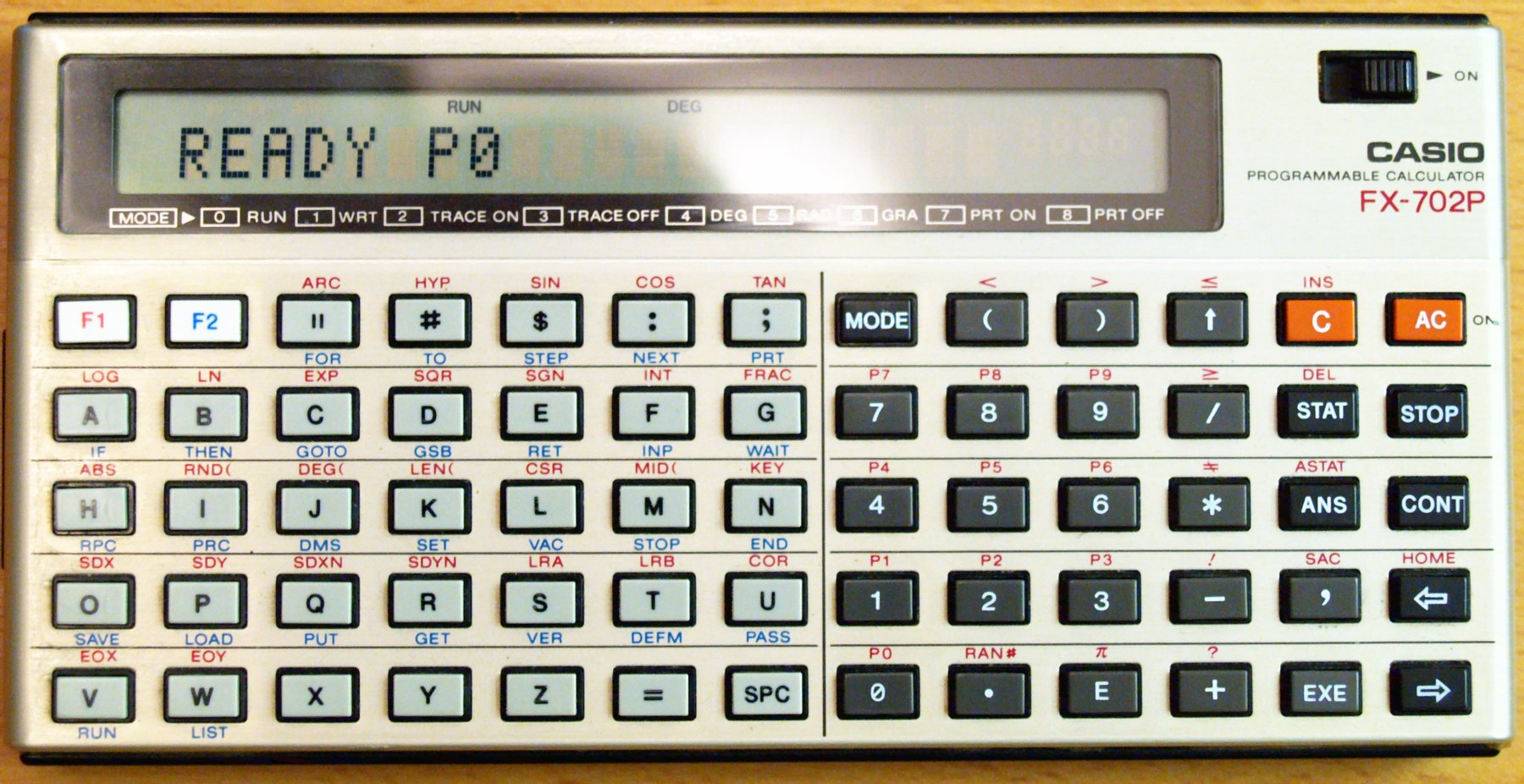
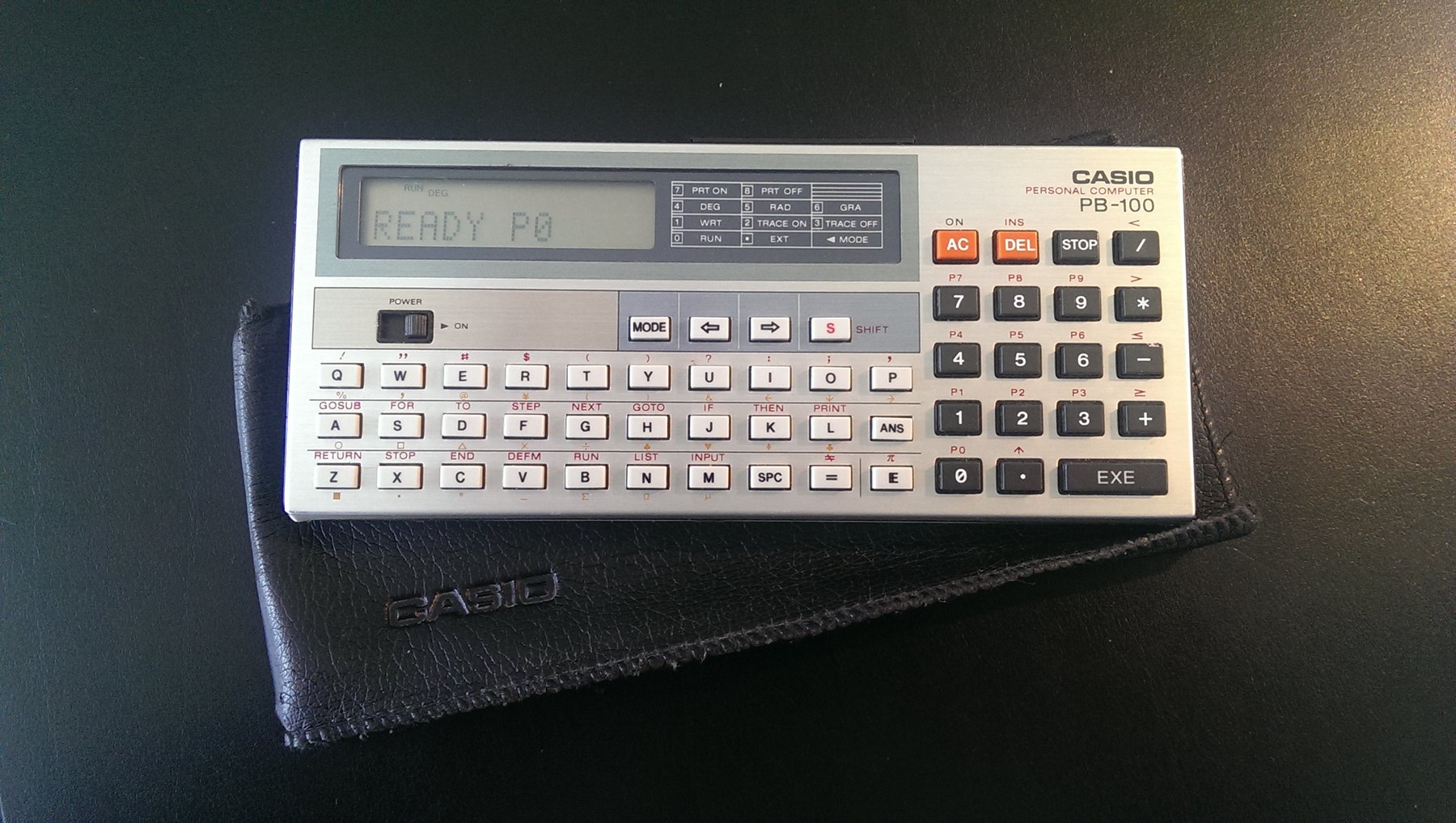
Casio’s first BASIC machine was the FX-702P of 1981, with 1,680 steps, a 20-character dot-matrix display and an FA-2 interface for a cassette and the FP-10 printer; it cost ¥39,800 and was made until 1984. The PB-100, announced on 10 May 1982 for less than $70, was the first cheap pocket computer: Casio planned to make 20,000 a month, Radio Shack sold it as the PC-4, and the Soviet Union copied it. The FX-700P followed in 1983, and the PB-700 of 1984 had a four-line display.
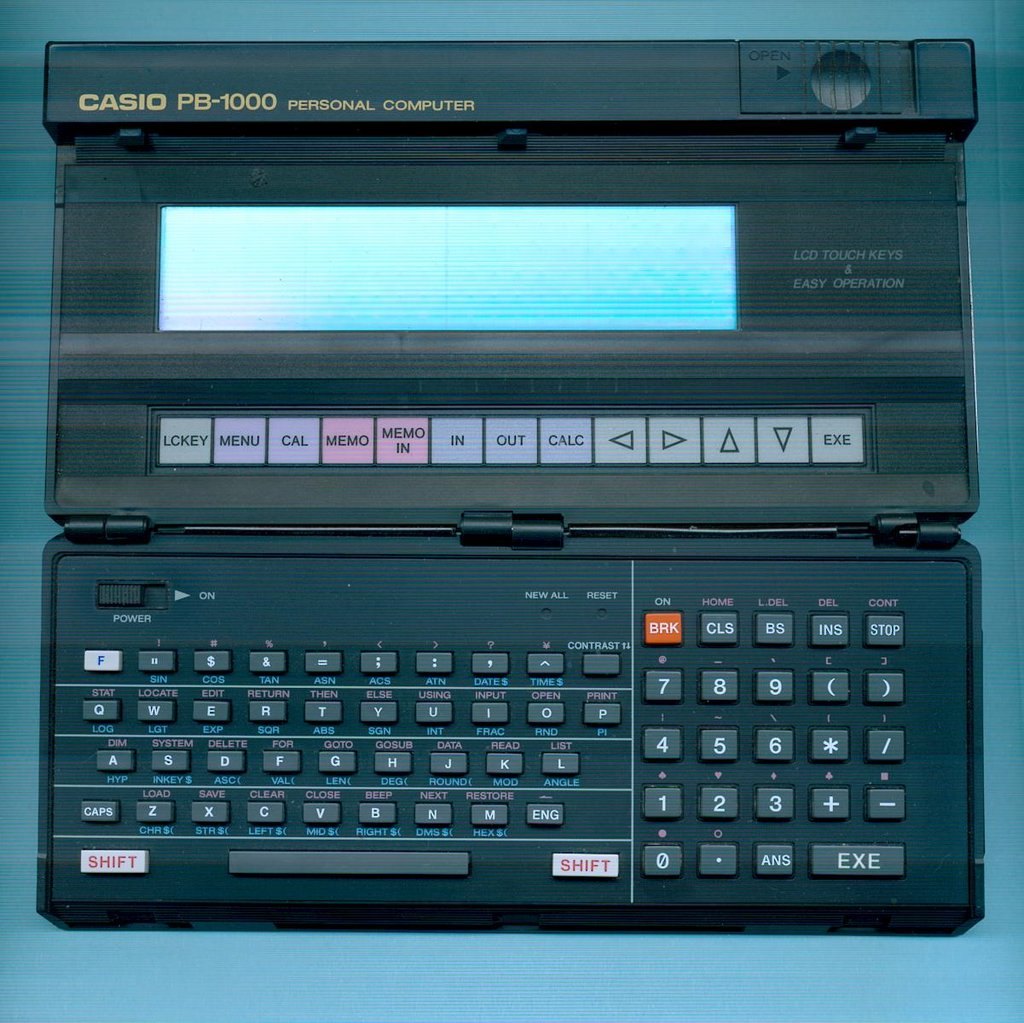
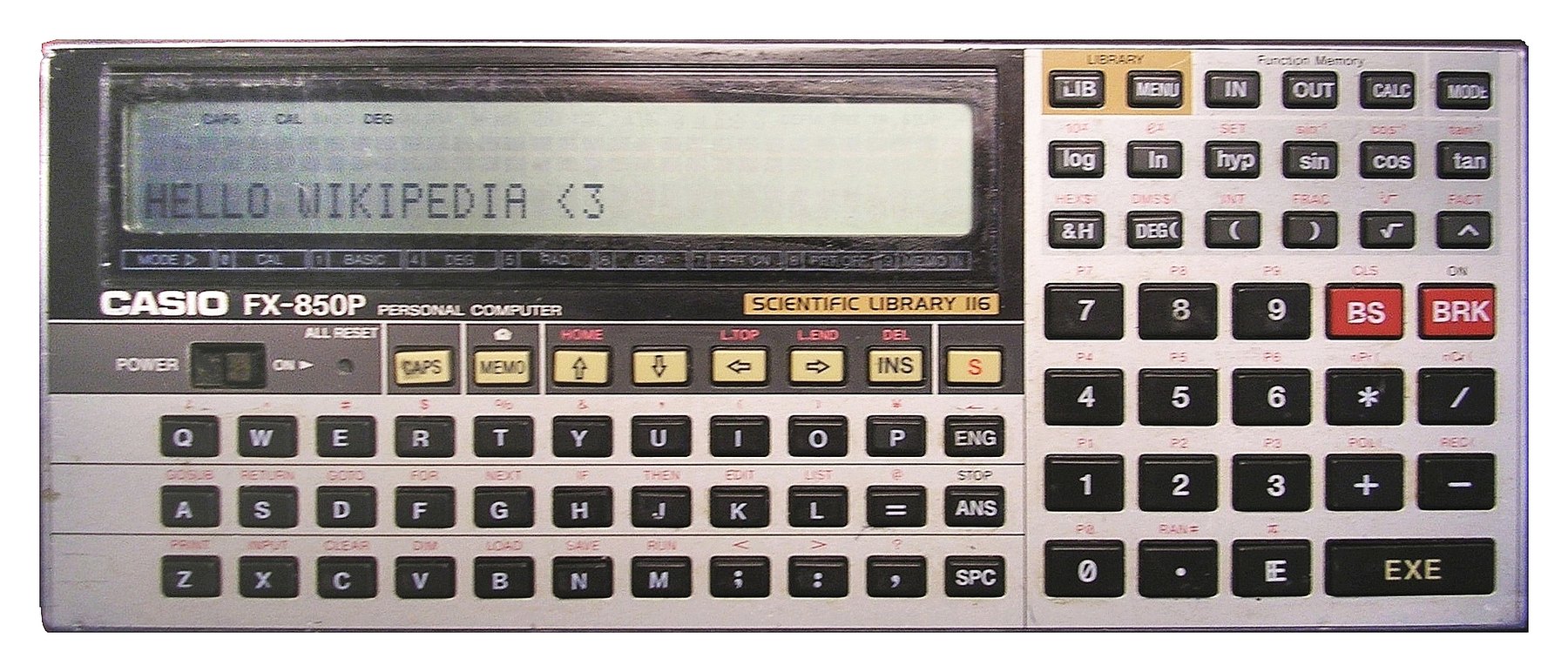
Later Casios were bigger and more capable: the PB-1000 of 1986 with a touch-key display and a Hitachi processor; the FX-850P series, made from 1987 to 1999; the AI-1000 of 1988 with LISP built in, and its export version the PB-2000C with a C interpreter; and the Z-1 and FX-890P, with 16-bit processors compatible with the Intel 80188 and BASIC, C and assembler. The VX series, sold only in Japan, could drive a floppy-disk drive.
3.4 Hewlett-Packard
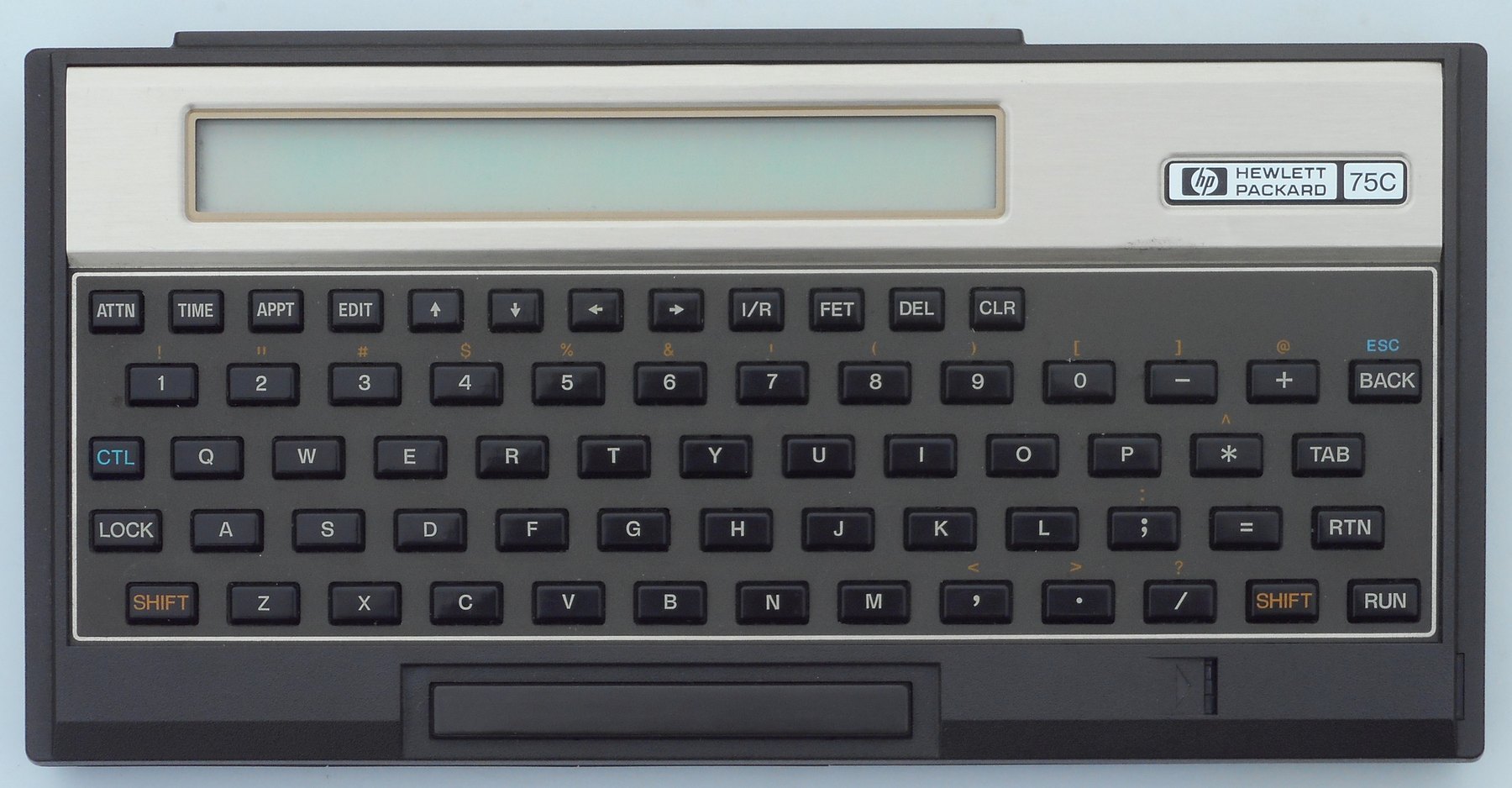
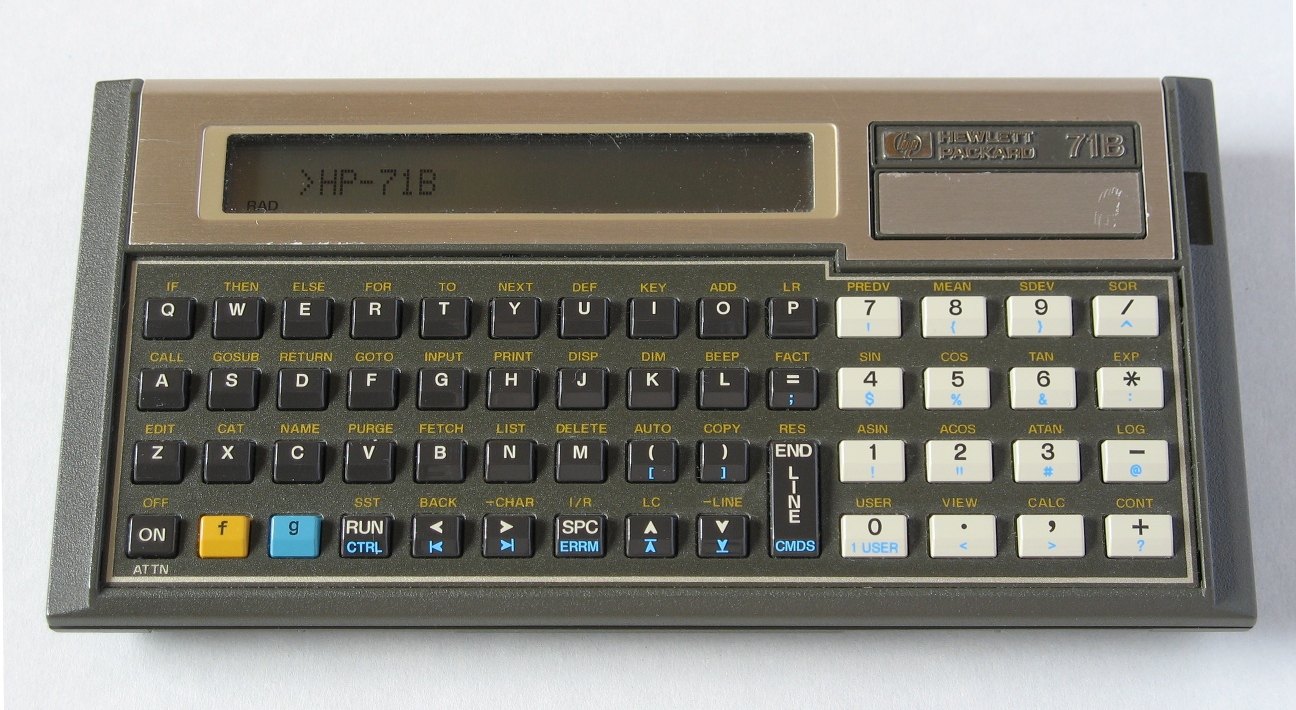
HP came at the pocket computer from its programmable calculators and made the most expensive ones. The HP-75C of September 1982, at $995, was HP’s first portable computer: 16 KB of memory, a one-line display, a magnetic-card reader along its bottom edge and the HP-IL loop for printers, storage and instruments. The HP-71B of 1984, $595 by Wikipedia’s figure and $550 by another, was the first machine with HP’s Saturn processor, later used in its calculators, with 64 KB of ROM, 17.5 KB of RAM and BASIC built in.
3.5 Texas Instruments, Canon, Epson and Psion
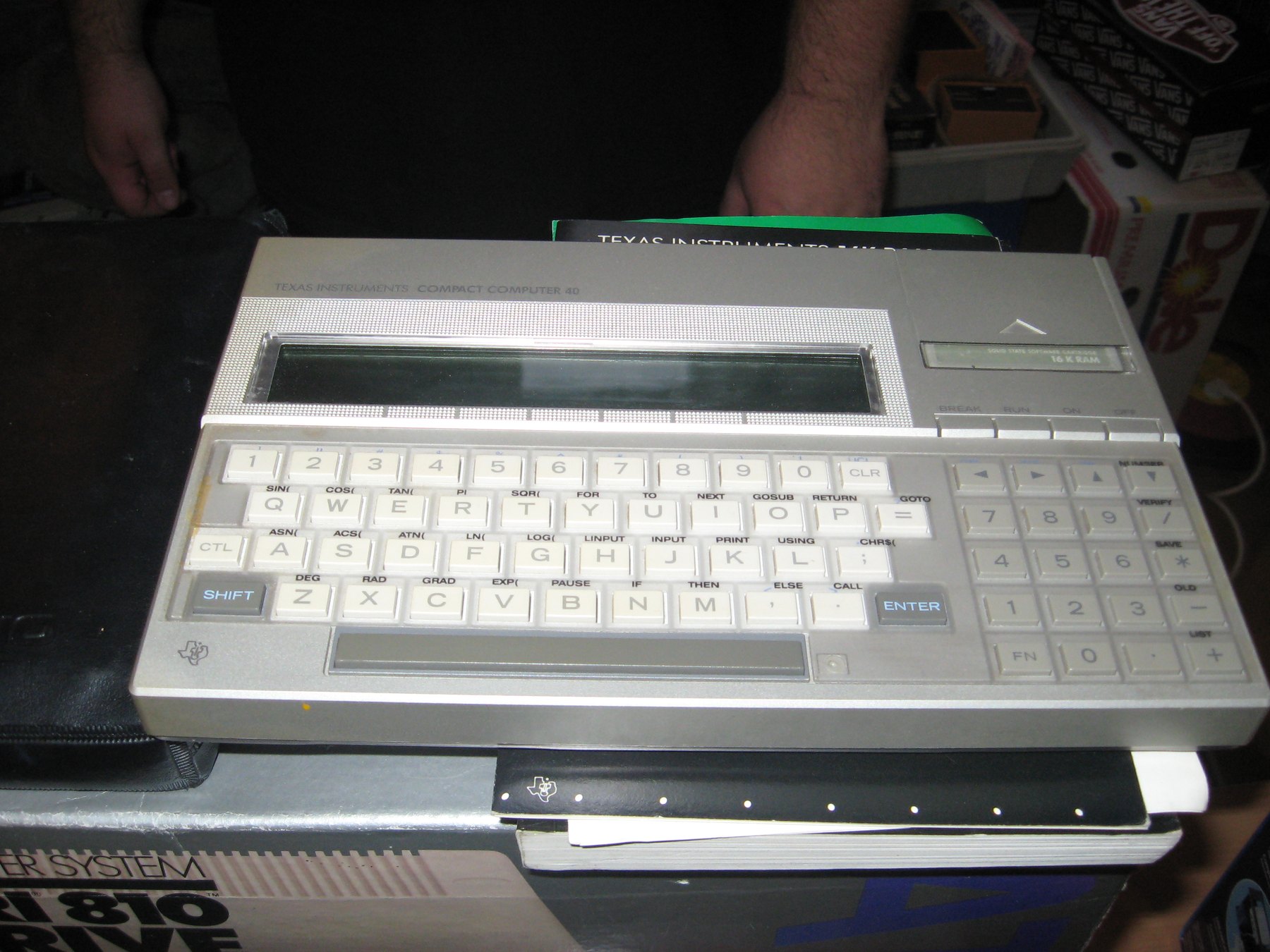
- TI CC-40 (Compact Computer 40, 1983, about $249): a TMS70C20 processor at 2.5 MHz, a 31-character display, 6 KB of memory and the Hex-Bus for peripherals. It was dropped within a year; the TI-74 BASICALC of 1985 took its place.
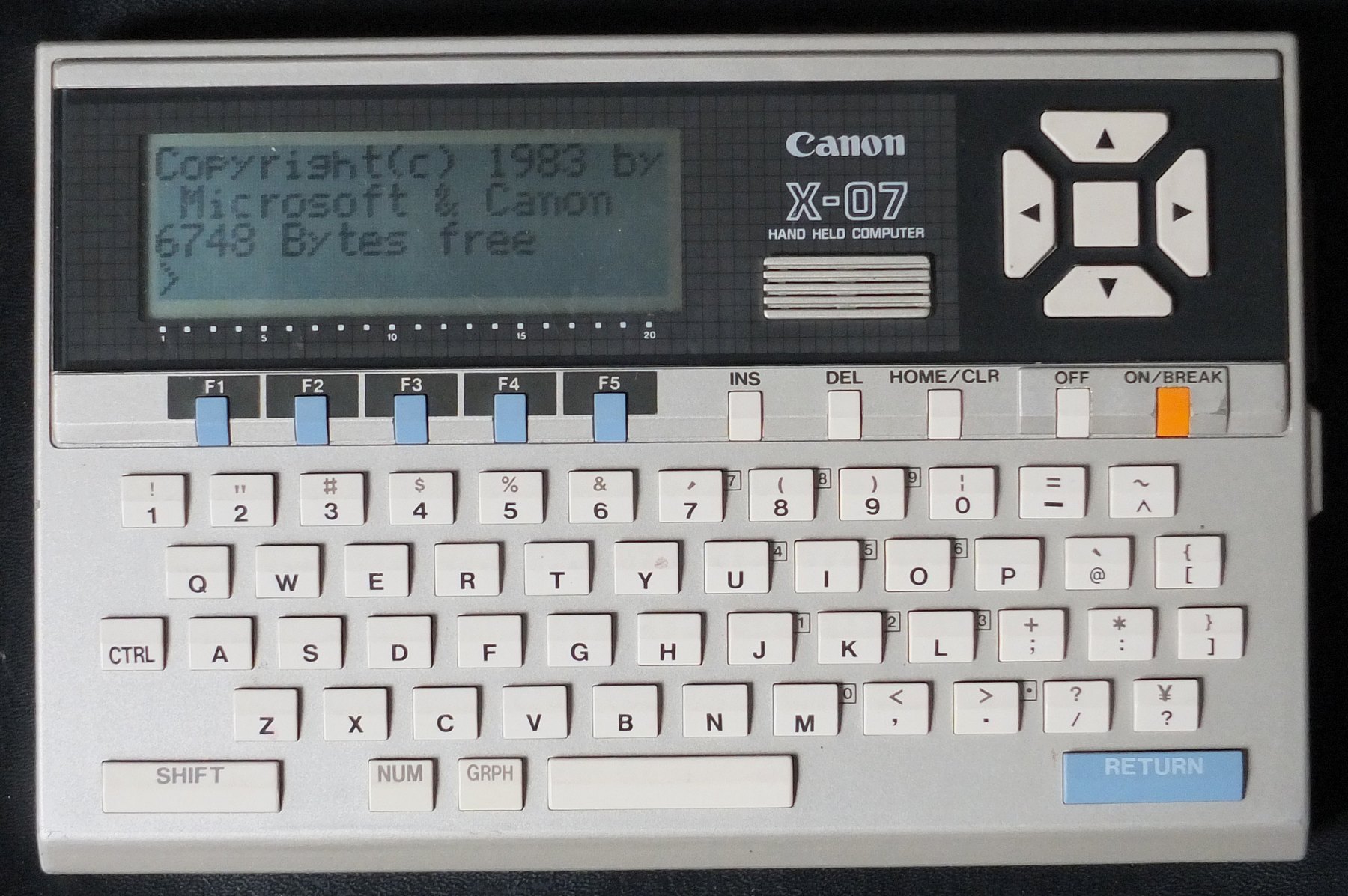
- Canon X-07 (1983): a Z80-compatible processor, Microsoft BASIC, a 4 × 20 display, and an optional infrared link.
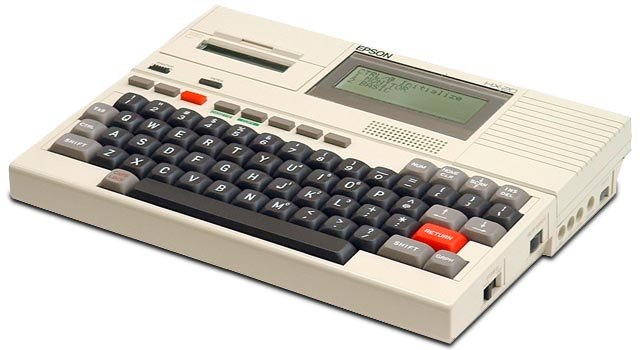
- Epson HX-20 (shown in November 1981, sold from July 1982 at $795): not a pocket machine but the first laptop, with a printer and a microcassette drive, often listed with them.
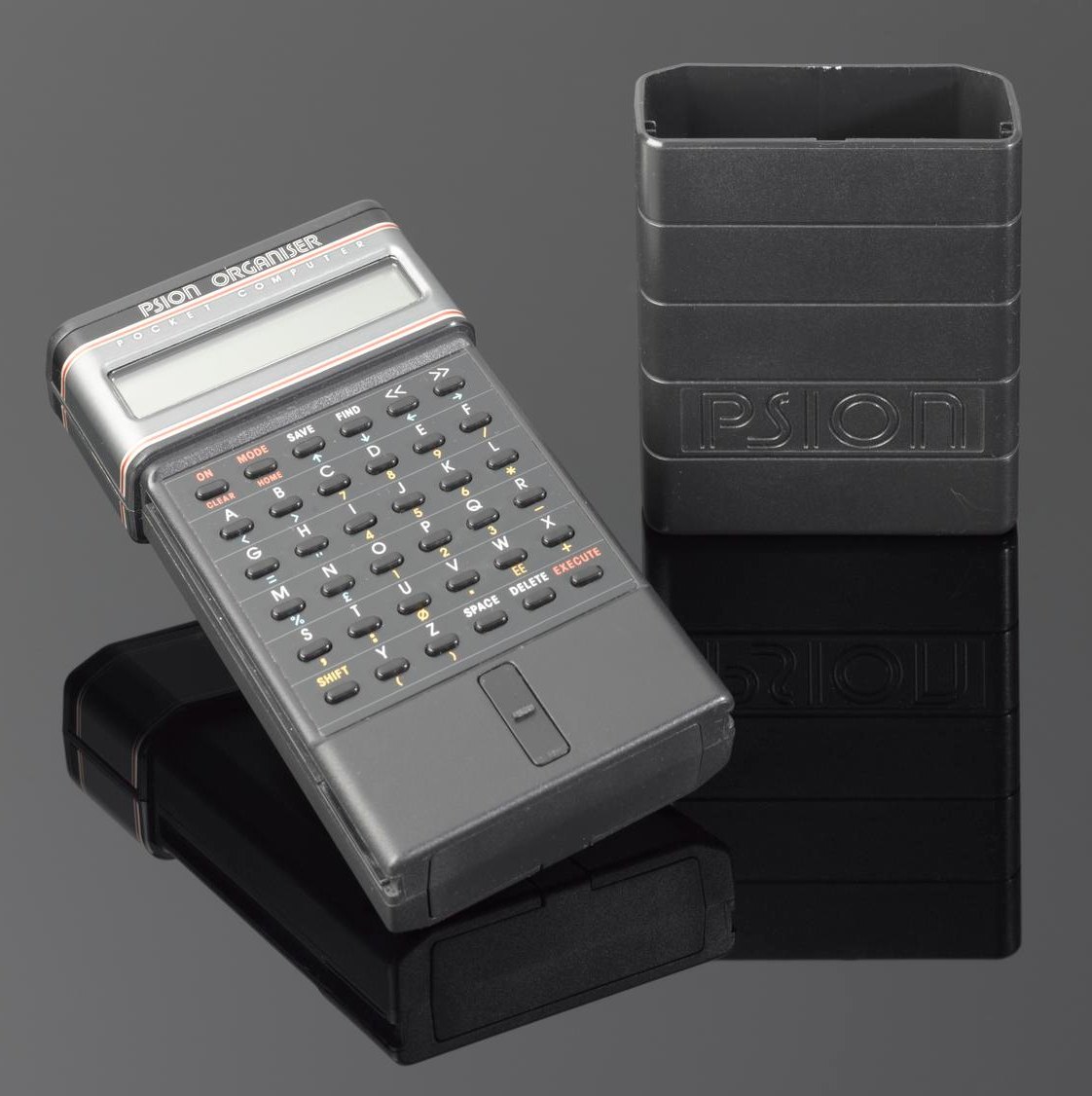
- Psion Organiser (1984, £99): a 6301 processor and a one-line display, programmed in Psion’s own POPL; the Organiser II of 1986 brought the OPL language.
3.6 The Soviet pocket computers
The Elektronika MK-85 of 1986, said to resemble Casio’s PB-700, ran BASIC on a 16-bit processor, and the MK-90 of 1986 or 1988 was a PDP-11-compatible machine with a 120 × 64 dot display that cost 3,500 roubles at first. Both are covered in the Soviet calculators series, and their manuals are in the Library.
3.7 Why they faded
By the middle of the 1980s the limits were plain: little memory, slow interpreters, small keyboards and few programs. Radio Shack’s shipments fell from 70,000 in 1982 to 40,000 in 1983. Casio’s fx-7000G of 1985, the first graphing calculator, offered students a large display and programmability for less, and through the late 1980s and 1990s handheld PCs such as the Poqet and the Atari Portfolio, electronic organisers such as Sharp’s Wizard, and then personal digital assistants took the business users. Saam ends the era at about 2000, when mobile phones absorbed the role and the old chips became uneconomic to make; Sharp’s run-only PC-1270, sold to software dealers, was made unchanged from 1986 to 1999.
3.8 Japan, where they stayed
In Japan the pocket computer had a second life in education. Japanese Wikipedia records that pocket computers were widely adopted in industrial high schools, vocational schools and some universities in the 1980s and 1990s, and that later models added CASL, an assembler for the virtual machine used in the national information-technology examinations, as well as C. Sharp’s PC-G850 line, from 2001, and the PC-G850VS of 2009 were sold for school use, and Japanese Wikipedia says the last were made in 2015. They still turn up new in their boxes.
Sources
- Roland J. Saam, “A History of Pocket Computers 1980–2000”, IEEE HISTELCON 2019, in the Library; sharppocketcomputers.com (Bill Symmes); Wikipedia articles on each machine; Japanese Wikipedia, “ポケットコンピュータ” (pocket computer).
- Matthew Reed, trs-80.org, on the PC-1 and PC-2; Christian Science Monitor, “Budget minicomputer from Japan”, 11 May 1982, on the PB-100.
- Manuals in the Library: the TRS-80 PC-2 operations manual and its printer/cassette interface manual; Sharp’s PC-1500 instruction manual, PC-1500A manual and PC-1500 technical reference; the Tandy PC-4 programming guide; the Casio pocket computer brochure of 1986 and FX-702P brochure; Hewlett-Packard’s HP-75 owner’s manual; David Thomas’s guide to programming the CC-40; Shaw’s Using and Programming the Psion Organiser II and Personal Computer World’s review of 1987; the English PC-G850VS manual, the PC-E500 service manual and Sharp’s 1987 German catalogue.
Comments (0)