VFD Calculators · Volume 3
The Machines
Vacuum-fluorescent displays went into more calculators than any other display before the liquid crystal, so no list can be complete. This volume takes the makers in roughly the order in which they adopted the tube, with the machines that mattered most: the first of each kind, the best-selling, and the ones collectors look for. Prices are launch prices where they are known. The tubes and chips are named where a teardown or schematic records them.
3.1 Sharp (Hayakawa Electric)
Sharp asked for the tube, used it first, and used more of it than anyone.
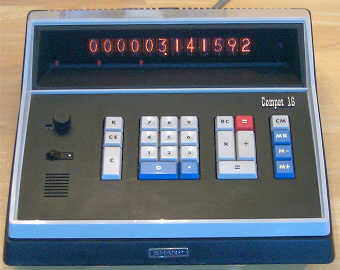
CS-16A Compet 16 (December 1967). Sharp calls it “a calculator employing MOS ICs”: 59 integrated circuits in place of about 3,500 discrete parts, 4 kg, and ¥230,000, under half the price of Sharp’s CS-10A of 1964. The IEEE Milestone proposal and the Calcuseum database say it carried Ise’s DG12B tubes, which makes it the first calculator with a vacuum-fluorescent display, and Sharp’s own photograph shows a green display. But the US-market Compet 16 in Rick Bensene’s Old Calculator Web Museum, built in January 1969 and sold for $995, has twelve NEC Nixie tubes and 72 NEC µPD-series MOS chips. Sharp may have built both versions, perhaps a Nixie one for export, or substituted Nixies when tubes ran short; no source explains it.
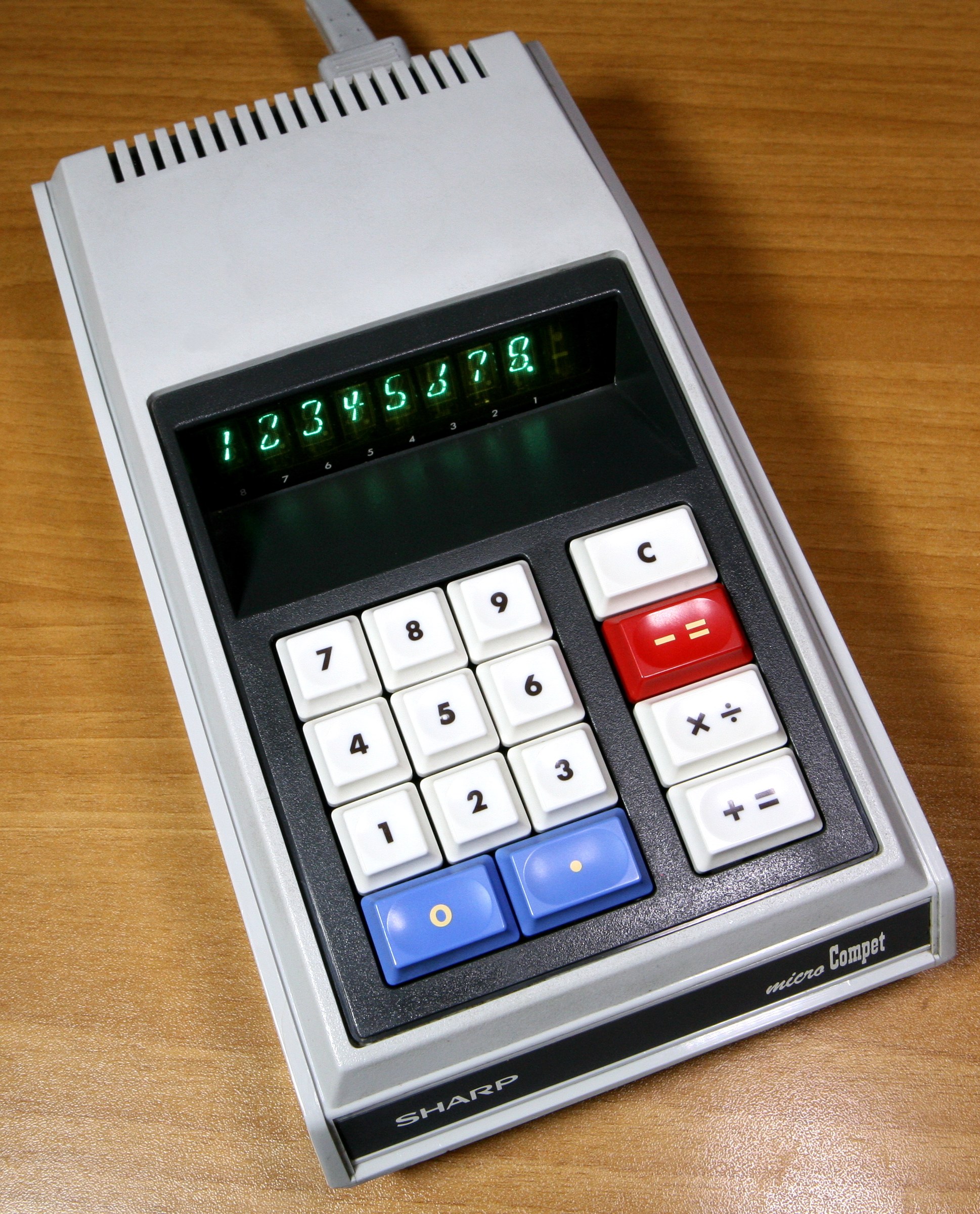
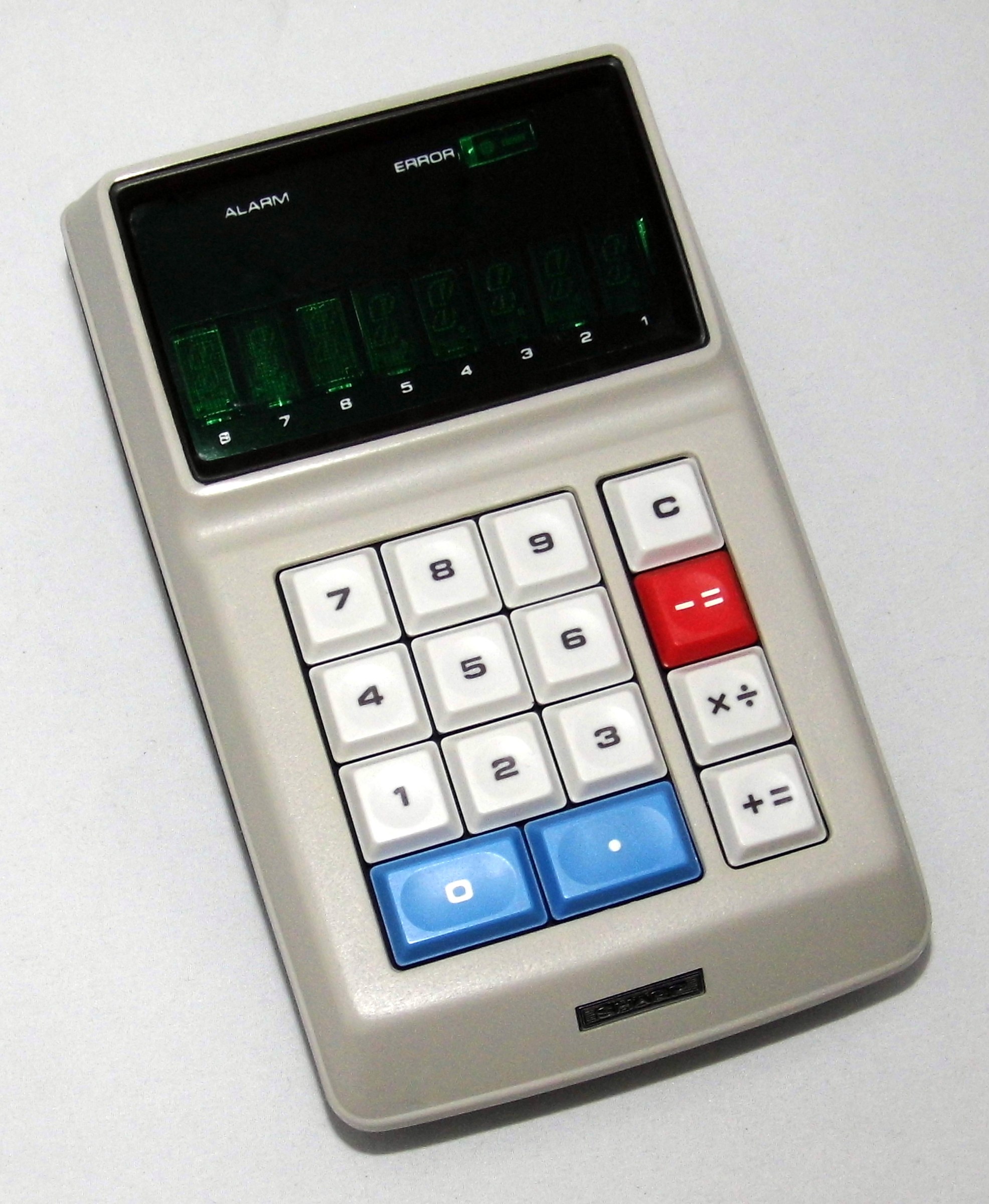
QT-8D Micro Compet (1969). Shown at the IEEE show in New York in March 1969, on sale in Japan from December 1969 at ¥99,800 and in the United States from March 1970 at $395. Sharp called it the first LSI calculator: four large MOS chips designed by Sharp and made by North American Rockwell, the AC2261, AU2271, NRD2256 and DC2266, each with about 700 to 900 transistors, plus a clock generator. Its display is eight Iseden DG10B eight-segment tubes and an SP10 tube for the point and the minus sign; the zero is half height, because the machine does not blank leading zeros. It is 135 × 247 × 72 mm and weighs 1.4 kg. The claim to be first needs qualifying: the Victor 3900, a CRT machine of 1966, was built on MOS-LSI chips three years earlier. The QT-8B of 1970 is the battery version, with six NiCd C cells, at ¥117,000 or $495. Facit sold the QT-8D as the 1115, Addo-X as the 9354.
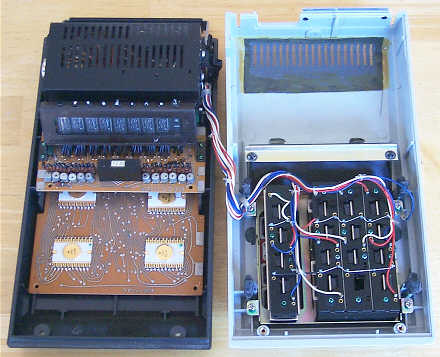
EL-8 (1971). One of the first hand-held calculators, and the first with a VFD: the QT-8D’s four chips, a CG1121 bipolar clock, eight Itron DG10L tubes on flying leads and an SP8A tube for minus and error, a six-cell NiCd pack, and a DC-DC inverter. It came to the United States in January 1971 at $345, a record low, and cost ¥84,800 in Japan. Cases were off-white or charcoal. By the autumn of 1971 final assembly took about an hour. Facit sold it as the 1111 and Addo-X as the 9364; the EL-8M followed.
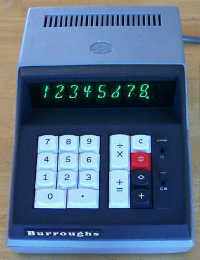
Burroughs-badged Sharps (1971). Early in 1971 Burroughs, owner of the Nixie and the royalties that the VFD was invented to avoid, was itself selling Sharp-built calculators with Ise tubes: the C3260, a Sharp EL-160 with DG12B digit tubes and an SP12A sign tube, and the C3146, a QT-8B type with DG10B tubes and a NiCd pack.
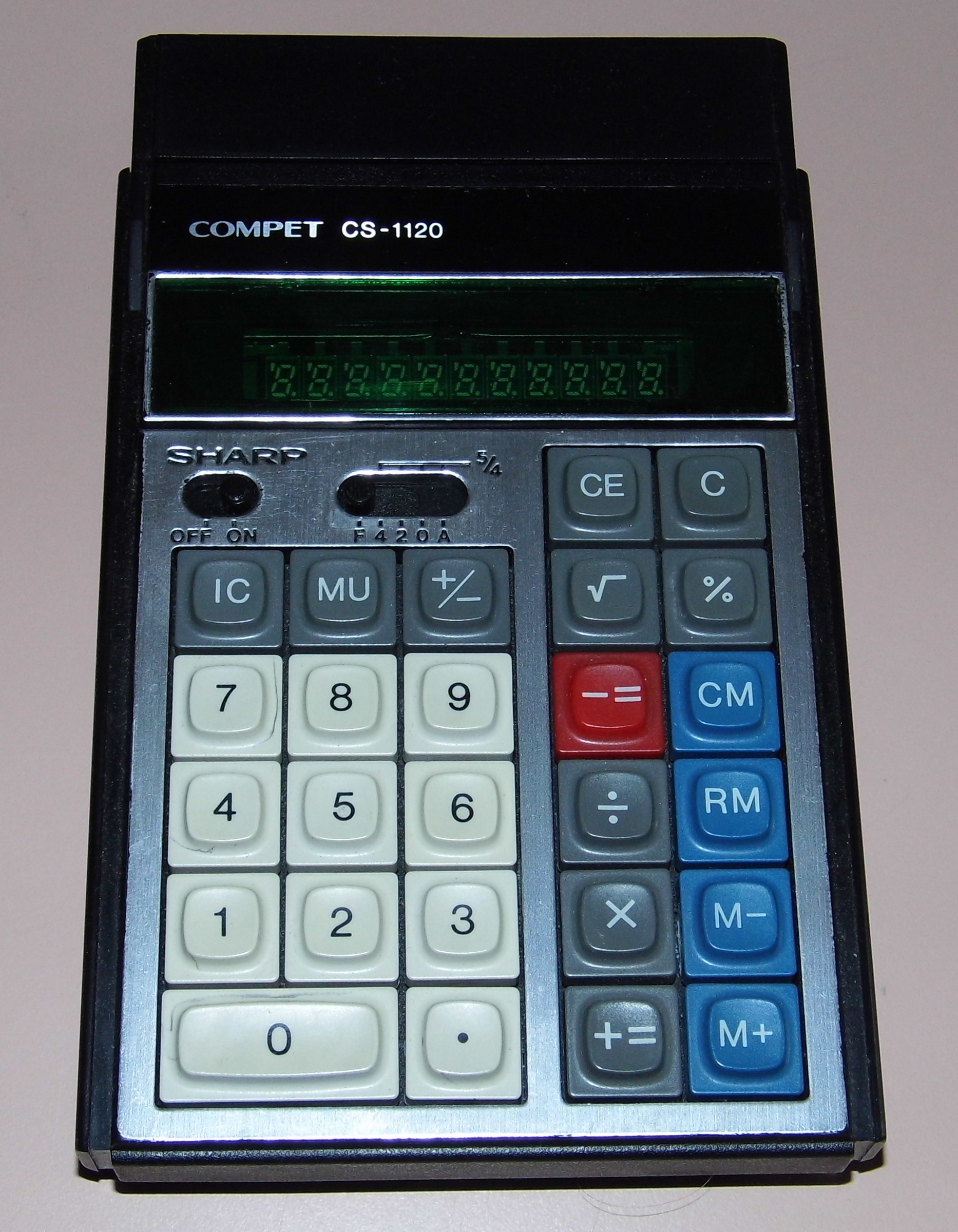
The ELSI MATE line (1972–78). After the EL-8 came a long series of pocket and desk machines, traced on John Wolff’s pages: individual tubes on flying leads (EL-811A of 1972, with Futaba DG10Q1 tubes; EL-816), then double-ended multi-digit tubes with leads at both ends (PC-1802 “Digital Rule” and EL-8002, 1974; the EL-8002 drew under 300 mW from three AA cells), then flat modules on connector strips (EL-1101, EL-8113S, EL-8118, PC-1201, 1975–77). The desk CS-2101 (1973) had a twelve-digit flat panel. The PC-1001 (1973) and PC-1002 were early programmable scientific desks built on Rockwell’s PPS-4 microprocessor. The EL-5001 (1977) is a fourteen-digit VFD scientific desk with a rotary switch to select groups of functions.
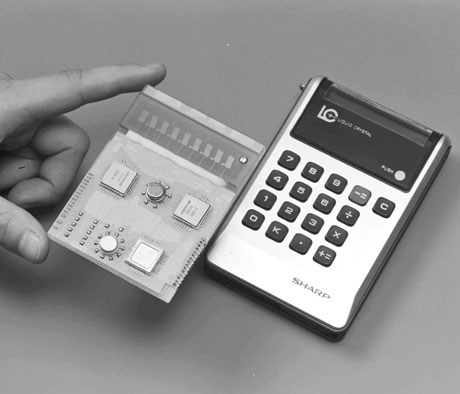
Sharp was also the first to leave the VFD in the pocket: the EL-805 of 1973 was the first calculator with a liquid-crystal display.
3.2 Busicom and the single-chip calculator
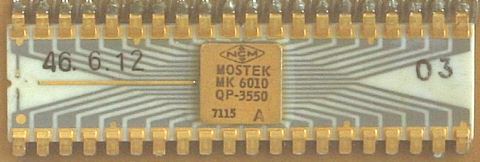
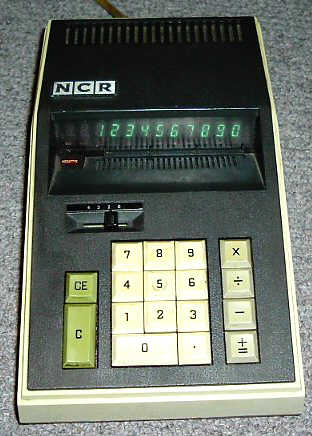
Busicom Junior 120-DM. A twelve-digit four-function desk machine with individual seven-segment VF tubes. The first version used 22 small MOS chips. The second put all of them into one: the Mostek MK6010, about 2,100 transistors on a 4.6 mm square die, designed to Busicom’s logic and later sold openly as the MK5010. Calcuseum dates the 120-DM to 1970 at ¥116,000. Wikipedia says the MK6010 first appeared in Busicom’s hand-held LE-120A of 1971; the Old Calculator Web Museum says the 120-DM came first. The LE-120A “Handy-LE” is famous as one of the first pocket calculators, but its display is LED, not fluorescent. NCR sold the 120-DM in the United States as the NCR 18-16.
Busicom’s other famous machine, the 141-PF of 1971 whose chip set became the Intel 4004, was a printing calculator with no display. Busicom failed in 1974.
3.3 Casio
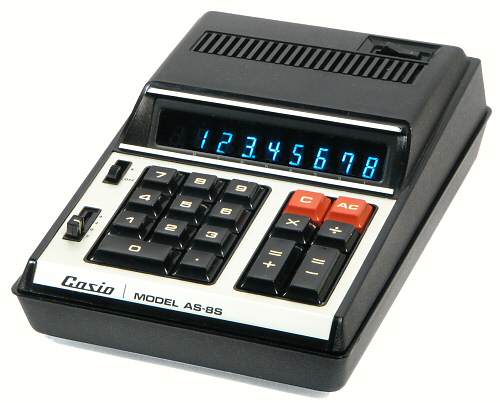
AS-8 (1971). Casio’s first cheap desk machine with fluorescent tubes, sold in stationery shops from September 1971 for just under ¥40,000. John Wolff’s AS-8S of 1972 has eight Futaba DG-10FL tubes and a Hitachi HD3272 chip.
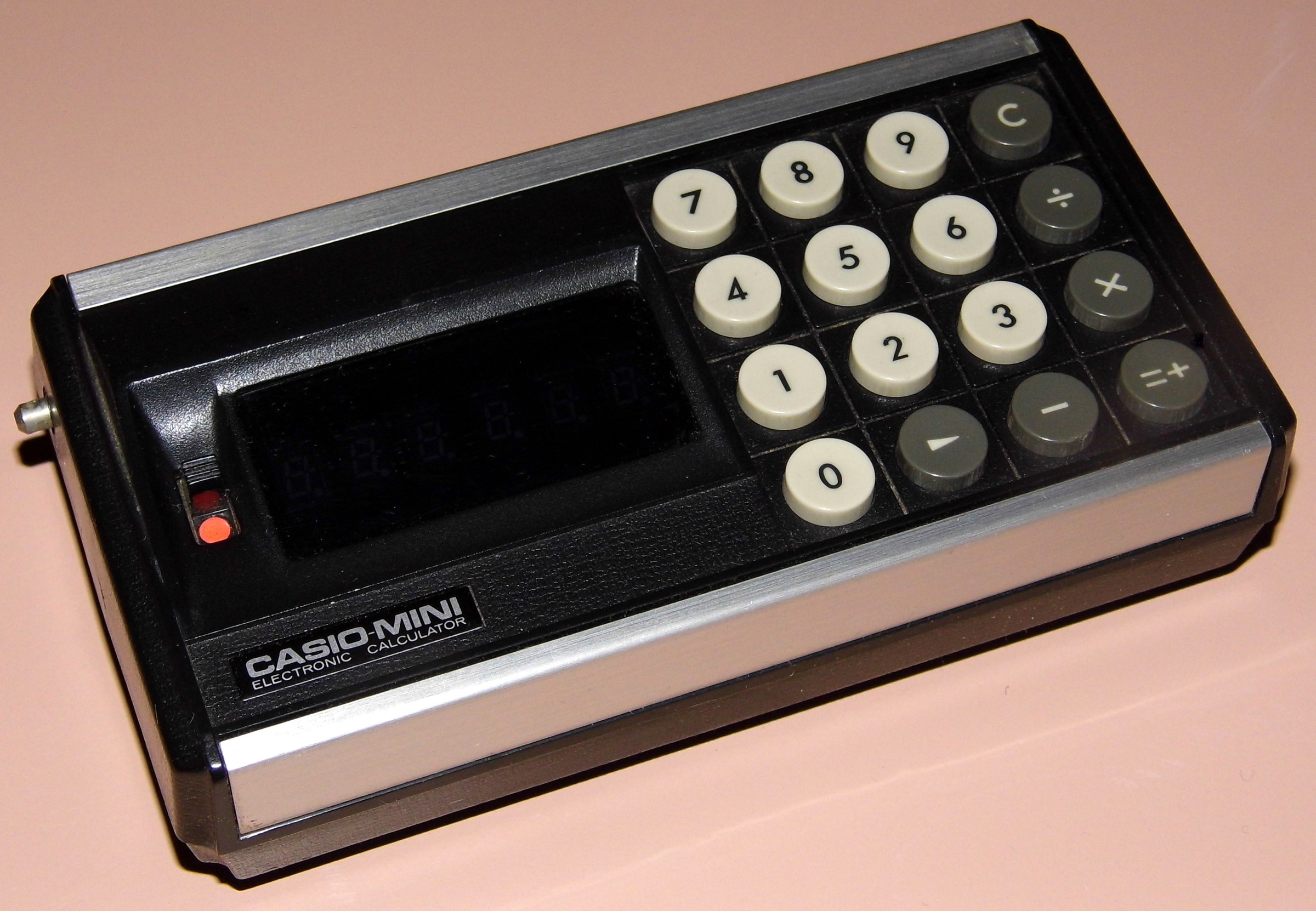
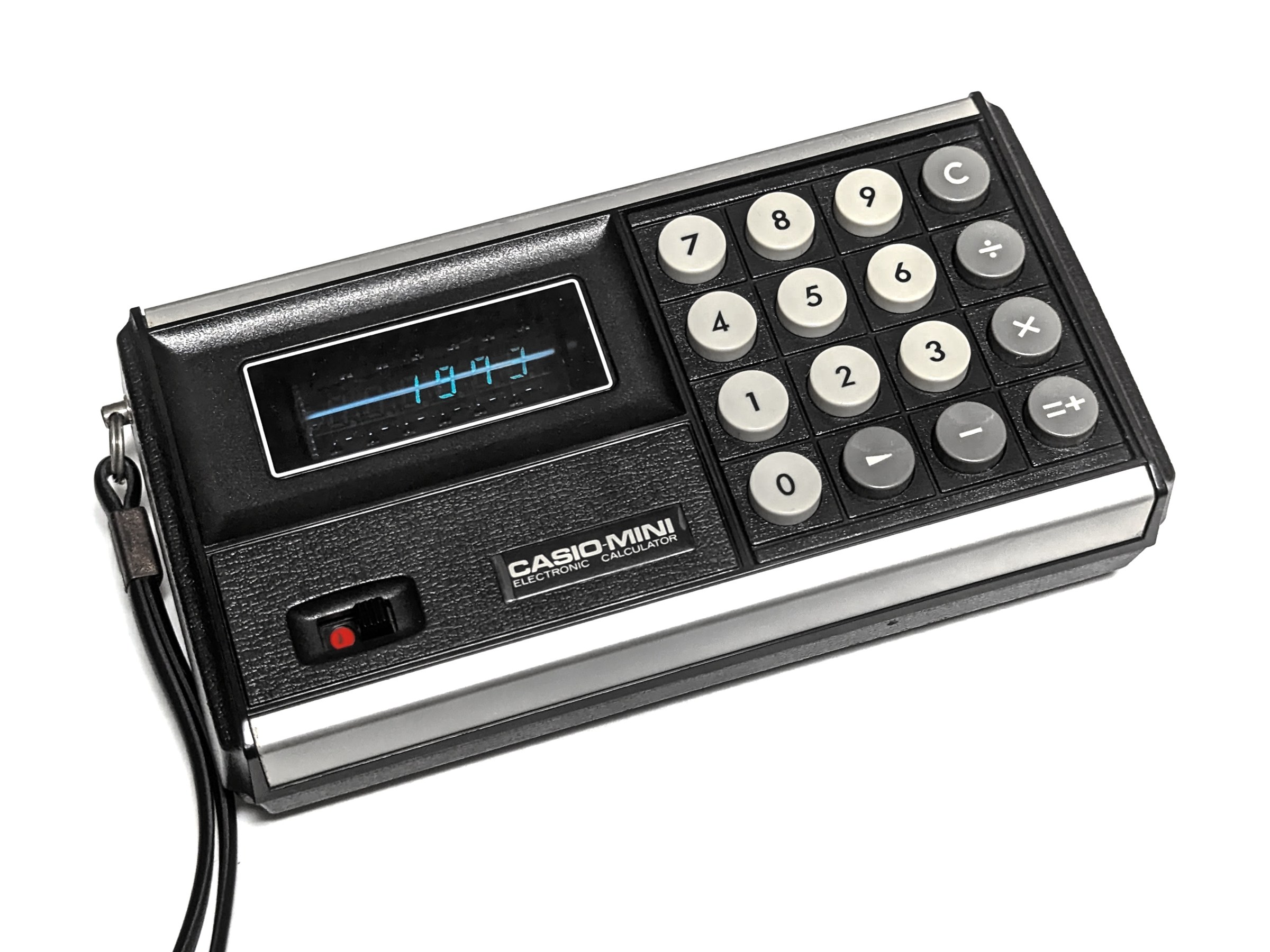
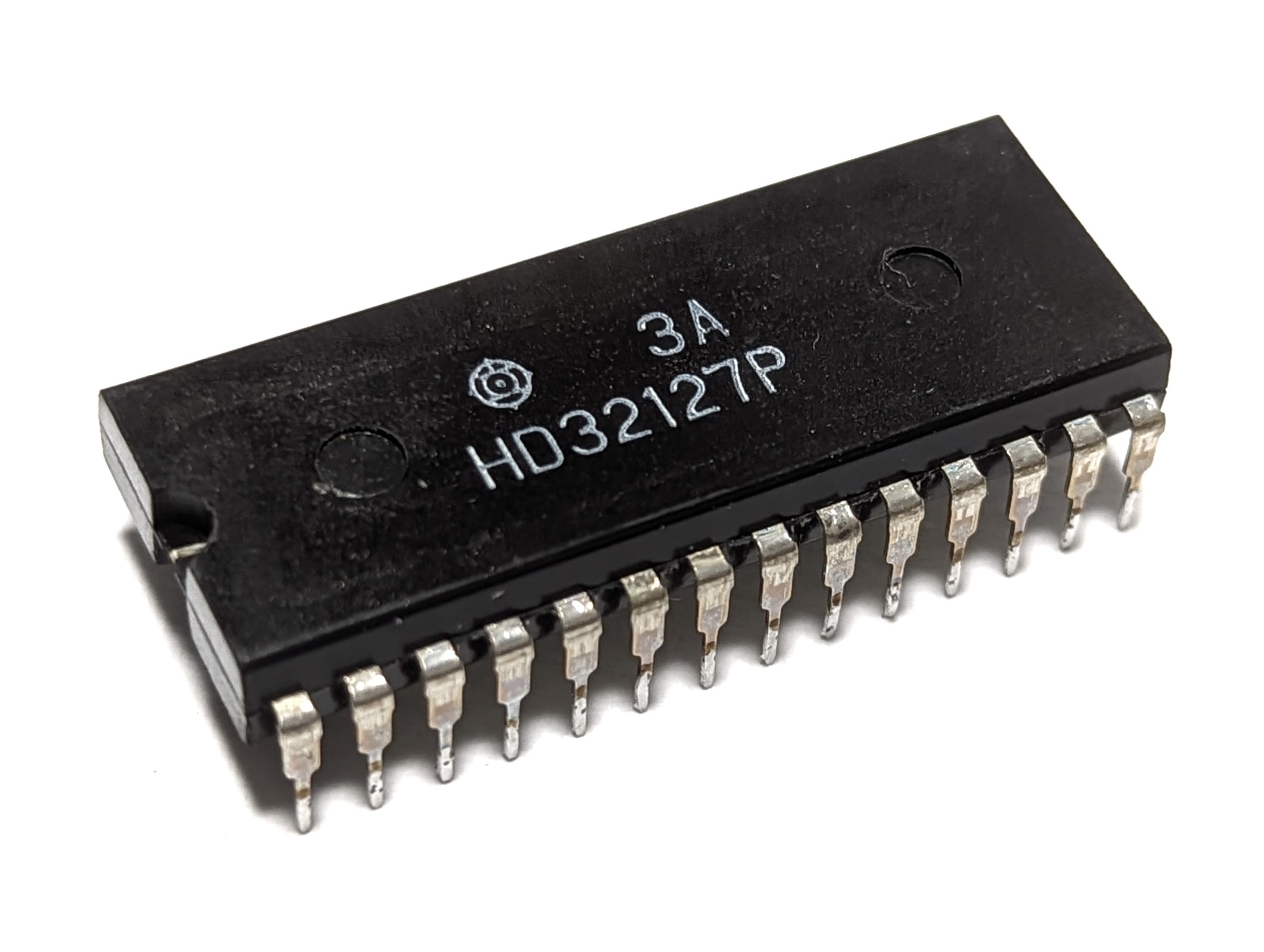
Casio Mini (August 1972). The machine that made the calculator a household object. It cost ¥12,800, about a third of the going price, and more than a million were sold in the first year. Six digits on six single-digit tubes, NEC LD8035 in John Wolff’s example; a Hitachi HD32127 calculator chip and an NEC µPD129 display driver; four AA cells. Multiplying two six-digit numbers gave a twelve-digit answer shown in two halves. In the United States it sold for $59.95 in November 1972. The line grew quickly: the CM-601 of February 1973 changed to a round multi-digit tube; the CM-602 of 1973 had an Ise DP60A six-digit tube and a Hitachi HD32154; then the CM-603, CM-604, CM-605, the CM-607 Personal-Mini, the Mini Memory and Mini Root-M (1974), and the Pocket-Mini CP-801 (1975). Sperry Remington sold a version as the 661D.
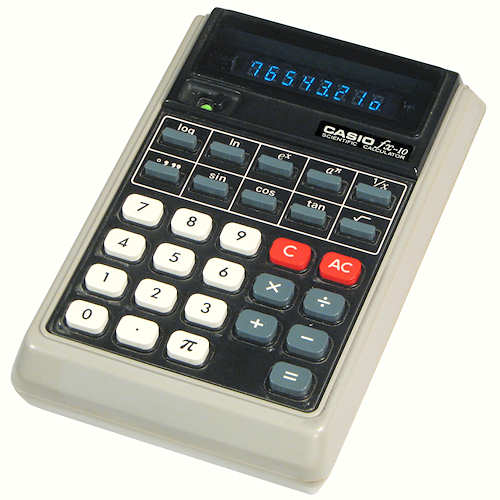
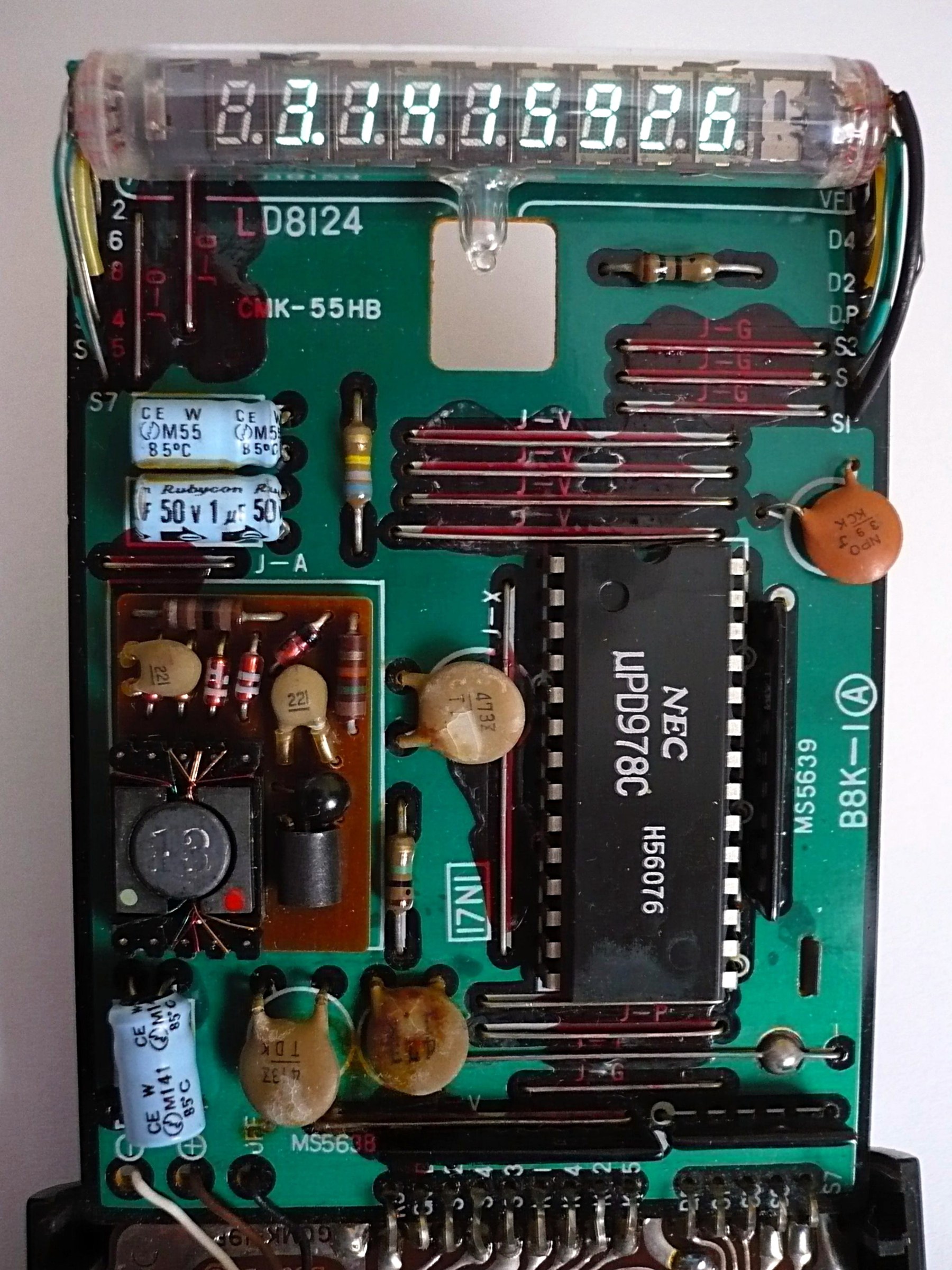
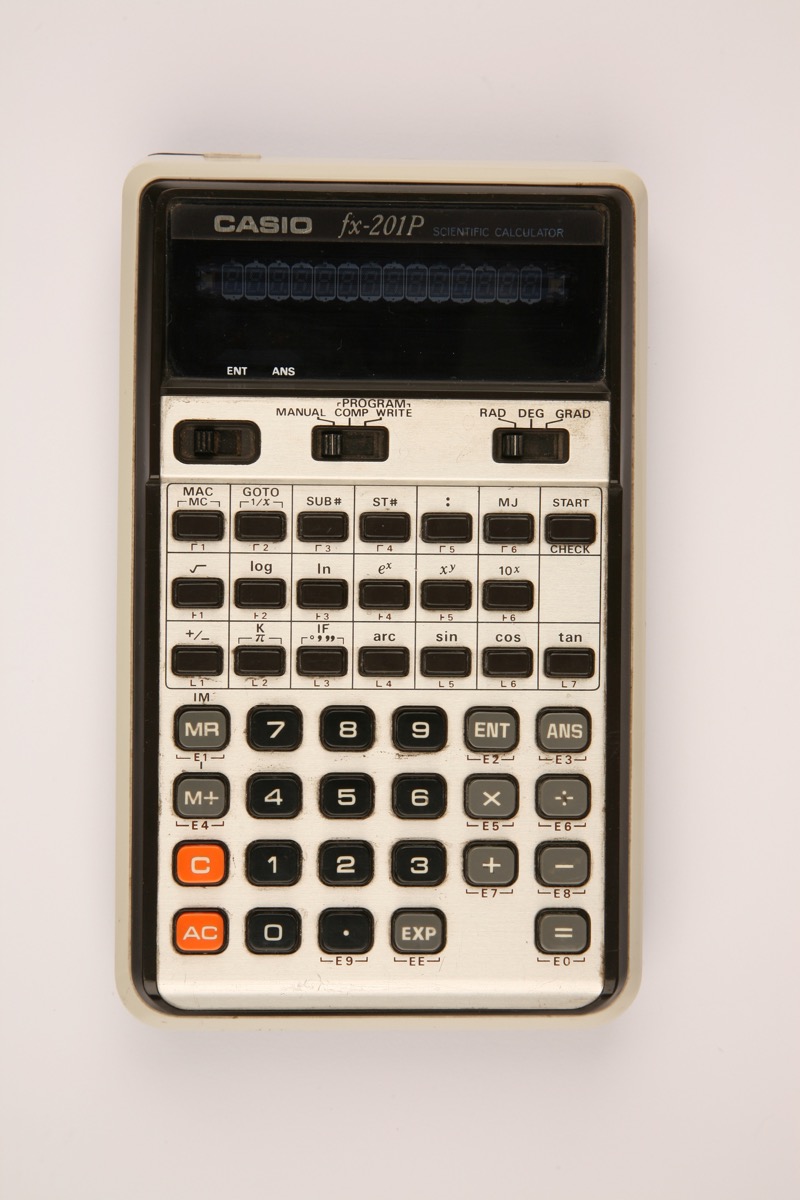
Scientifics. Casio’s fx-1 of February 1972 had Nixie tubes; the fx-2 that followed replaced them with fluorescent tubes to cut the cost. The fx-10 of May 1974 was, in Casio’s words, the first LSI scientific calculator made in Japan, a pocket machine with an eight-digit Toshiba E6525 tube. The fx-20 (1975, NEC LD8124 tube, Hitachi HD3678B), the fx-101 (1975–76, an eleven-digit double-ended NEC LD8126 tube showing an eight-digit mantissa and a two-digit exponent, ¥18,500 according to Calcuseum), the fx-19 and fx-21 followed. The fx-201P of 1976 was Casio’s programmable pocket scientific, with a green display of eight digits, a two-digit exponent and one extra digit, and a MANUAL/COMP/WRITE switch. The fx-39, made from 1978 into the early 1980s with an NEC FIP-9D5 tube, was among the last of the pocket VFD scientifics.
The CQ-1 “Computer Quartz” of December 1976 was the first calculator with a built-in clock, also on an eight-digit fluorescent tube. Casio’s move to the LCD came with the 3.9 mm thick Mini Card LC-78 of January 1978.
3.4 Canon
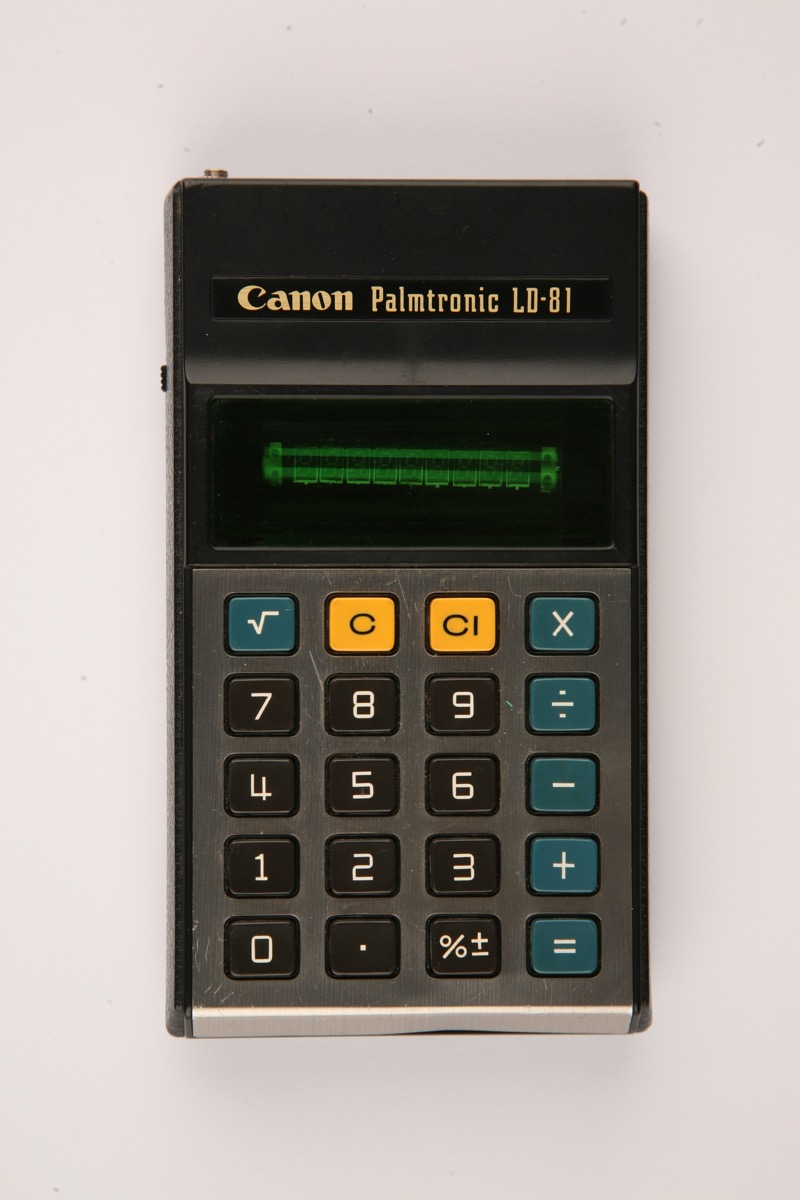
Canon came to the VFD late. Its first calculators had edge-lit lamp displays, then Nixies (the 162P, 1210 and L121 of 1969–71), then neon gas-discharge panels (the L100S of 1972 and its successors). The L1214 of 1975 replaced the neon with a twelve-digit blue fluorescent panel, and the L1217 followed in 1976. The Pocketronic of 1970 printed its answers on paper tape and had no display. In the pocket, the Palmtronic LE-80 of 1972 was LED; one source dates Canon’s first VFD pocket, the LD-80, to 1974, and the LD-81 of 1975 had an eight-plus-one-digit green display.
3.5 Toshiba, Hitachi and Friden
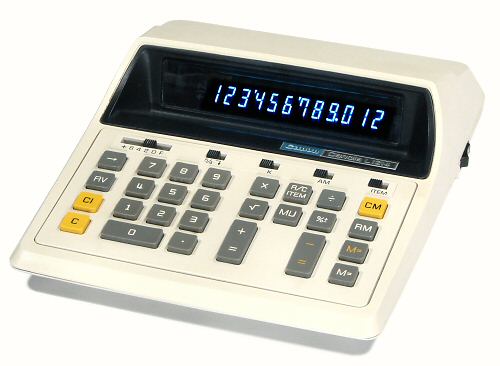
Toshiba built VFD desk machines from 1971: the BC-1011, a ten-plus-one-digit machine with Toshiba chips and reed-switch keys at ¥115,000, the BC-0801B and BC-0802, and twelve- and fourteen-digit machines. It made its own chips and its own tubes.
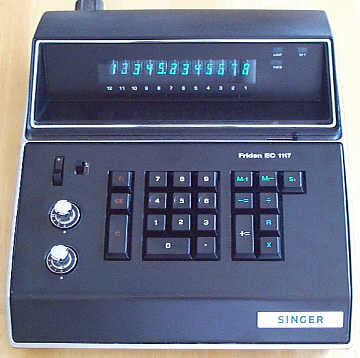
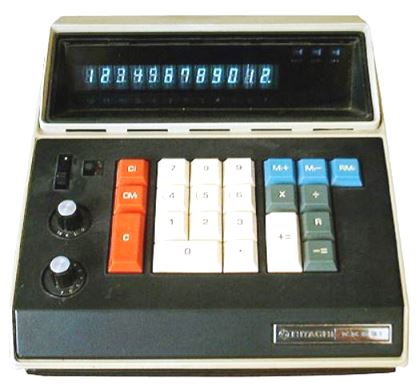
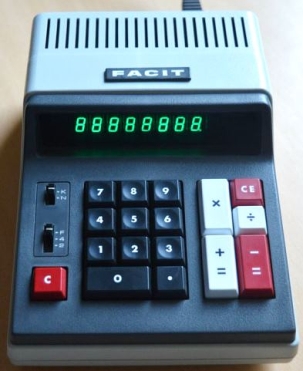
Hitachi was the leading Japanese maker of calculator chips in the VFD years: the HD32127 of the Casio Mini, the HD3276 of the Facit 1114 and Sharp’s EL-803 and EL-804, and the long HD36xx to HD38xxx series in Sharp, Casio and Sanyo pocket machines. It also built calculators for others. The Friden EC-1117A, from early 1972 by its chip date codes, is the fluorescent version of the Hitachi-built Nixie EC-1117: twelve individual tubes with an unusual eight-segment style, three Hitachi chips (HD3234, HD3235, HD3236) and two hybrid display drivers, at $395. Hitachi’s own KK-521 is the same machine, first with Nixies and then, in 1972, with fluorescent tubes. The Facit 1114 of late 1972 had an HD3276 chip and DG-10T tubes.
3.6 Crown and the price war
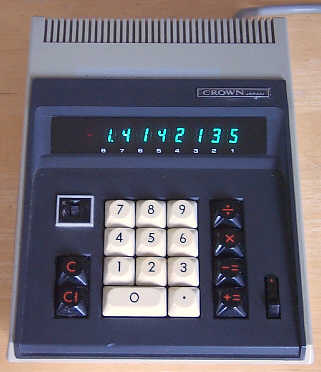
The Crown CL-80K of mid-1972 shows how fast prices fell: nine VF tubes, the leftmost behind a red window for the sign and error marks, one Texas Instruments TMS0105 chip with discrete 2SA675 driver transistors, and a mains supply. The Dai’ei supermarket chain sold it as the BUBU 100X for the equivalent of about $89. The same TI chip family drove fluorescent, LED and gas-discharge displays alike; only the drivers changed.
3.7 Sanyo
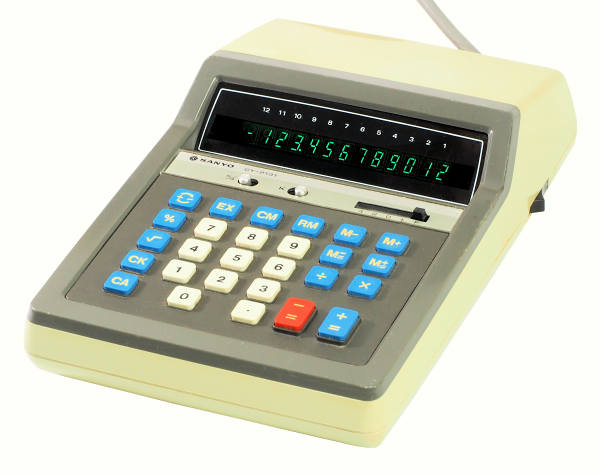
Sanyo used every display. Its ICC-82D of 1970 had Nixies or amber gas-discharge tubes, its own Eightron tube was a gas-discharge type, and the ICC-804D of 1971 was LED. Its fluorescent machines include the battery desk ICC-1418D (c. 1971), the twelve-digit ICC-1123 (1973), the ICC-805 (1973, Futaba DG10R1), the CX-8001 with a double-ended tube, the CX-6000 Mini (1974), the CY-2131 desk of 1977 with a Futaba 13-BT-02A, the CY-5012 of 1980, and the scientific CZ-8127 of 1976 with a nine-digit flat panel and a Rockwell chip. Sanyo’s CZ-8100 and CZ-2171 scientifics, by contrast, were LED.
3.8 Omron and the brands it built for
Omron made fluorescent machines under its own name, such as the 800 of 1971–72 with a three-chip set by Nortec Electronics, and for others. The Commodore C108 of 1971 and the first version of the US*8 (early 1972) were Omron-built with multiplexed eight-segment VF tubes; the second US*8 of mid-1972 changed to a Burroughs Panaplex gas panel and a TI chip. Triumph-Adler’s 804, 814, 1214 and other machines are listed by Calcuseum as largely Omron-built. John Wolff’s Adler EC-60 of 1973 has a six-digit tube with figures only 4.5 mm tall, and his Adler Scientific 108T of 1975 an Itron FG125A2 flat panel.
3.9 Rockwell, and the American brands
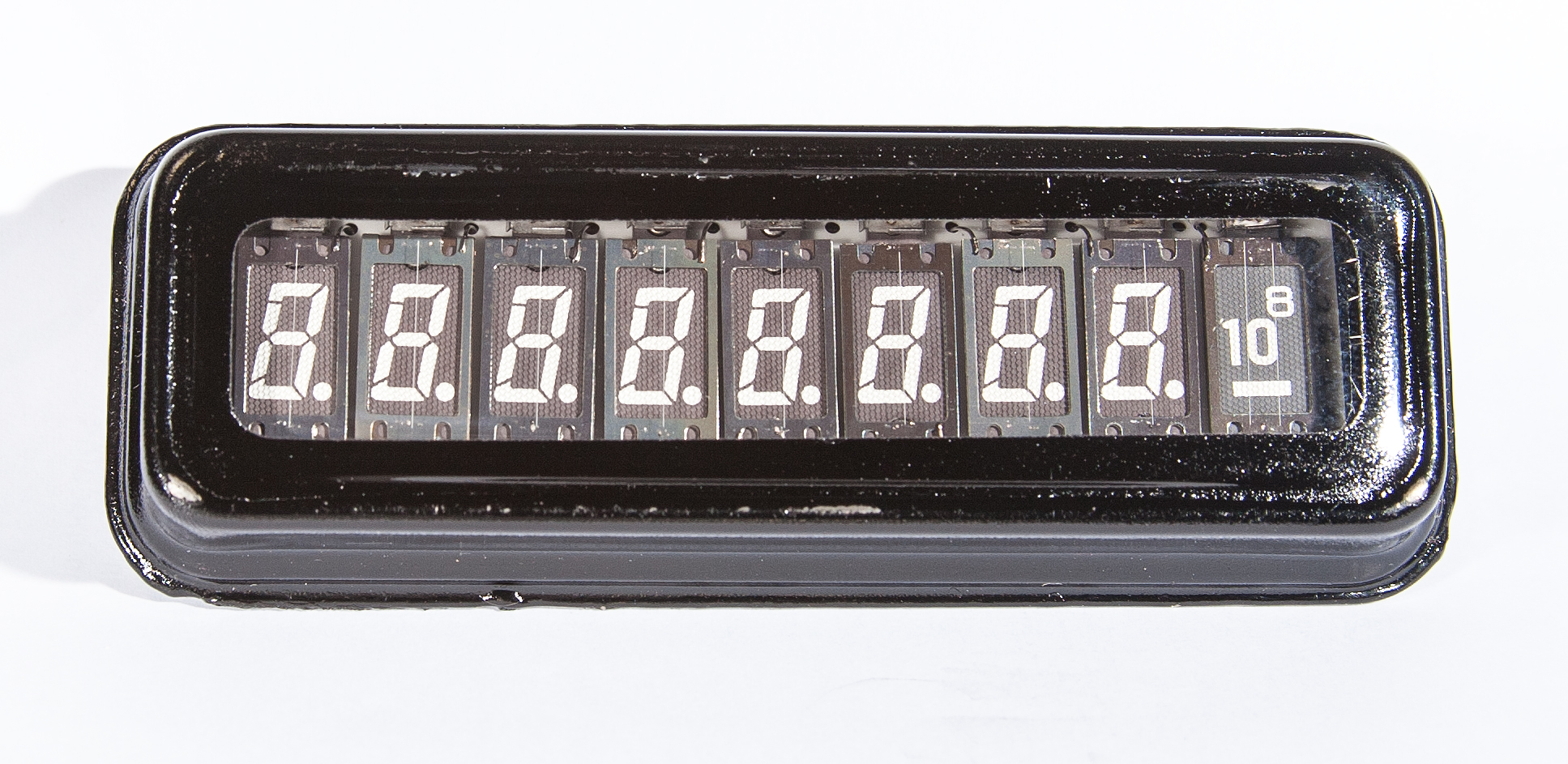
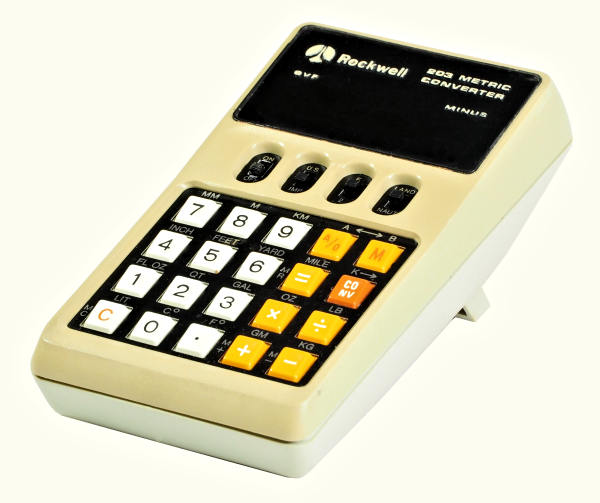
Rockwell, which made Sharp’s first chips, bought Unicom in 1972 and sold its own machines. The Unicom 202SR scientific and the Rockwell 203 metric converter of 1974 had VF tubes; John Wolff’s 203 has an Ise DP89A eight-digit tube with a metal back, an early form of multi-digit tube. The Rockwell 24K of about 1975 was a fluorescent pocket machine made in Taiwan; the 8R and 18R were LED.
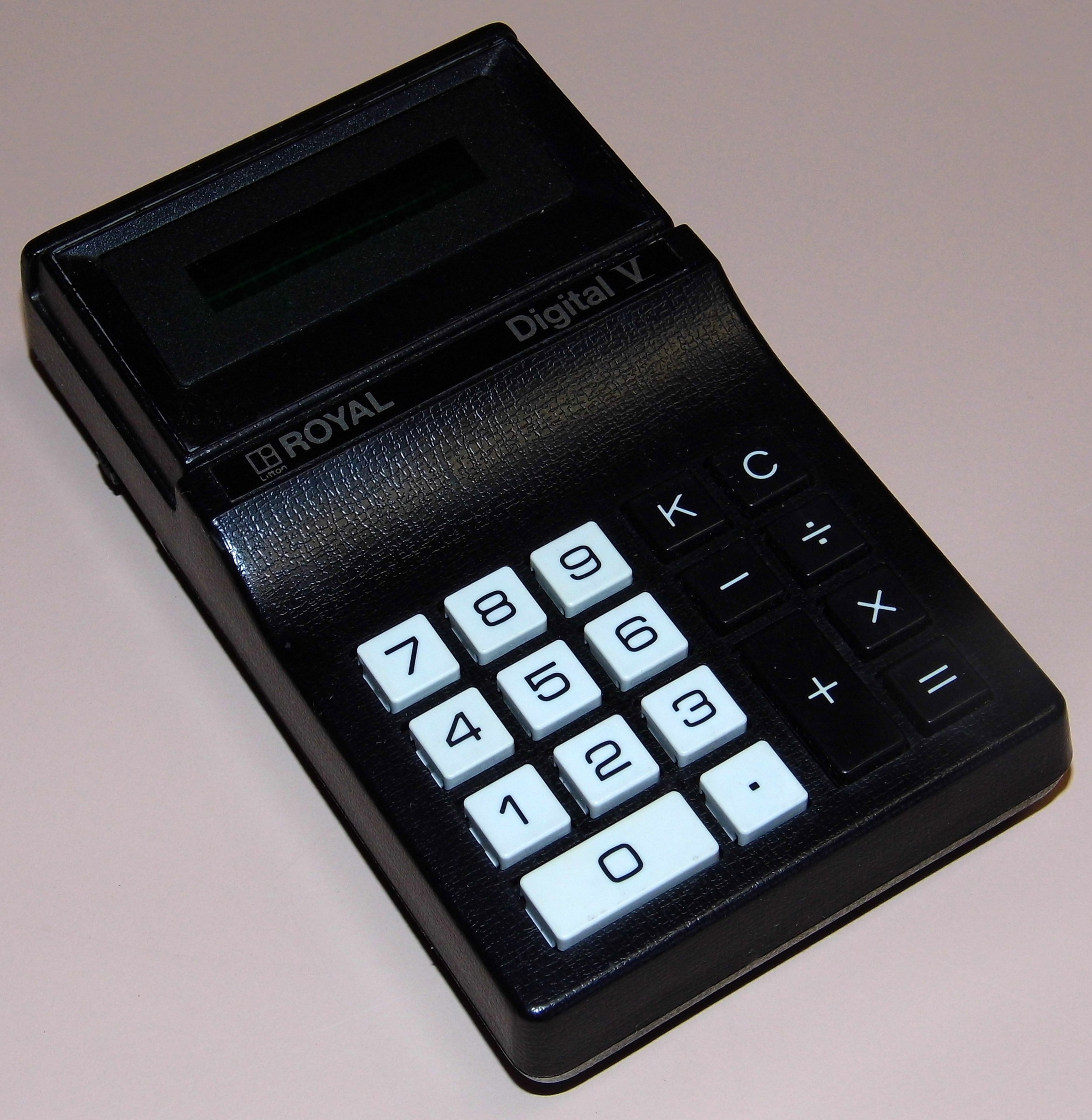
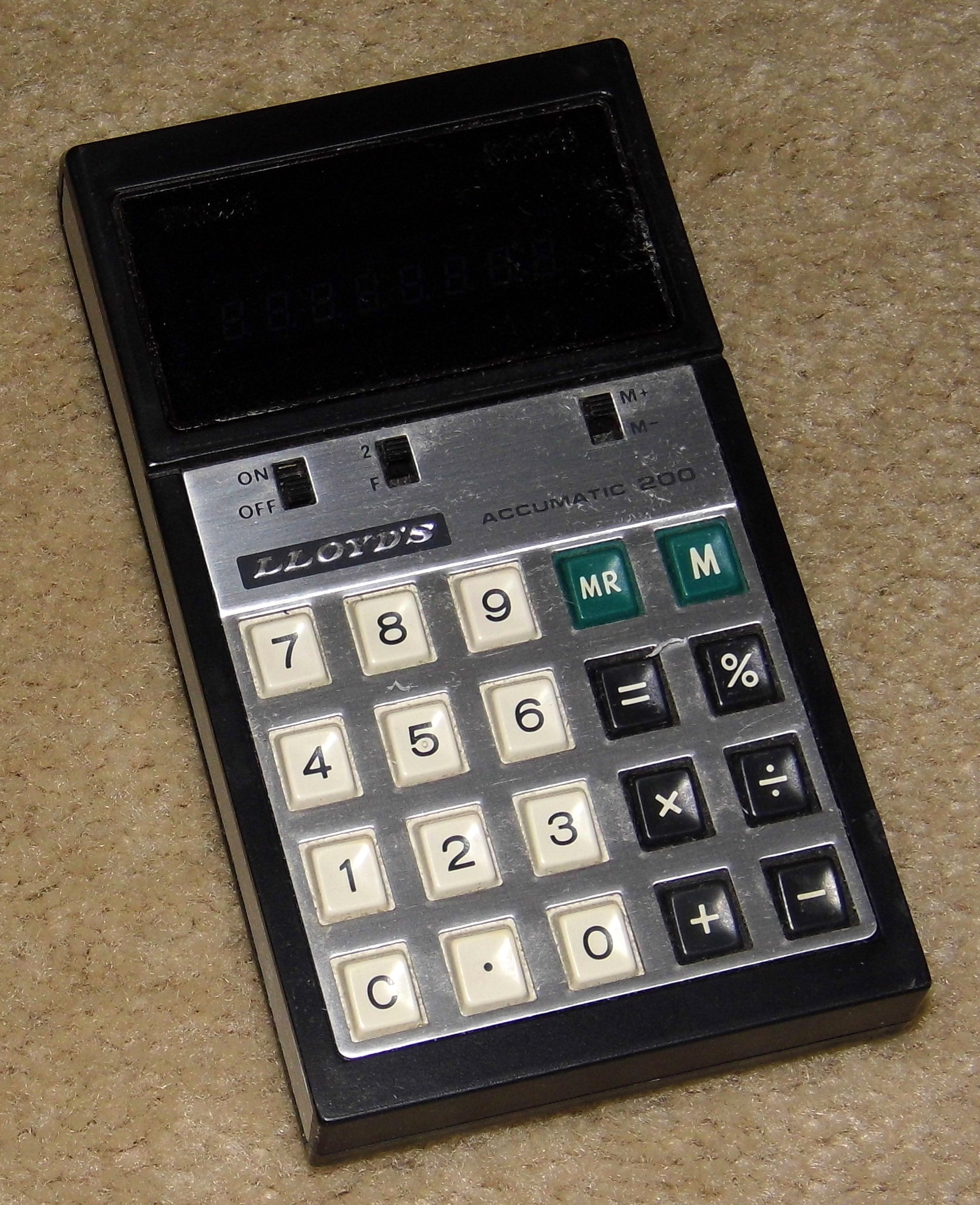
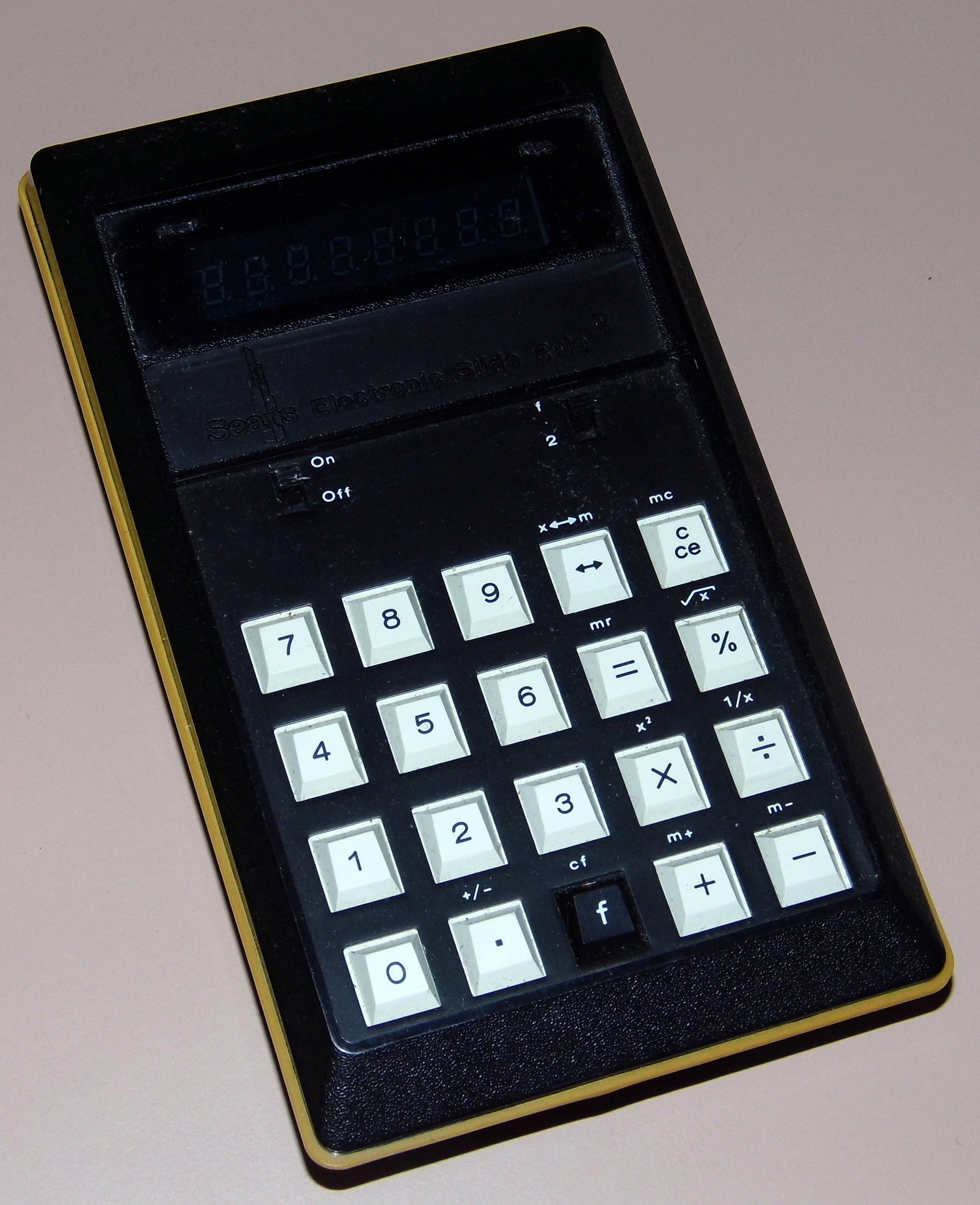
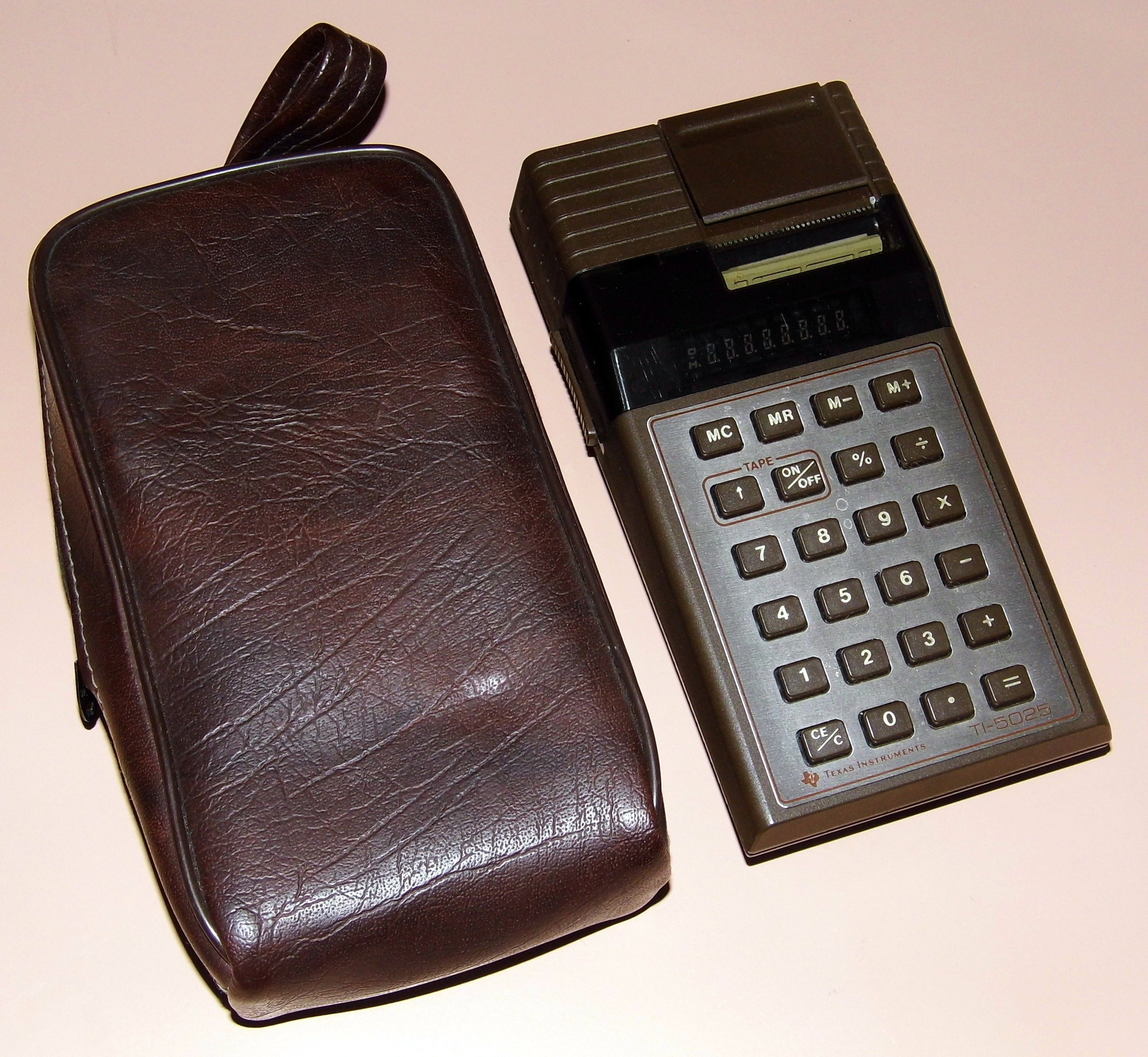
Many American brands sold Japanese- or Mexican-built fluorescent pocket machines: Royal (the Digital V of 1972), Lloyd’s (the Accumatic 200 of about 1973, made in Mexico, and the Accumatic 50 of 1974), Sears (the Electronic Slide Rule II of about 1974, also made in Mexico), APF, Unisonic, Craig, Qualitron (the 1438 of 1975 with an Itron FG95A flat panel; the 1450 with a Futaba 9-ST-10), and even National Semiconductor, an LED maker, whose Model 200 of 1976 used a Futaba tube. Texas Instruments itself, the champion of the red LED, made fluorescent machines too, such as the TI-1025 and the TI-5025 printing pocket calculator of about 1978.
3.10 Europe and the badge trade
European office-machine firms bought Japanese fluorescent machines and sold them under their own names: Facit and Addo-X in Sweden (from Sharp and Hitachi), Olympia and Triumph-Adler in Germany (from Omron and others), Olivetti in Italy. Olivetti’s own Divisumma 18 of 1972–73 printed and had no display; its later Divisumma 31 had a green VFD. The Olympia CD401A of 1974, made in Japan with TI chips and a Futaba thirteen-digit module, is one of the machines whose circuit is traced in the inside volume.
3.11 The LED and the liquid crystal
The VFD was the Japanese display. The American pocket boom of 1971–74, Bowmar, Texas Instruments, Hewlett-Packard, Rockwell’s later models, National Semiconductor’s Novus, ran on red LEDs. The Bowmar 901B of autumn 1971, at about $240, is usually called the first LED pocket calculator. The split seems to follow the supply chain: the American firms were close to the American LED makers, the Japanese to Ise, NEC and Futaba; no source states this directly. LEDs drew a lot of power too: the HP-35 of 1972 ran for about three hours on a charge.
The liquid crystal ended both in the pocket. After Sharp’s EL-805 of 1973 came the EL-8020 with twisted-nematic LCD and the solar EL-8026, both in 1976, and the Casio Mini Card of 1978. Pocket VFDs lasted in Japan until about 1978–81, mostly where a mains adapter or large cells were acceptable or a bright display was wanted.
3.12 On the desk, still
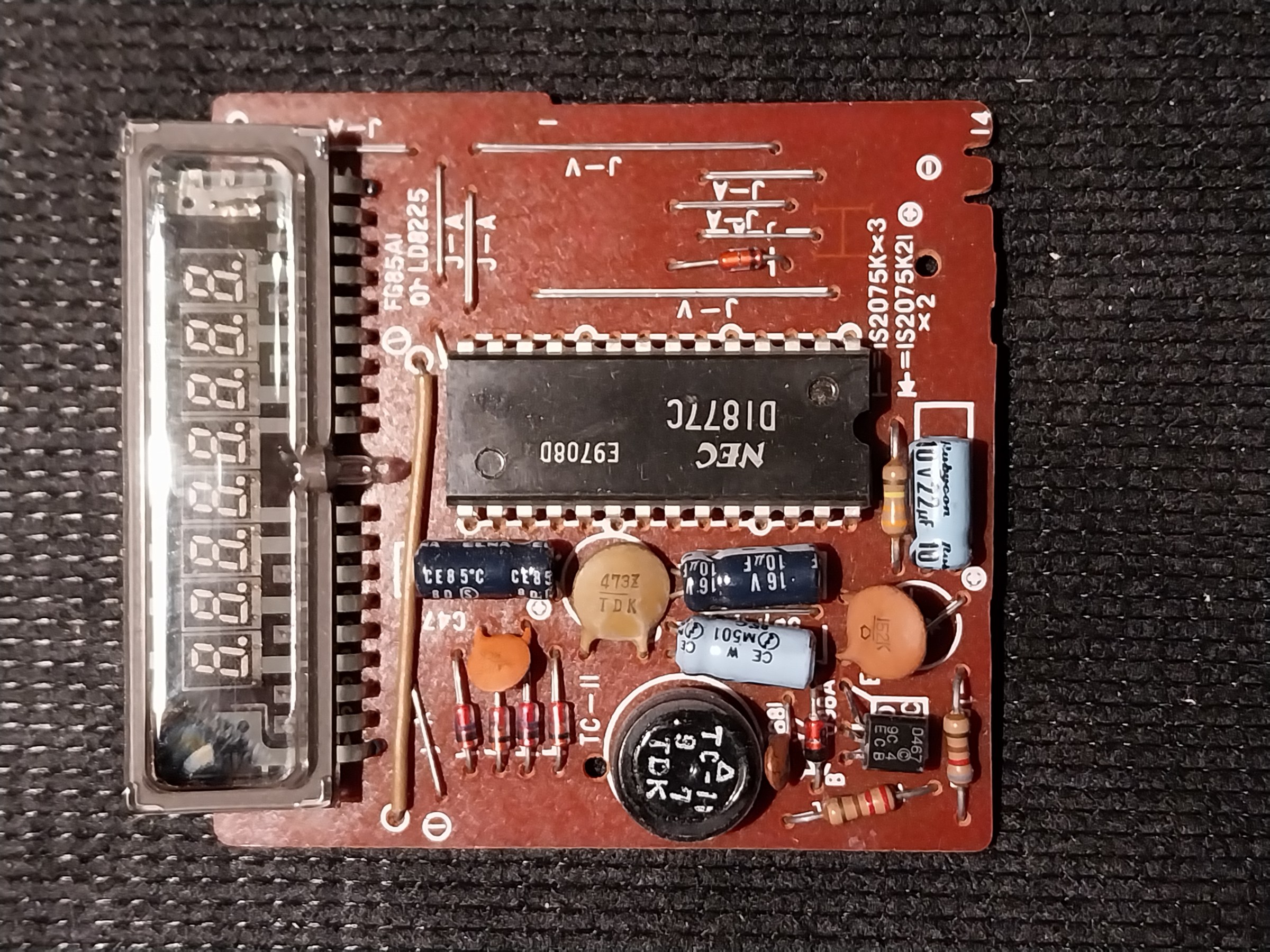
Mains-powered desk and printing calculators kept the fluorescent display long after the pocket gave it up, because it is bright, easy to read from an angle, and costs nothing extra when the power comes from the wall. Sanyo was selling VFD desk machines in 1980, Casio’s M-1 had one into the 1980s, and Sharp’s EL-1197PIII and Canon’s MP25DV printing calculators, both sold new today, still have fluorescent displays.
3.13 Soviet machines
The Soviet Union built VFD calculators in large numbers and with its own tubes: the Elektronika EKVM 24-71 of 1971, reverse-engineered from the Sharp QT-8D; the Svetlana S3-07 desk machine; the B3-18 pocket scientific of 1976 with a nine-digit tube; and the MK-61 programmable of 1983 with a ten-digit green VFD. They have a series of their own.
3.14 The machines in brief
Table 1 — The machines in brief
| Machine | Year | Price at launch | Tube | Chips |
|---|---|---|---|---|
| Sharp CS-16A | Dec 1967 | ¥230,000 | Ise DG12B (Japan; US unit has Nixies) | 59 MOS ICs |
| Sharp QT-8D | Dec 1969 (Japan) | ¥99,800; $395 | Ise DG10B | 4 Rockwell MOS-LSI |
| Sharp QT-8B | 1970 | ¥117,000; $495 | Ise DG10B | 4 Rockwell |
| Busicom 120-DM | 1970–71 | ¥116,000 | single tubes | Mostek MK6010 |
| Sharp EL-8 | Jan 1971 (US) | ¥84,800; $345 | Ise DG10L | 4 Rockwell |
| Toshiba BC-1011 | 1971 | ¥115,000 | single tubes | Toshiba |
| Casio AS-8 | Sept 1971 | under ¥40,000 | Futaba DG-10FL | Hitachi |
| Friden EC-1117A | 1972 | $395 | single tubes | Hitachi HD3234–6 |
| Crown CL-80K | mid-1972 | about $89 | single tubes | TI TMS0105 |
| Casio Mini | Aug 1972 | ¥12,800; $59.95 | NEC LD8035 | Hitachi HD32127 |
| Casio fx-10 | May 1974 | — | Toshiba E6525 | NEC |
| Canon L1214 | 1975 | — | 12-digit flat panel | — |
| Casio fx-201P | 1976 | — | multi-digit | — |
| Sharp EL-5001 | 1977 | — | 14-digit | — |
The Library holds the owner’s manuals for the Sharp QT-8D, the Casio personal-mini, pocket-mini, fx-21, fx-101 and CQ-1, the Sharp EL-5001 and EL-8131, the Commodore Custom Green Line and the Unisonic 790R, among others.
Comments (0)