Scientific Calculators · Volume 2
The Electronic Slide Rule, 1968–1978
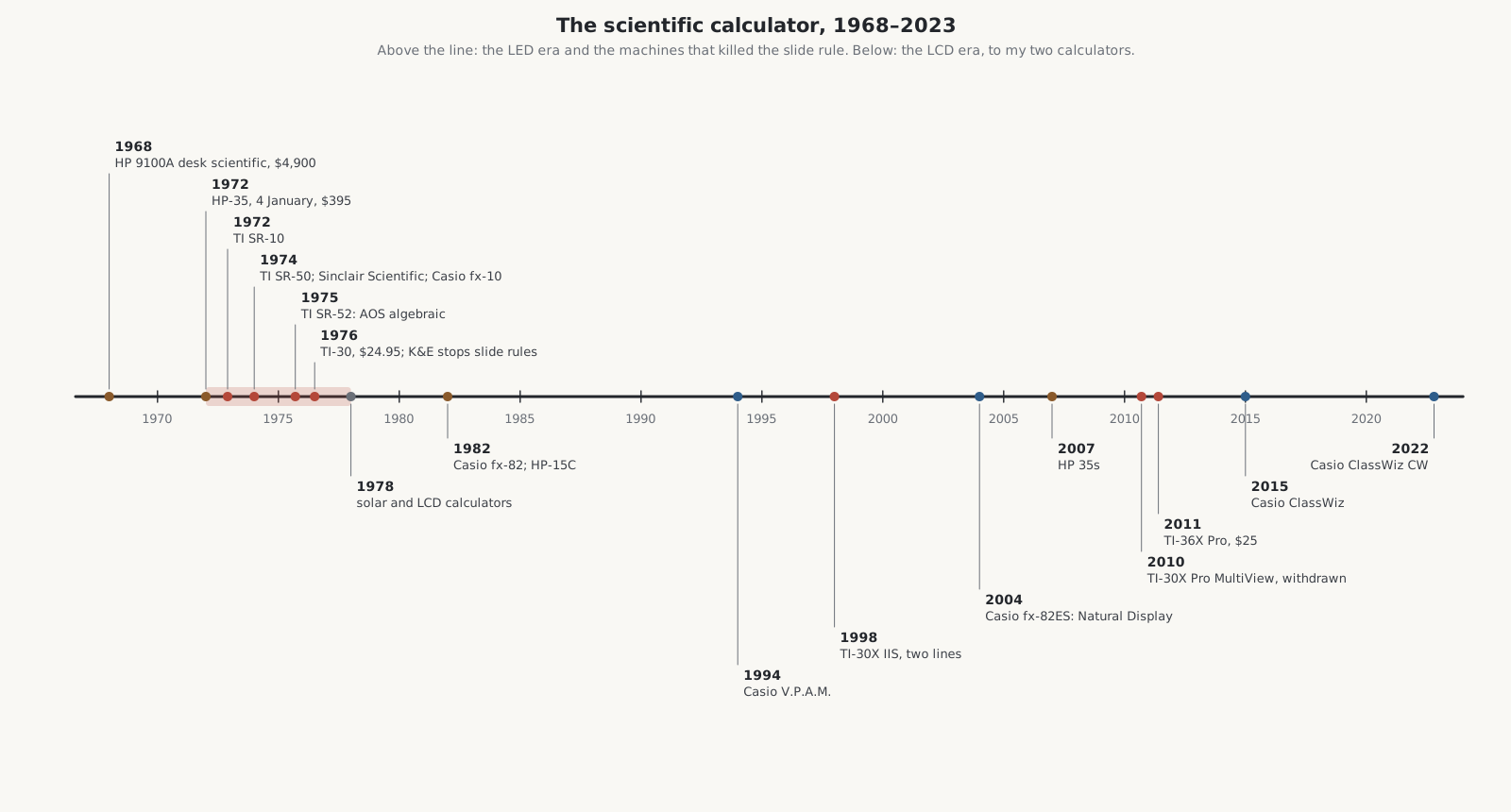
Until 1972 an engineer who needed a logarithm or a sine away from a desk used a slide rule, good to about three figures. Desk calculators that could do scientific functions existed, but they weighed as much as a typewriter and cost as much as a car. In ten years that changed completely: the scientific function went into the pocket, its price fell by a factor of sixteen, and the slide rule went out of production.
2.1 On the desk: Wang and the HP 9100A
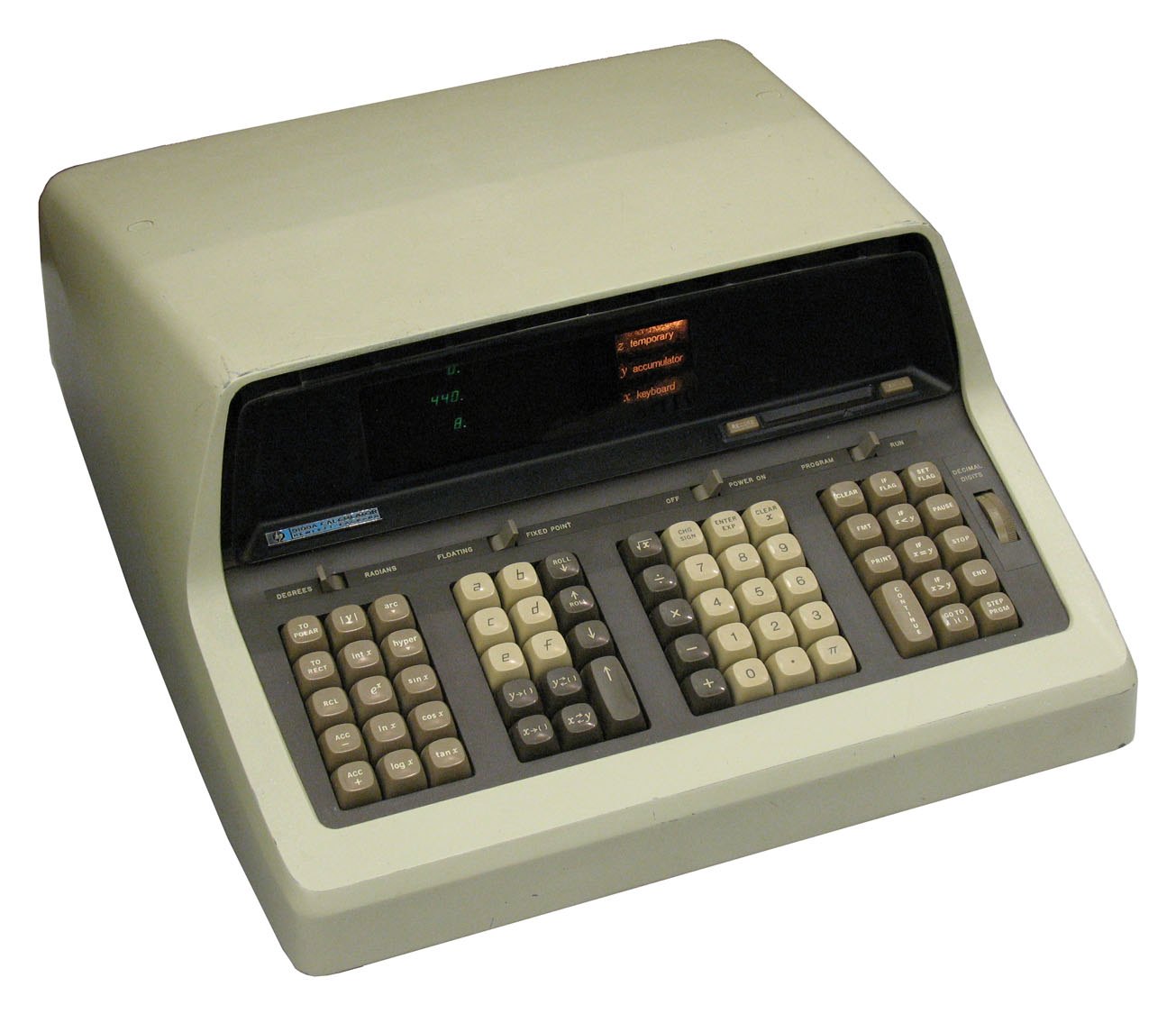
The first electronic calculators that did scientific functions were desk machines. Wang Laboratories’ LOCI-2 of 1965 cost $6,500, and the Wang 300 series, shown in October 1965 at about $1,700, computed logarithms in hardware to multiply and divide (the Nixie calculators series describes how). Hewlett-Packard’s 9100A of 1968, at about $4,900, was programmable, worked in reverse Polish notation and did trigonometry, logarithms and exponentials to ten digits on a cathode-ray tube; its story is told in the CRT calculators series. Casio’s first scientific was a desk machine too: the fx-1 of February 1972, with a 12-digit Nixie display and five NEC chips.
2.2 The HP-35
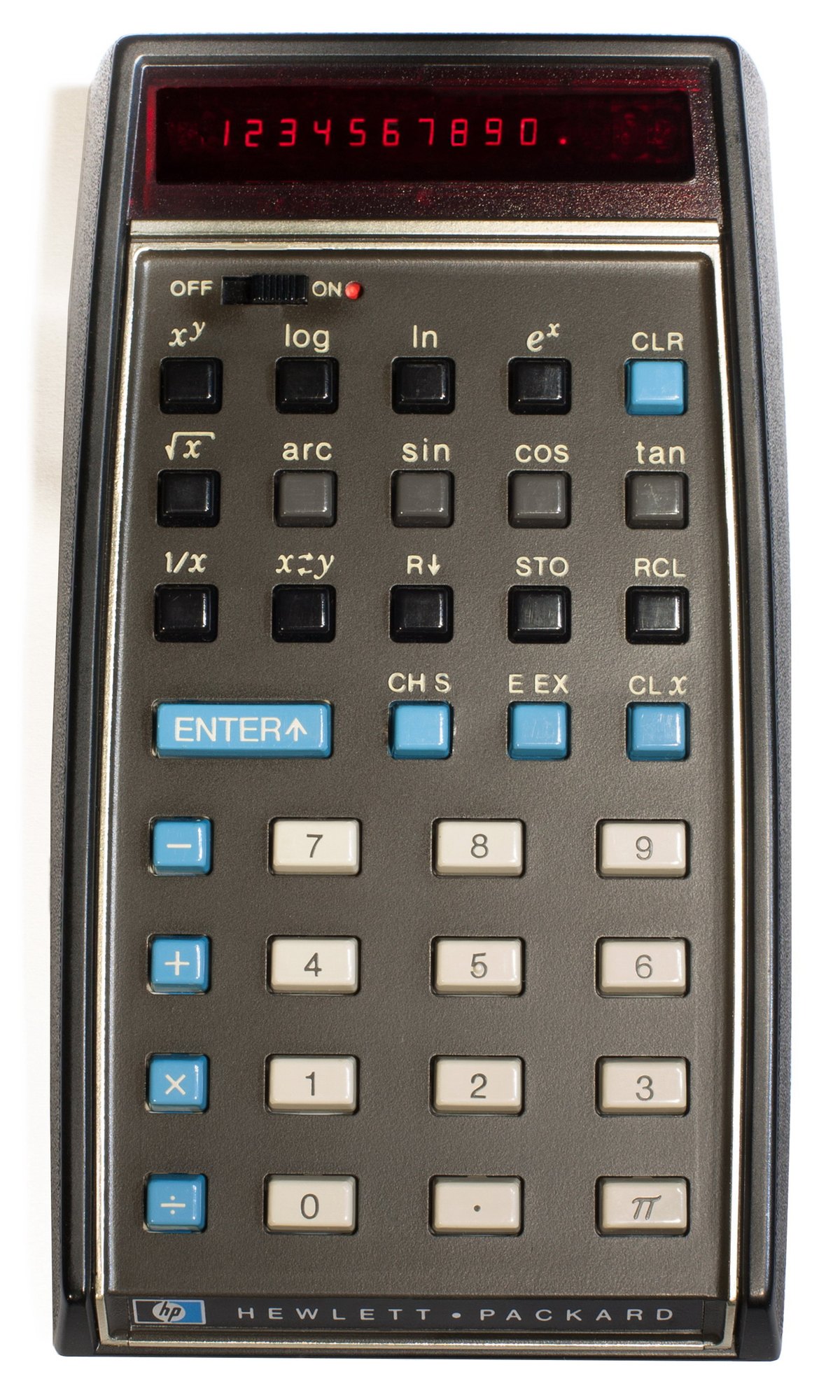
Around 1970 Bill Hewlett challenged his engineers to make a “shirt-pocket sized HP-9100”. The result, the HP-35, was introduced on 4 January 1972 at $395. It was named for its 35 keys, and it did logarithms, exponentials, trigonometry and their inverses, square roots and powers to ten digits, over a range from 10⁻⁹⁹ to 10⁹⁹, on a 15-digit red LED display, in about a second. Its manual called it “a high precision portable electronic slide rule”; the IEEE plaque that marks it as a milestone, dedicated in 2009, says it “performed all the functions of the slide rule to ten-digit precision”.
Inside were five MOS chips, three of them read-only memories of 256 ten-bit instructions each, an arithmetic and register chip and a control and timing chip, built by Mostek and AMI to HP’s design, with HP’s own bipolar driver chips. It used RPN, with a four-level stack, and ran for three to five hours on its rechargeable pack.
It sold far better than HP expected: about 100,000 in its first year by Wikipedia’s figure (the Whipple Museum says more than 50,000), and over 300,000 by 1975, when it was dropped at $195. Early units had a bug: 2.02, ln, eˣ gave 2 instead of 2.02, a fault in the exponential routine, and HP offered to replace the ROMs. The first version is known to collectors as the “red dot”, for the red dot by its power switch.
2.3 Texas Instruments’ SR series
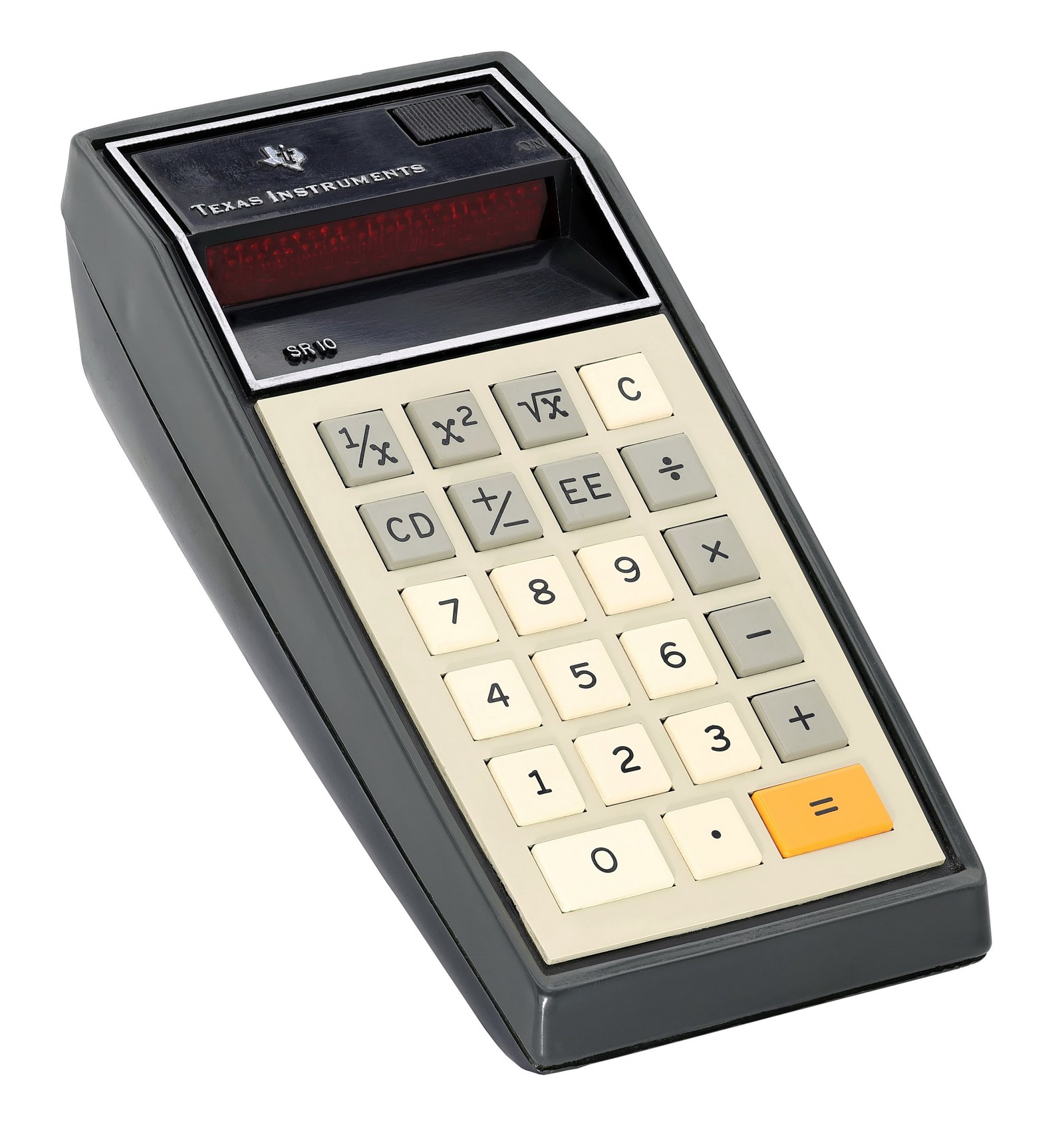
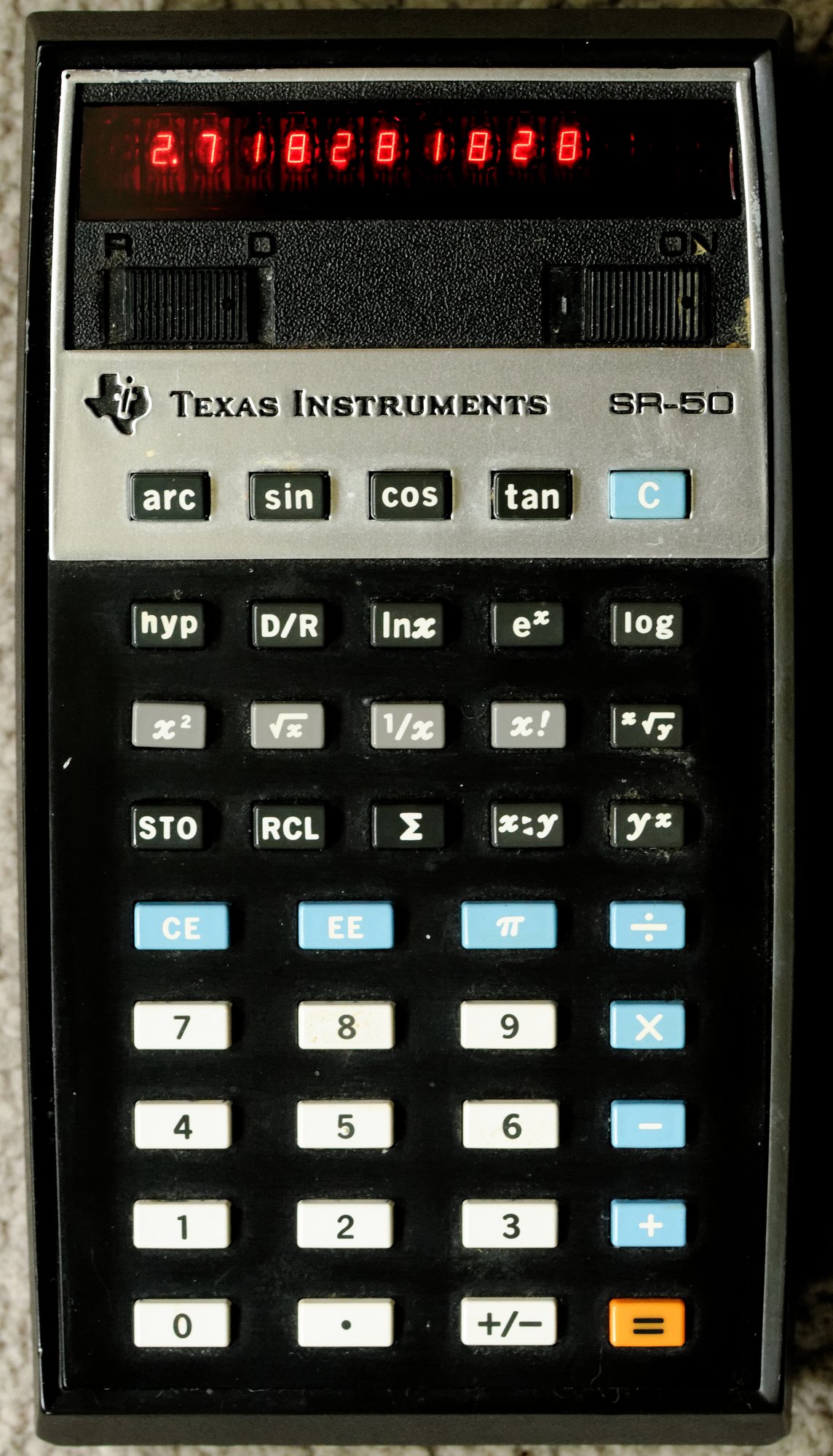
Texas Instruments, whose engineers had built the first hand-held electronic calculator in 1967, answered with its “SR”, slide rule, models:
Table 1 — Texas Instruments, whose engineers had built the first hand-held electronic calculator in 1967, answered with its "SR", slide rule, models
| Model | Announced | Price |
|---|---|---|
| SR-10 | 1972 | $149.95; $89.99 in 1973 |
| SR-11 (adds π) | September 1973 | $119.95 |
| SR-50 | 15 January 1974 | $169.95; SR-50A $109.50 |
| SR-51 | about March 1975 | $224.95 |
| SR-52 (programmable) | September 1975 | $395 |
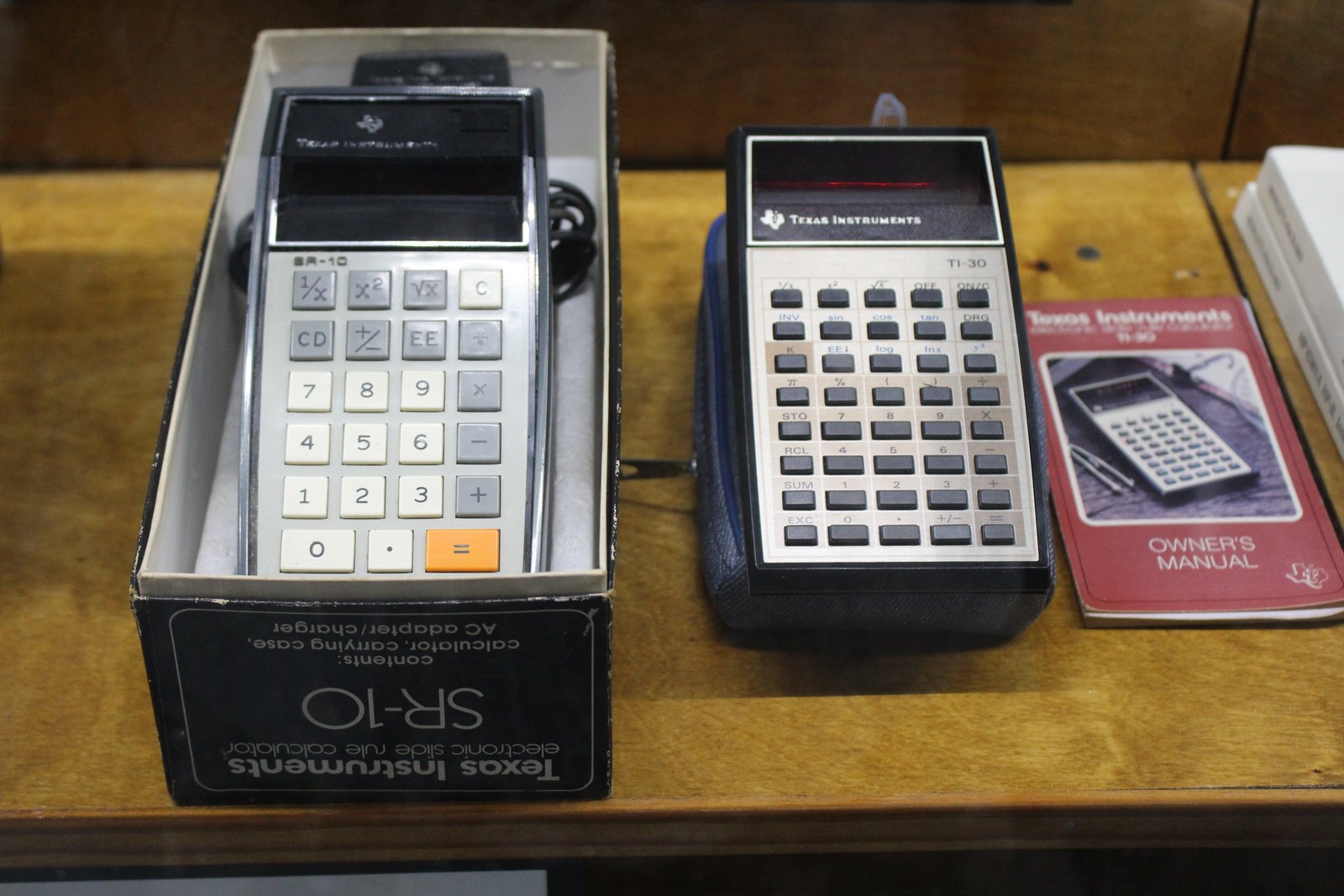
The SR-10 showed numbers too long for its eight digits in scientific notation; the SR-50 was TI’s answer to the HP-35, with a full set of functions on two chips, a 10-digit mantissa shown from 13 digits held inside, and algebraic entry, where 30 sin gives the sine at once and multiplication is done before addition. TI’s full algebraic system with brackets, AOS, arrived with the SR-52 in 1975, and the argument between HP’s reverse Polish and TI’s algebraic entry lasted as long as both companies made calculators.
2.4 The Sinclair Scientific
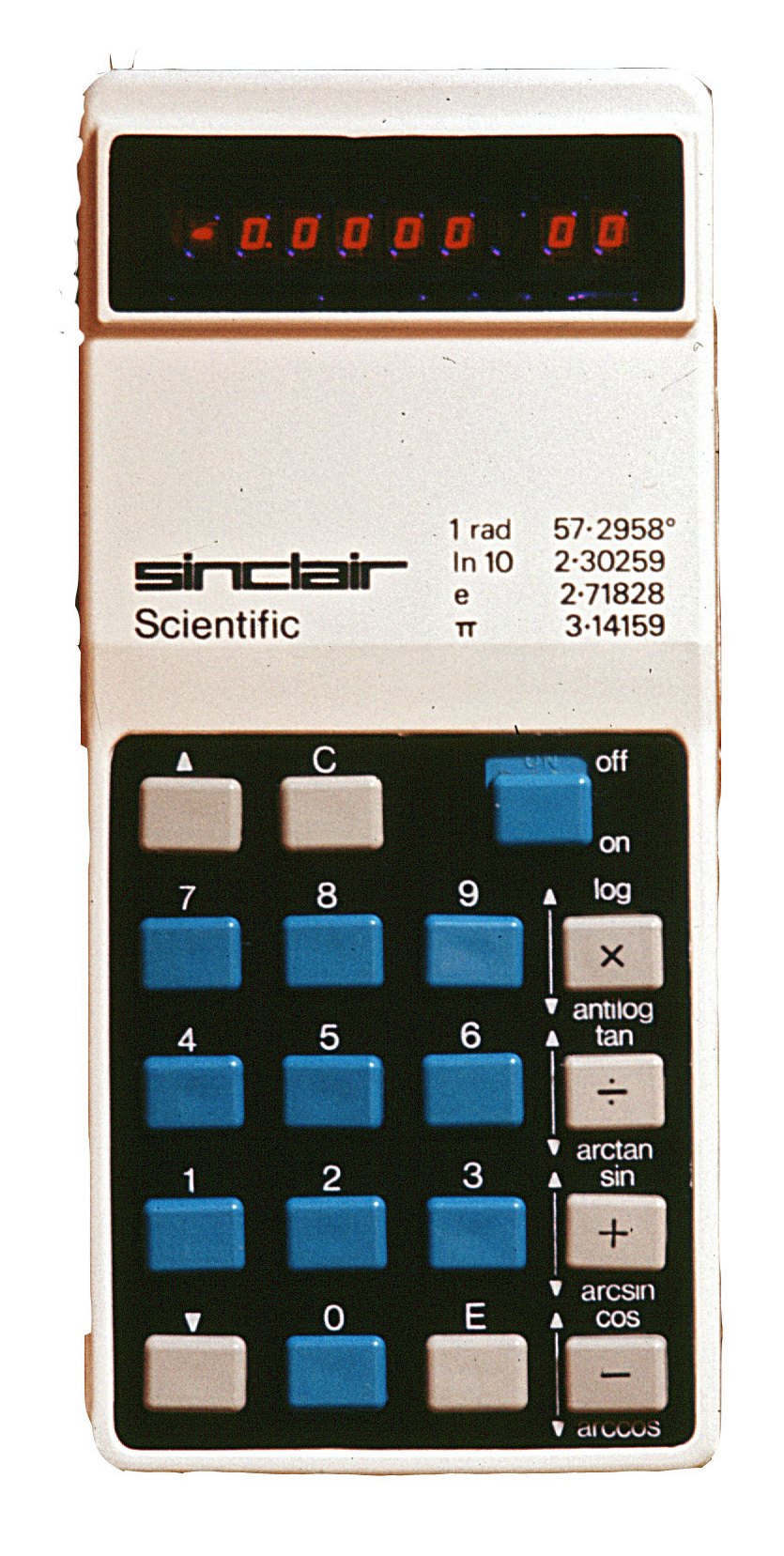
Clive Sinclair’s Scientific of 1974 did trigonometry, logarithms and their inverses for £49.95 in Britain, $139.95 assembled in America, and as a kit for much less: £9.95 by the end of 1975. It managed it by reprogramming a four-function Texas Instruments chip, the TMS0805, whose read-only memory held only 320 instructions, half the size of the HP-35’s, as Ken Shirriff put it. The display showed only scientific notation, five digits and a two-digit exponent; entry was like reverse Polish, with no equals key; and the answers were good to about three figures, a slide rule’s accuracy. A sine could take several seconds.
In 2013 Ken Shirriff read the chip’s program from John McMaster’s photographs of the die, worked out how it did so much with so little, and wrote a simulator that runs the original code. The volume on calculation describes the trick.
2.5 Casio’s fx-10
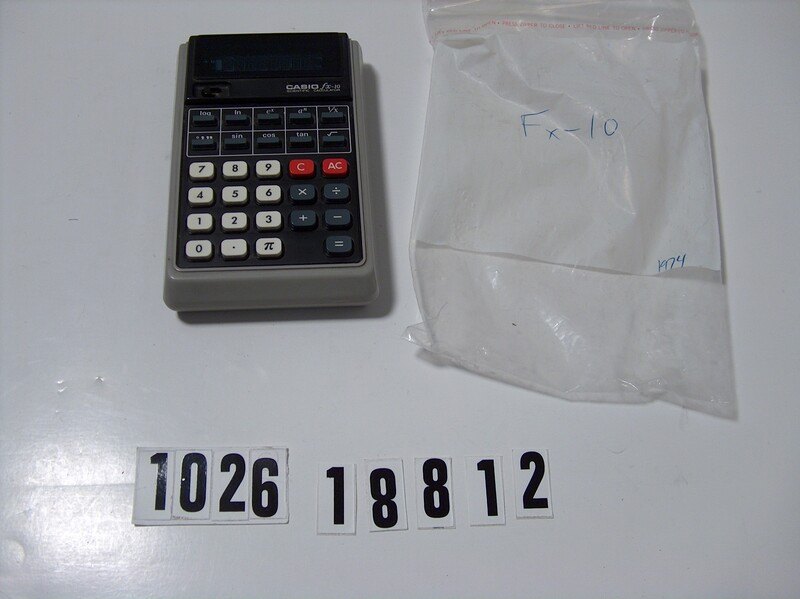
Casio’s first pocket scientific, the fx-10 of May 1974, was in Casio’s words “the first LSI-equipped scientific calculator made in Japan”: a seventh of the weight of the fx-1 and a thirteenth of the price. It was the start of the fx series. Commodore, National Semiconductor’s Novus line (the Novus 4510 Mathematician was $69.95 in 1975) and many others followed.
2.6 The price collapse
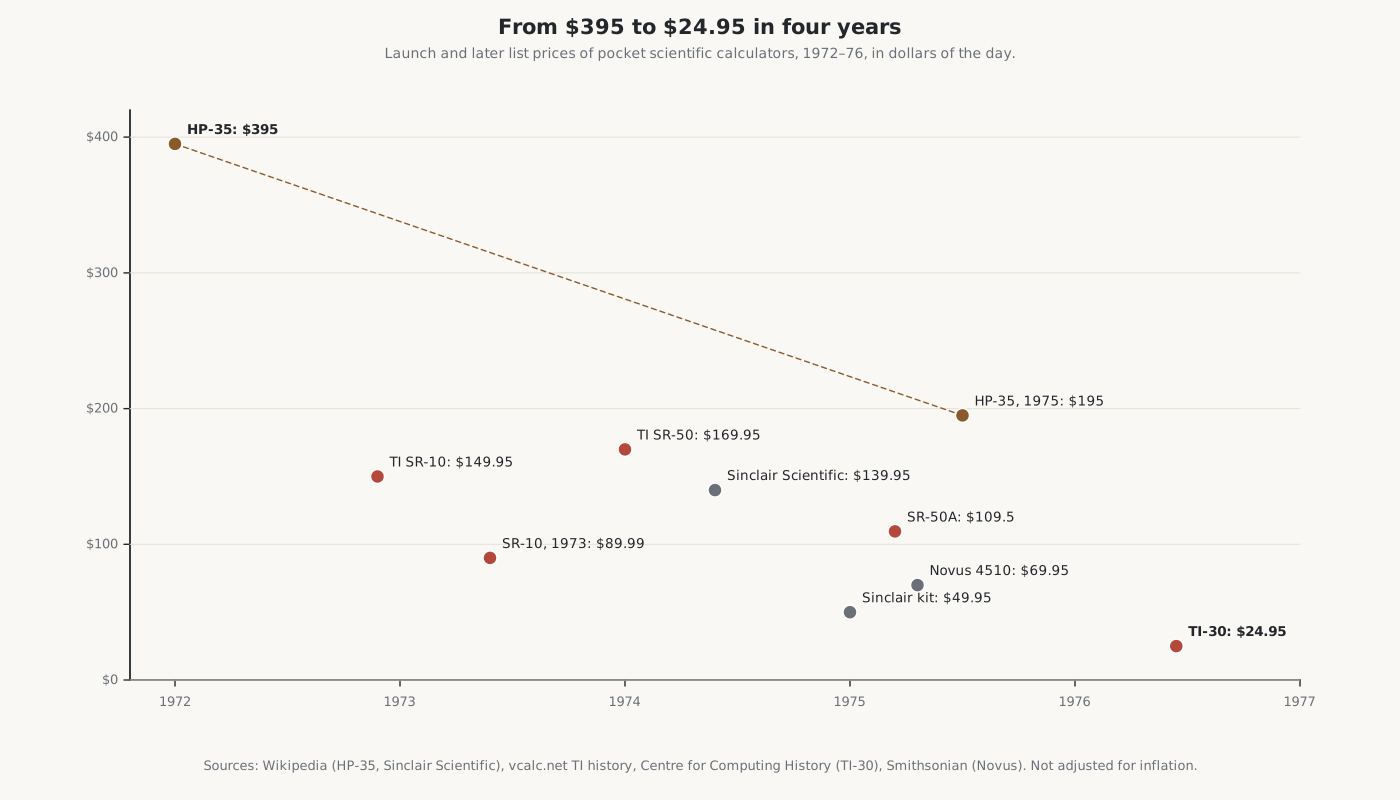
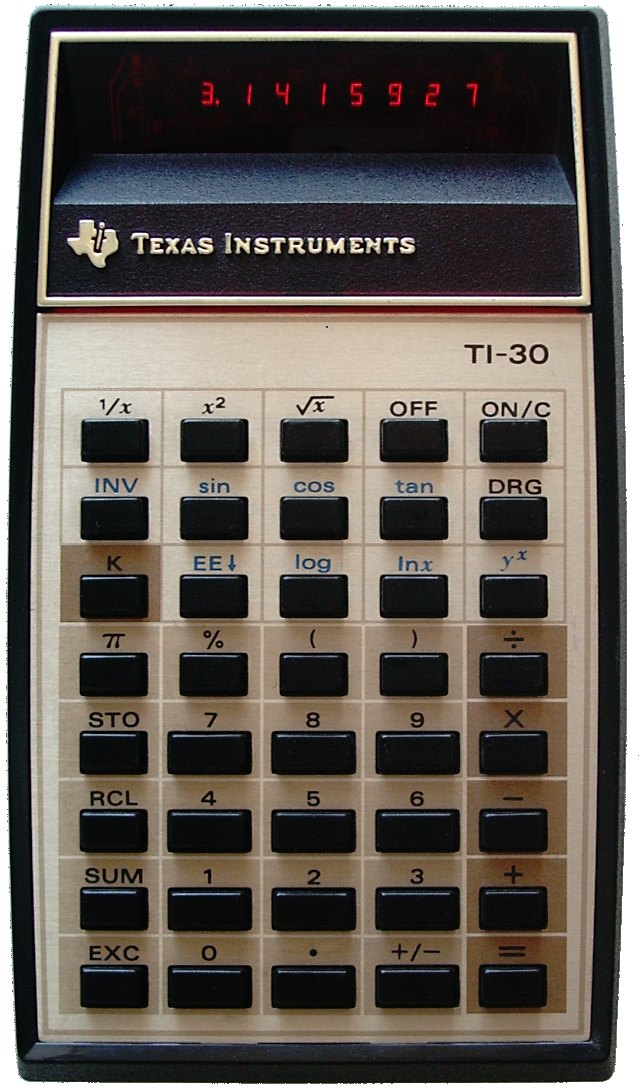
Prices fell as fast as the chips improved. The HP-35 halved in price in three years. The SR-10 lost 40 percent in one. The Sinclair kit fell to a fifth of the assembled price. Bowmar, the largest calculator maker of the early 1970s, went bankrupt in the middle of the decade. And on 13 June 1976, by the Slide Rule Museum’s dating, Texas Instruments launched the TI-30 at $24.95, less than a good slide rule. It had an 8-digit LED display, algebraic entry and a 9-volt battery, and Wikipedia’s estimate, which it flags as needing a citation, is that 15 million were sold by 1983.
2.7 The end of the slide rule
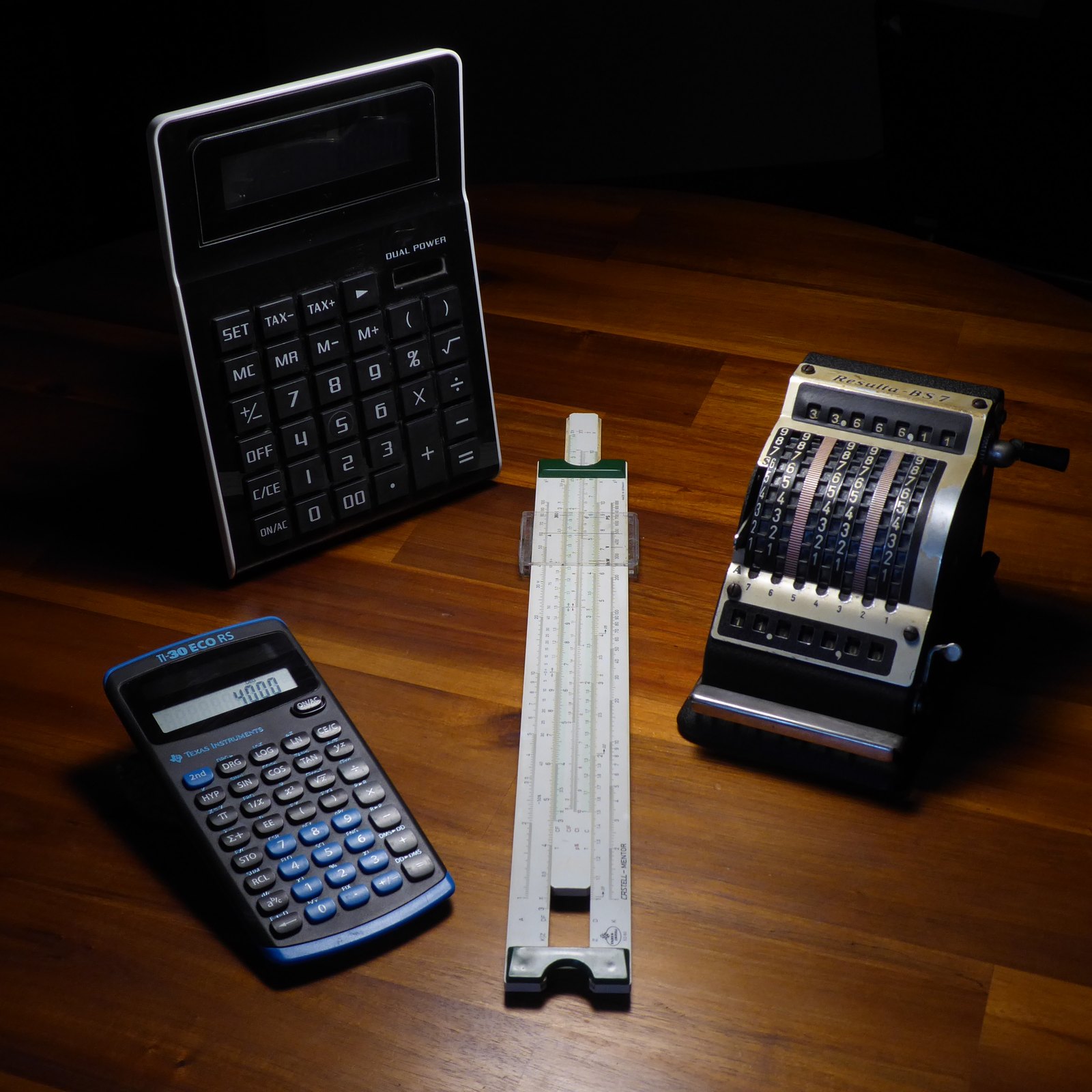
Keuffel & Esser, the leading American slide-rule maker, stopped production on 11 July 1976, and sent the last one to the Smithsonian; a 1987 newspaper article gives 1975. Pickett stopped in August 1976. Colleges dropped their slide-rule classes, and the leather holster on an engineer’s belt held a calculator instead. My slide rules are in the Slide Rules series.
Sources
- David S. Cochran, “The HP-35 Design: A Case Study in Innovation” (Computer History Museum, 2010); Hewlett-Packard Journal, June 1972, in the Library; the HP-35 operating manuals (1972, 1973); IEEE Milestone, “Development of the HP-35” (2009); Wikipedia, “HP-35”.
- Vcalc’s history of TI calculators; the SR-10, SR-50, SR-51 and TI-30 manuals; TI’s patent US 3,819,921 on the miniature electronic calculator.
- Ken Shirriff, “Reverse engineering and simulating the Sinclair Scientific” (2013); the Sinclair Scientific instructions; Electronics Today International, July 1975.
- Casio’s corporate chronology; the Old Calculator Web Museum (Casio fx-1); Centre for Computing History; Slide Rule Museum.
Comments (0)