Nixie Calculators · Volume 2
The Nixie Tube
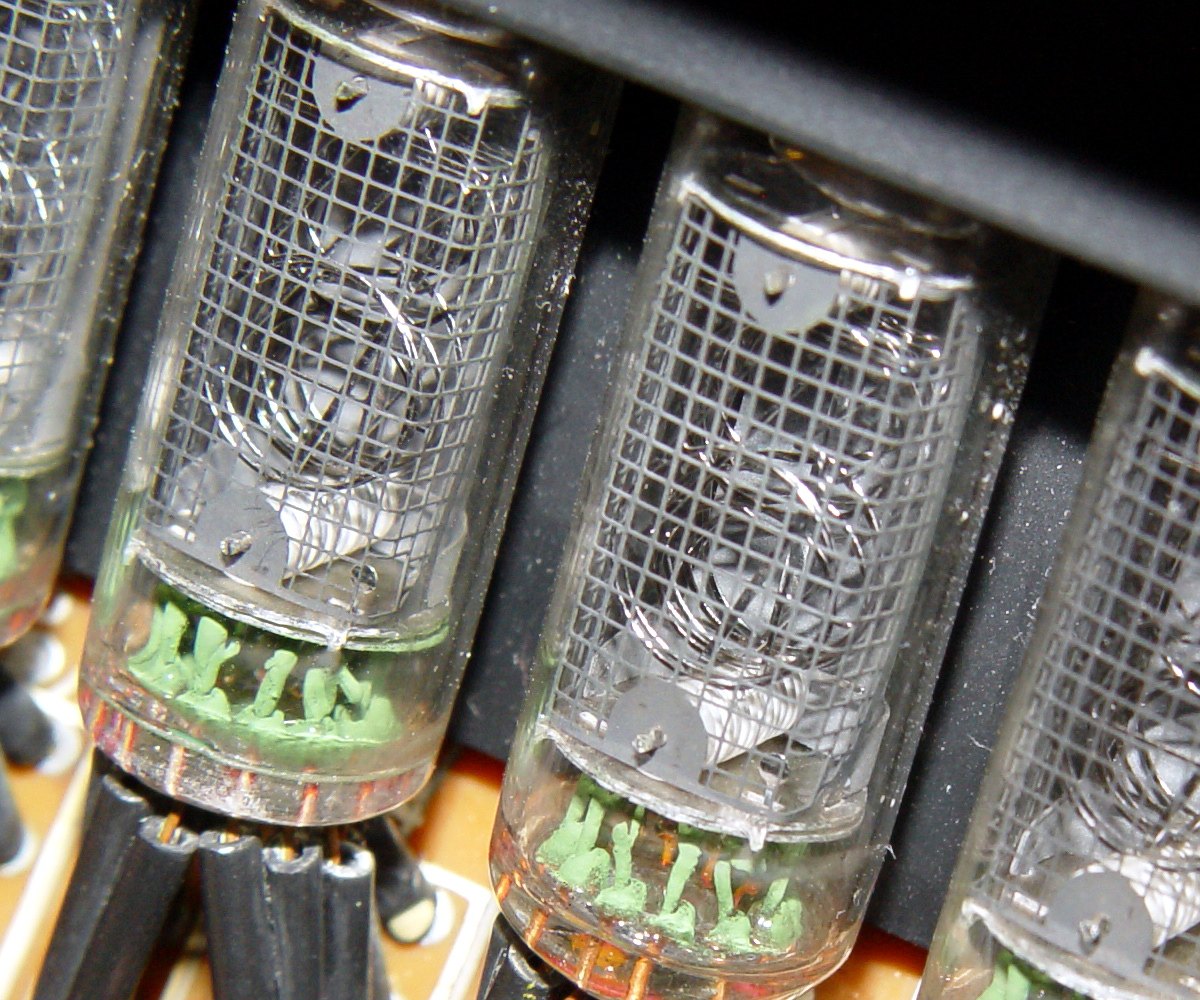
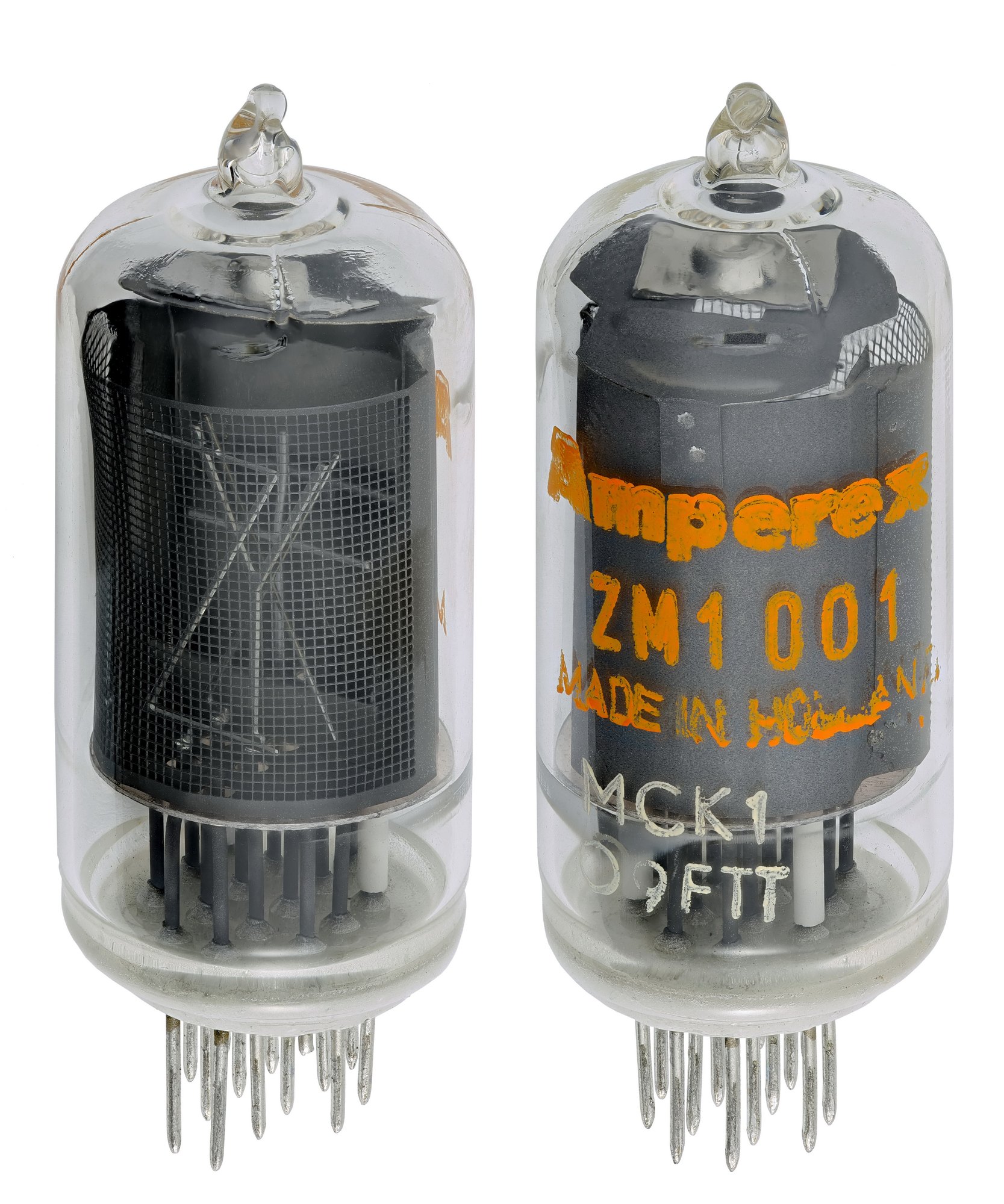
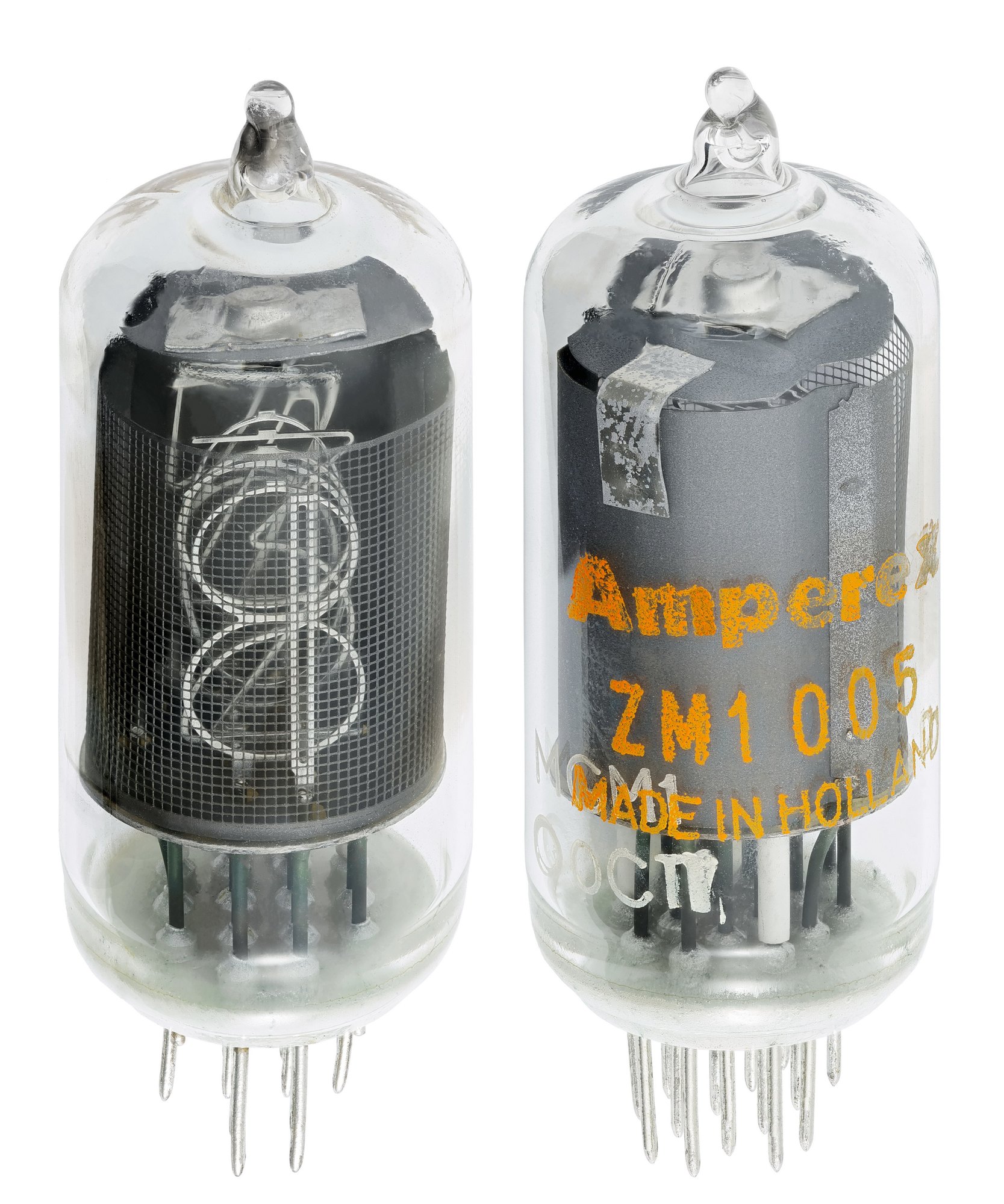
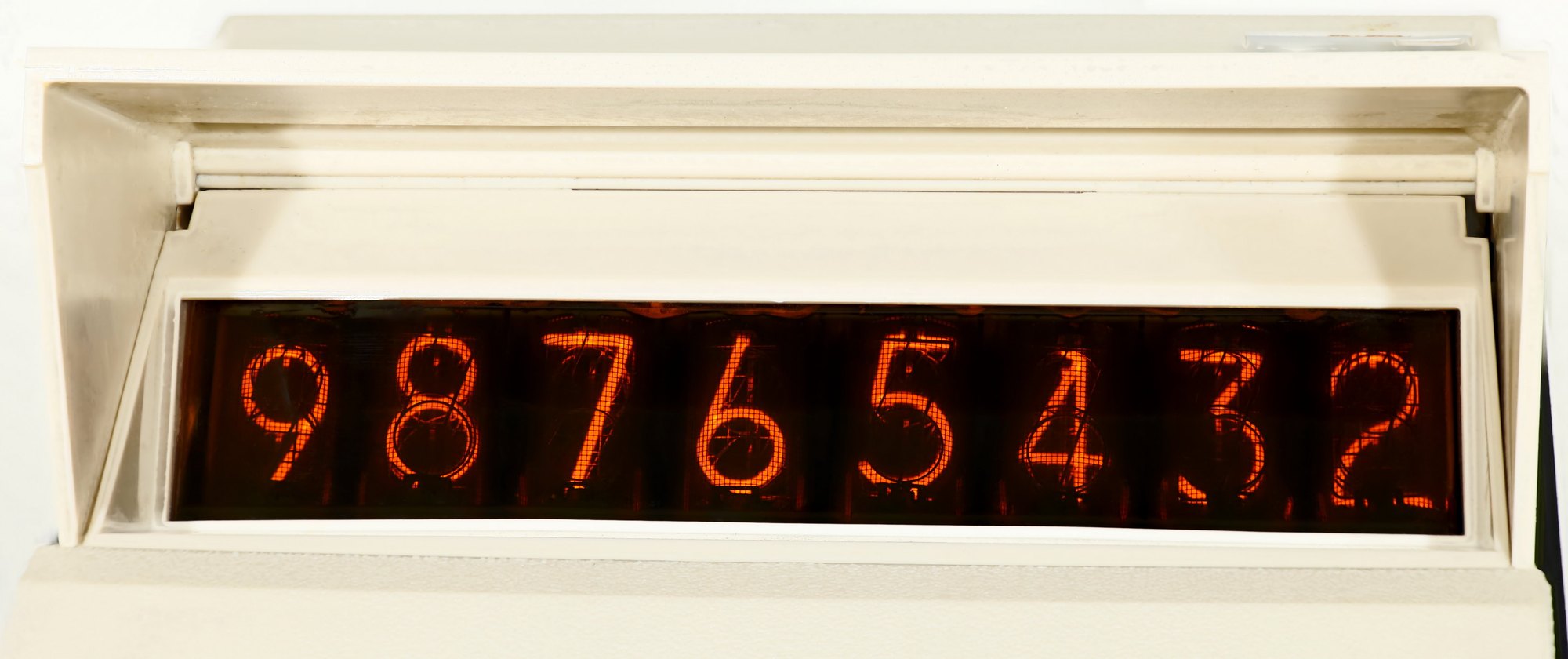
Every Nixie calculator is built around one component, and it is worth understanding before the machines. The Nixie tube is a cold-cathode glow-discharge indicator: a small glass bulb of low-pressure neon holding a wire-mesh anode and ten thin metal cathodes, each cut in the shape of a numeral and stacked one behind another. Put about 170 volts between the anode and one cathode and the neon next to that cathode ionises and glows, wrapping the numeral in an orange sheath of light. The other nine cathodes stay dark, and because they are thin wire outlines rather than solid plates, the lit numeral shows through them.
2.1 Where it came from
Glowing-numeral tubes go back to the 1930s. Boswau’s US patent 2,142,106, filed in 1934, is one early glow-indicator design, and in 1954 the National Union company in the United States began selling the Inditron, the first numeric indicator tube made in quantity. It was crude, and the tube that took over the market came from a small firm in New Jersey.
Haydu Brothers was founded in 1936 by George and Zoltan Haydu and their father, Hungarian emigrants, to make parts for radio and later radar. By about 1950 it employed some 500 people. In the early 1950s, probably in 1952 or 1953, the Haydus designed a numeric indicator with stacked numeral cathodes, and a related tube, the Pixie, with the numerals cut out round a disc. The Burroughs Corporation, the Detroit business-machine maker, bought the company in 1954, registered the name Nixie as a trademark, and developed the design into a product under its project manager Saul Kuchinsky between 1953 and 1955. The first tubes carried Haydu’s “HB” type numbers (the Nixie HB-106, the Pixie HB-105) and were sold for a while under the Haydu name.
The record is not tidy. Burroughs said it developed the Nixie in its own laboratory in 1953; a donor’s note at the Computer History Museum puts Haydu’s design as early as 1948 and a patent sale in 1952; Wikipedia credits a Burroughs engineer, David Hagelbarger, with the invention, without a source. The usual explanation of the name, “NIX I” for “Numerical Indicator eXperimental number 1”, is repeated everywhere and traced to nothing. What is certain is that Burroughs was selling Nixies by 1955 and owned the market for the next decade.
2.2 Hampel’s patent
The design Burroughs patented is not the Haydu tube but an improved one, described by Herbert J. Hampel of Philadelphia in US patent 2,874,320, “Indicating device”, filed on 13 December 1955 and granted on 17 February 1959, assigned to Burroughs. Its drawings show every feature of the classic Nixie. The cathodes are photo-etched or stamped from thin sheet, each numeral with a tab that bends round to a lead. They are stacked on insulated rods with spacers, and each is offset very slightly from the one in front so that, seen from the front, the wide parts of one numeral do not hide the strokes of the next. The backs of the numerals are coated with an insulating, light-absorbing layer so that the glow forms only on the front face, where it can be seen. The anode surrounds the stack. The patent never uses the word “Nixie”, but it is plainly the Burroughs tube.
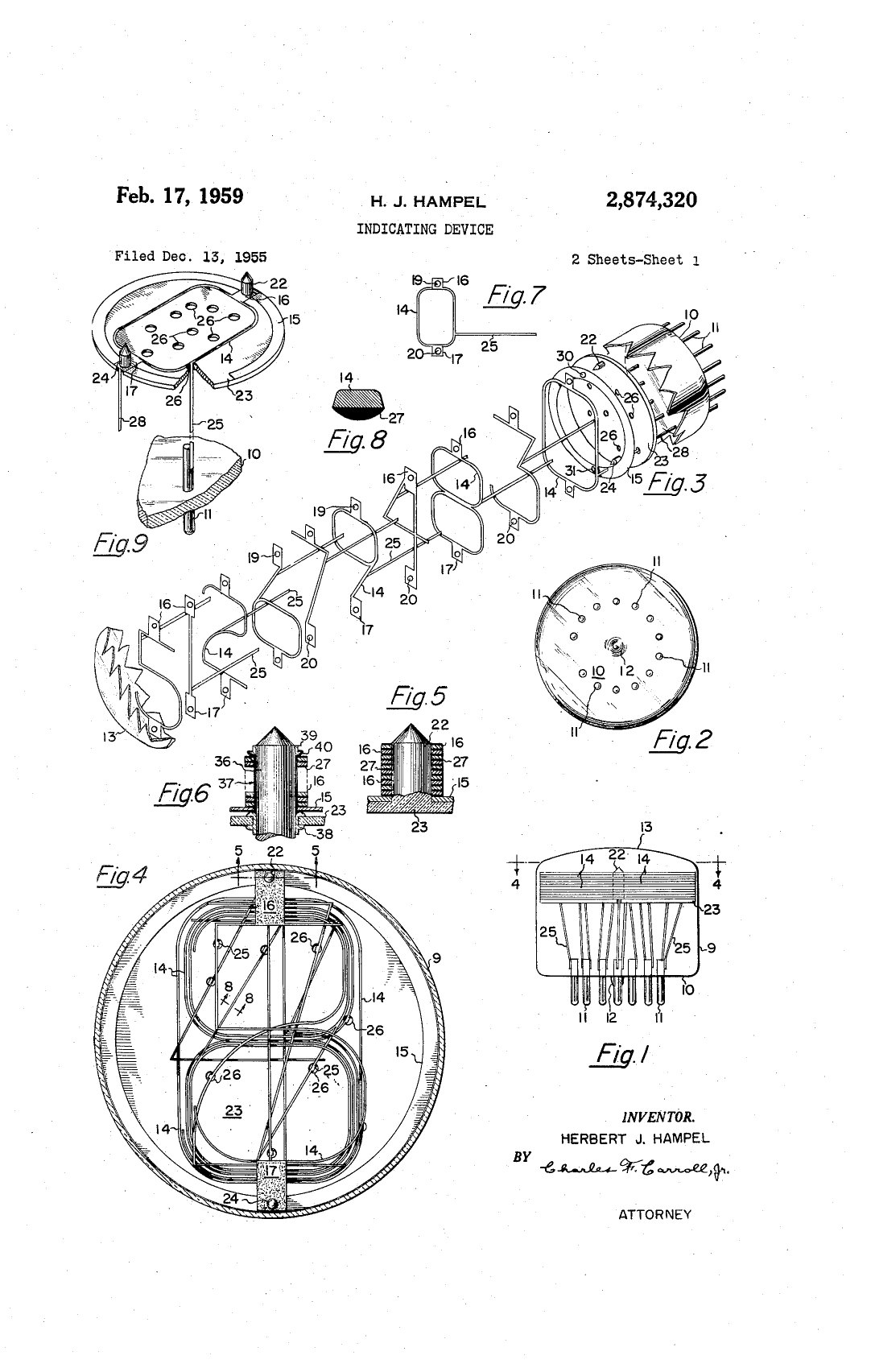
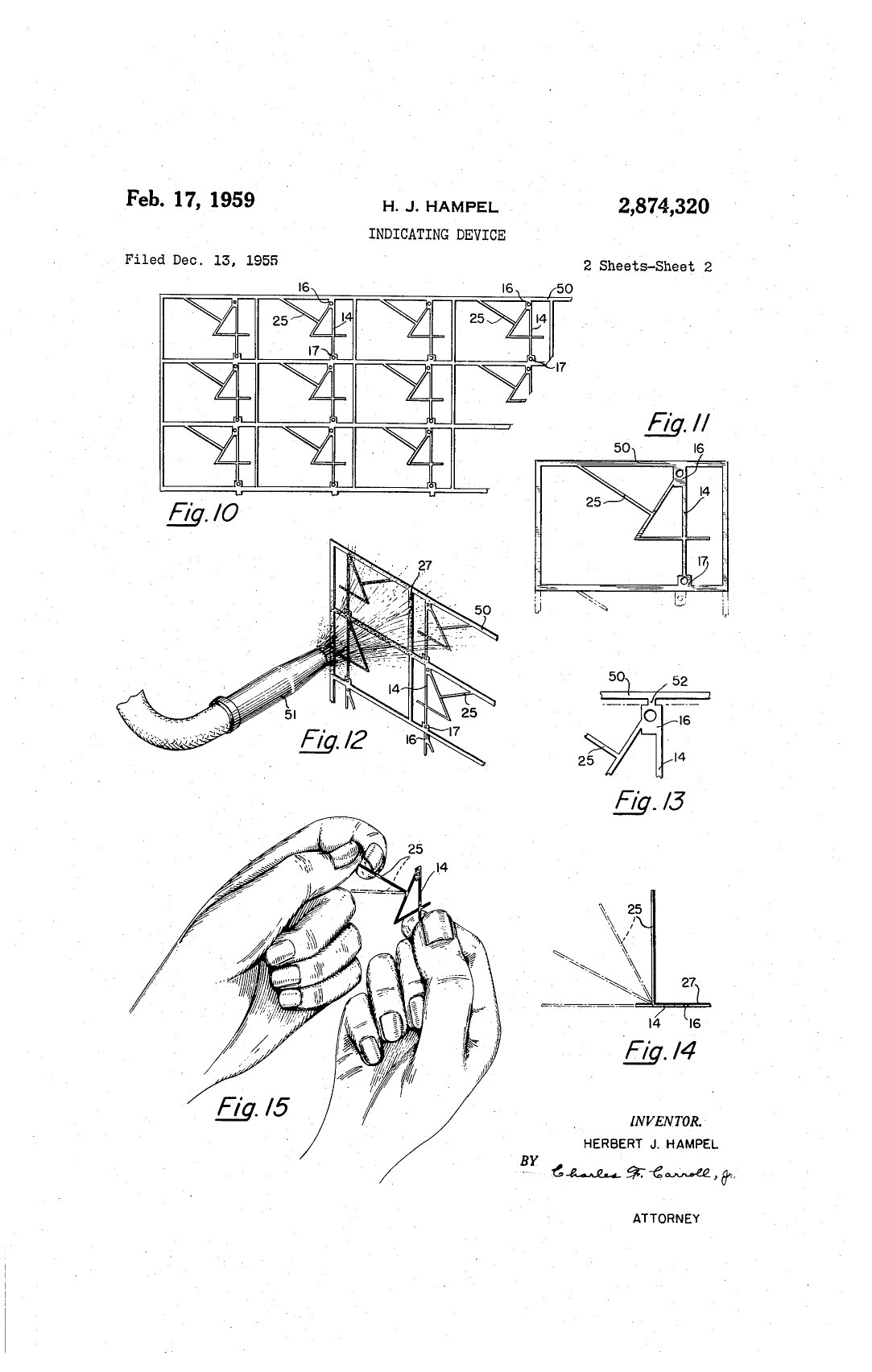
The patent is in the Library.
2.3 How it is built
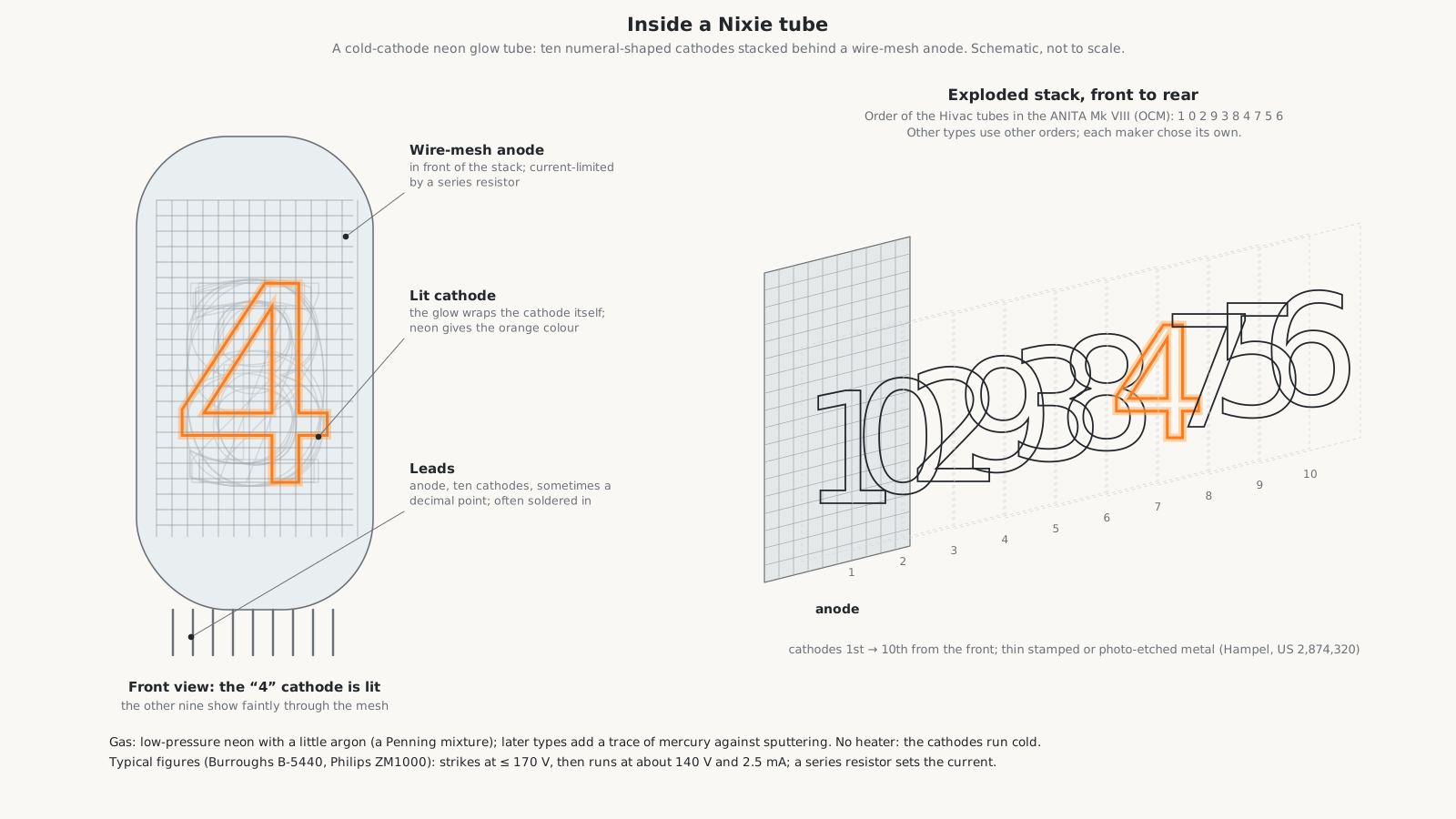
- Envelope. A glass bulb, usually a small cylinder. Side-view tubes are read through the side of the cylinder and stand upright on the board, like the Burroughs B-5440 and B-5750, the Philips ZM1000 series and the Hitachi CD-71. Top-view (end-view) tubes are read through the domed end and lie flat or stand behind the panel looking up, like the National Electronics tubes in the Wang LOCI-2. Calculator tubes were usually small, with numerals 13 to 16 mm high.
- Anode. A fine wire mesh in front of the cathodes, often wrapped round the stack, transparent enough to see the numerals through. Some tubes also have a solid anode at the back.
- Cathodes. Ten numerals, 0 to 9, stamped or photo-etched from thin sheet metal and insulated from each other by spacers. Each maker chose its own stacking order. The Hivac tubes in the ANITA Mk VIII were stacked 1, 0, 2, 9, 3, 8, 4, 7, 5, 6 from front to back. Many calculator tubes add one or two small decimal-point cathodes, a dot to the left or right of the numeral; the Burroughs B-5441 has both.
- Gas. Neon at low pressure, with a little argon added to make a Penning mixture that strikes at a lower voltage. Later tubes add a trace of mercury, which reduces sputtering and greatly extends life; it tints the glow slightly blue-violet at the edges, and some tubes have a red or orange coated envelope to hide this.
- Leads. Eleven to fourteen: one anode, ten cathodes and any decimal points. Early tubes plugged into sockets; most calculator tubes have flying leads soldered straight into the circuit board, which matters a great deal when one has to be replaced.
- Primer. Some tubes made for multiplexed use, such as the Philips ZM1000, have a tiny extra electrode kept permanently glowing through a high-value resistor. It supplies a few free ions so that the main glow strikes instantly each time the tube is switched on.
2.4 Why it glows
A Nixie is a glow-discharge tube, the same physics as a neon sign or a neon indicator lamp. At room temperature a gas is an insulator, but it always contains a few free electrons and ions, made by cosmic rays and natural radioactivity. With a few volts across the tube they drift harmlessly to the electrodes. Raise the voltage and the electrons gain enough energy between collisions to knock further electrons off neon atoms, and the positive ions, accelerated towards the cathode, strike it hard enough to release more electrons. At the striking voltage, about 170 volts for most Nixies, the process becomes self-sustaining and the tube suddenly conducts.
Once it conducts, a thin glowing layer forms on the surface of the cathode, the negative glow, where excited neon atoms give up their energy as the orange-red light characteristic of neon. It forms on the cathode, not between the electrodes, which is why the glow takes the shape of the numeral. The voltage across the tube now drops, to a maintaining voltage of about 140 volts, and stays almost the same whatever current flows: a Philips ZM1000 maintains about 125 volts plus 6 volts per milliamp. That is a negative resistance, and it means the tube cannot limit its own current. Every Nixie runs through a series resistor or a current source that sets the current at a couple of milliamps. If the voltage falls below about 120 volts, the glow goes out.
The amount of the numeral covered by the glow depends on the current. Too little and the glow covers only part of the cathode, leaving dark patches. Too much and the glow spreads onto the leads at the foot of the cathodes and wears the tube out faster. Burroughs called the Nixie “basically a current operated device” and asked designers to aim for the middle of its range.
2.5 Typical figures
Table 1 — Typical figures
| Tube | Maker | Used in | Strikes | Runs at | Current |
|---|---|---|---|---|---|
| B-5440 / B-5441 | Burroughs | general, early calculators | ≤ 170 V | about 145 V | 2.5–2.8 mA |
| B-5750 | Burroughs | SCM Marchant I, desk calculators | ≤ 170 V | 2.6 mA typical, 3.8 mA max | |
| ZM1000 | Philips / Mullard / Amperex | European calculators | ≤ 170 V | about 140 V at 2.5 mA | 2.5 mA average, 12 mA peak pulsed |
| ZM1080 | Mullard / Telefunken | Anita 1011, Monroe 770, Olympia RAE | ≤ 170 V | about 140 V | |
| CD-81 | Hitachi | Sony SOBAX 2500, Sharp Compet 17 and 22, Facit 1123 | ≤ 170 V | about 130 V | 2.5 mA |
| CD-71, CD-79 | Hitachi | Canon 163, Casio 121, Friden EC-1113 to 1115 | |||
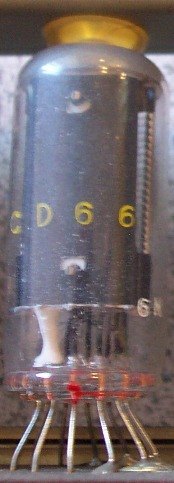
| CD-66 | NEC | Toshiba BC-1411, Commodore 500E | |||
| IN-1 | USSR | Soviet equipment | ≥ 170 V supply | about 133 V | 2.5 mA |
The figures are from the makers’ data sheets in the Library and from Dieter Wächter’s tube archive at tube-tester.com; blank cells are figures not found. The Russian tube data are in the Library.
2.6 Japanese tubes and the royalty fight
The Japanese calculator makers bought their first Nixies abroad and soon made their own. NEC and Hitachi produced Nixie-type tubes in quantity from the mid-1960s, Matsushita and Rodan joined them, and by 1968 nearly every Japanese calculator used a Japanese tube. Burroughs held patents on the Nixie, and in 1967, in the middle of a wider dispute over integrated-circuit patents, it claimed royalties on every Japanese copy. Early in 1968 Hayakawa Electric (Sharp) agreed to pay a small royalty on each Japanese-made Nixie in its calculators, with machines built for Burroughs to sell under its own name exempted; Burroughs then sold rebadged Sharps such as the C-3350.
The royalty was one more reason for the Japanese industry to find a display of its own. Sharp’s Tadashi Sasaki encouraged Tadashi Nakamura of Ise Electronics to develop a cheap low-voltage tube, and the result, in 1967, was the vacuum-fluorescent display. It is the main reason the Nixie disappeared from Japanese calculators within four years.
2.7 How tubes wear out
A Nixie does not burn out like a bulb; it fades. The positive ions that bombard the lit cathode knock metal atoms off it, a process called sputtering, and the metal settles on the glass and on the other cathodes. Three things follow:
- Darkening. The glass slowly greys, most of all in front of the lit numerals. In bad cases the envelope turns almost black.
- Cathode poisoning. Sputtered metal coats the cathodes that are not lit. The coating is not a good emitter, and a numeral that has been dark for thousands of hours may no longer glow all over: parts of it stay dark, or it will not light at all. The cure, running the poisoned cathode at several times its normal current for a while, is described in the repair volume.
- Lead glow. With age, or with too much current, the glow creeps onto the leads at the foot of the numerals.
Early tubes lasted about 5,000 hours. Burroughs’ “Ultra Long Life” tubes of 1958 were predicted to last 20,000 hours per cathode lit continuously, and after 29,200 hours 49 of the first 50 test tubes were still working; Burroughs revised its estimate to 35,000–50,000 hours per cathode, and 200,000 hours or more in multiplexed use. Philips gives the ZM1000 a life of 100,000 hours at 2.5 milliamps, provided each digit is changed at least once every 1,000 hours, and adds that life is shorter if the bulb is below 10 °C. Mercury-doped tubes last longest.
A calculator is easier on its tubes than a clock, because every numeral gets used. But the pattern is not even. In machines without leading-zero suppression, such as the ANITA and the Toshiba BC-1411, the 0 in the high-order tubes is lit nearly all the time the machine is on; in machines with suppression, the high-order tubes sit dark most of their lives. Either way, the less-used numerals of the outer tubes are the first to poison. That is a reasoned expectation from the mechanism rather than a measured fact, but it matches what collectors report.
2.8 Relatives
The Nixie had cousins, and they turn up in the same machines:
- Dekatron. A cold-cathode counting tube with a ring of ten main cathodes, and guide electrodes between them, round a central anode: the glow steps from cathode to cathode under pulses, counting to ten, and the count can be read through the top of the tube. The ANITA Mk VII used Dekatrons as counters and the Mk VIII kept one as its master timing and keyboard scanner.
- Trigger tubes and thyratrons. Small cold-cathode switching tubes with a third electrode that fires the discharge; the ANITA’s logic is built from 177 of them.
- Neon lamps. Simple two-electrode glow lamps, used for decimal points, signs and indicator lights in many Nixie calculators.
- Panaplex and seven-segment neon. Flat gas-discharge displays of the early 1970s with seven bar-shaped cathodes per digit instead of ten numerals; they succeeded the Nixie in the last neon calculators.
Comments (0)